


THE TOP FIVE:
Absolute Insanity. A federal agent shot and killed a nonviolent civilian in Minneapolis on January 7 and may face no consequences whatsoever. Millions have now seen the videos in which three immigration agents approach a stopped SUV, which slowly starts to pull away at the same time one of the agents fires three shots into the driver, 37-year-old Renee Good. Homeland Security Secretary Kristi Noem said the woman “proceeded to weaponize her vehicle and she attempted to run a law enforcement officer over.” Everybody can see that’s a hysterical and fictional account of what happened. Vice President JD Vance said the shooter has “absolute immunity,” as if a federal badge lets you kill anybody you want. And the Trump Justice Dept., which is unlikely to prosecute the shooter, seems to be trying to prevent the state of Minnesota from pursuing it, either.
This is brazen lawlessness, out in the open. If a police state with no accountability is fine with you, look the other way. If you want democracy back, don’t stand for it.
[Read more about the Trump Revolution of 2026.]
A Donroe Doozy. It seems crazy, but just one week after President Trump ordered the daring raid to capture Venezuelan President Nicolás Maduro, his takeover of the socialist kleptocracy seems to be a fait accompli. US forces have seized at least five oil tankers on the open seas, while a US blockade prevents any oil from leaving Venezuela, except with Trump’s permission. That may be all the leverage Trump needs to control the Maduro allies still running the government in Caracas. One sign of cooperation: Venezuela’s release of political prisoners jailed for opposing the Maduro regime.
Congressional squawking about Trump’s liberal use of military force, meanwhile, hasn’t done anything to discourage Trump. And he seems unbothered by the likelihood that he’ll have a dysfunctional country on his hands for a long time.
Trump’s plan now is to get American energy companies to upgrade Venezuela’s decrepit oil infrastructure, boost output and siphon a healthy dose of that oil into the US market. That could be a tall order. Trump wants to see oil prices at $50 per barrel or less, which would be $10 lower than they are now. But many oil companies can’t make money on oil with prices that low. Plus, operating in Venezuela still entails physical and financial hazards. Still, Trump might be able to do a better job than Maduro of boosting oil output and spreading the wealth a little more widely.
[4 things to know about Trump’s Venezuela takeover]
A key question now is how far Trump will take his new Donroe Doctrine, which is basically the threatened or actual use of force to accomplish whatever Trump thinks is necessary. Will he target “shadow tankers” that belong to other countries besides Venezuela? That could be a direct affront to Iran, Russia or China. And will he really try to obtain Greenland? If so, why?
“I’ve been to Greenland,” Michael Froman, president of the Council on Foreign Relations, wrote in this nice essay. “We don’t want it.” He explains that Greenland would readily host more American bases or partner with US companies for mineral drilling, with no need for America to buy or conquer the inhospitable island. Worth a read.
Jobs bummer. Employers added 50,000 jobs in December, but hiring in 2025 slowed sharply. And that will probably continue into 2026. Since Trump started imposing steep tariffs in April, job growth has averaged just 38,000 new jobs per month. The 2024 average was 168,000 jobs per month. The unemployment rate in December dropped a bit, to 4.4%, but that’s still a point higher than the low in 2023. “There may not be a recession in the overall economy, but there sure is one in the labor market,” economist David Rosenberg of Rosenberg Research wrote in a January 9 analysis.
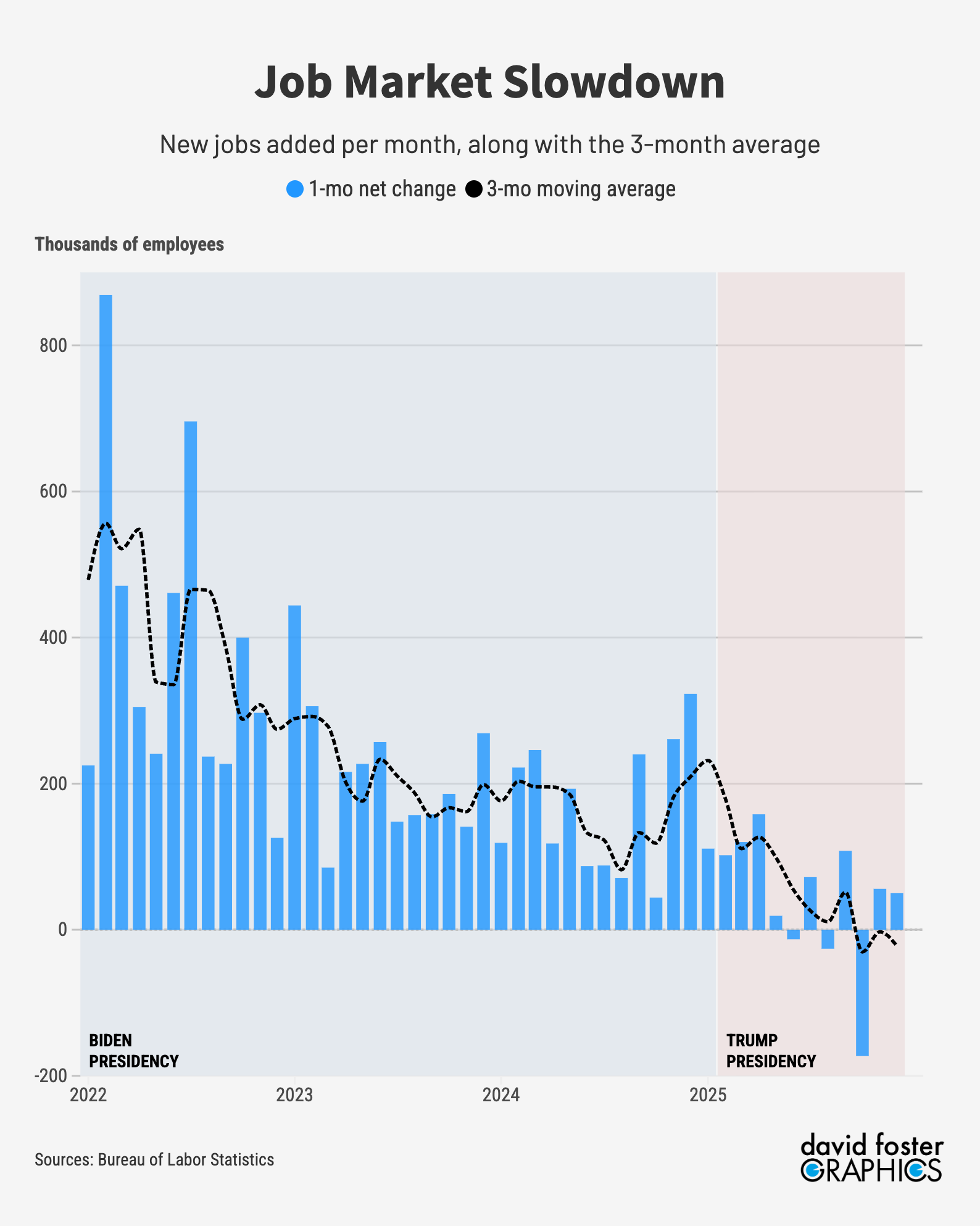
The stock market doesn’t care. The S&P 500 index rose 1.6% for the week, even though that drop in the unemployment rate lowered expectations of a Federal Reserve rate cut this month. Investors now feel pretty sure the Fed won’t cut rates in January. In fact, there might not be another cut under current chair Jerome Powell, whose term expires in May.
Mortgage help. To help lower mortgage rates, Trump instructed the federal housing agencies Fannie Mae and Freddie Mac to buy $200 billion worth of mortgage-backed securities on the open market. The Federal Reserve sets short-term rates, which mostly affects banks. Markets set long-term rates such as those on mortgages and most other consumers and business loans. But the government can put a thumb on the scale by buying large amounts of bonds. The increased demand basically lowers the prevailing rate that bond issuers need to pay to borrow.
The Fed has pulled this trick several times as an urgent stimulus measure, starting with the Great Recession in 2009. During Covid, the Fed’s holdings of mortgage-backed securities doubled, increasing by about $1.4 trillion. That lowered the average mortgage rate by nearly one percentage point. But the Fed has nearly unlimited purchasing power, while Fannie and Freddie don’t. So that $200 billion may lower rates by only one- or two-tenths of a point. Plus, cheaper financing tends to push home prices up, and housing affordability is already terrible.
Trump is rolling out a variety of plans to make housing cheaper, but so far he hasn’t addressed the biggest challenge, which is building more housing, to increase supply. Trump obviously wants to appease voters heading into the November midterm elections. But if voters don’t see actual results, it could work against him and his fellow Republicans.
[The real way to make housing cheaper]
Eat your beef tallow. The federal food guidelines are now basically one guy’s opinion of what you should eat. And maybe some people in the beef, booze and dairy industries.
The new nutrition guidelines unveiled January 7 by Health Secretary Robert F. Kennedy, Jr. are an easier read than the prior version: 10 pages, down from 164. Have a look. We’re supposed to eat more whole foods and less ultraprocessed stuff. No surprise there. Whole milk is in, low-fat milk is out. There’s an unusual insistence that we increase protein consumption by 50% to 100%—including more red meat—even though most Americans get enough protein. Beef tallow gets a shout-out, as an acceptable cooking fat. Alcohol is less bad than it used to be.
Two Harvard experts who approve of some of the changes seem worried that the guidelines will lead people to eat more saturated fat. They also point out that there’s no public methodology or source material on where the guidelines came from, as there has been in the past. That suggests food industry lobbyists may have had some influence. Or, it could just be RFK Jr. projecting his personal dietetic preferences onto the rest of the country.
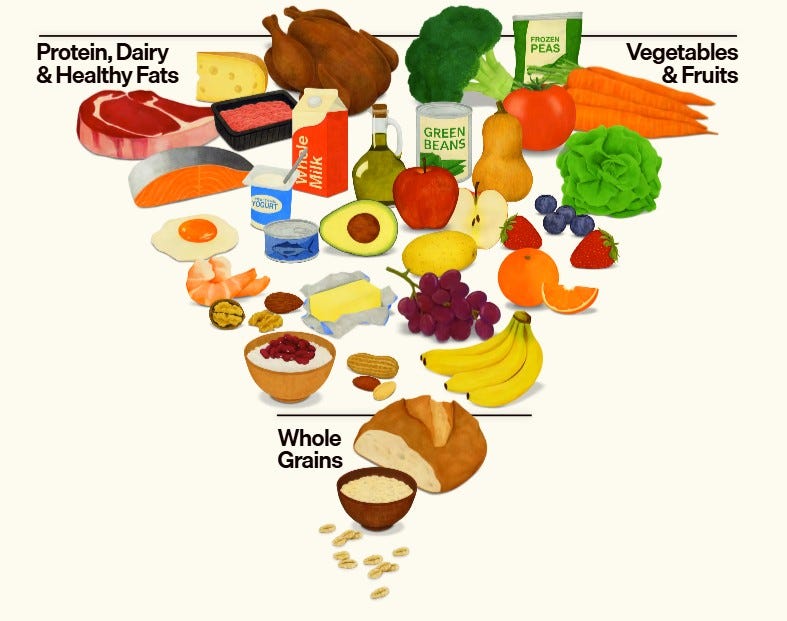
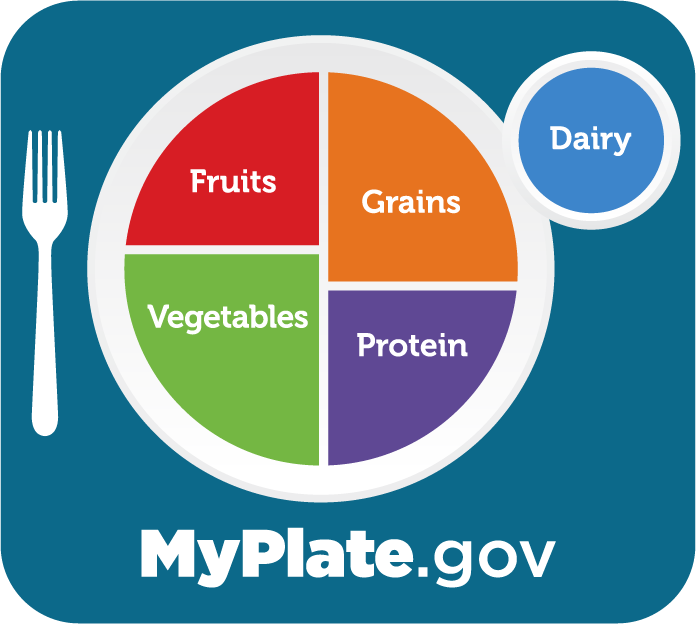
At any rate, you’ll be delighted to know the food pyramid is back. The government retired that in 2011 and replaced it with “MyPlate,” which users could customize on a web site. RFK brought back an inverted food pyramid, with steak, chicken, broccoli and cheese at the top. Whole grains get banished to the bottom. But it’s a Rorschach test and some people’s eyes might start at the bottom, where the whole grains are, the way you’d see the first ball in a billiards triangle. It kinda makes you wish Elon Musk’s DOGE commission had gotten rid of federal food guidelines instead of the Agency for International Development.
If you’re still enthralled, here’s the new food pyramid followed by the food plate it’s replacing.
~ ~ ~ ~ ~ ~ ~ ~ ~ ~
WHAT WILL MATTER NEXT WEEK
Earnings watch. Fourth-quarter earnings reports will kick off January 13, and markets are a little twitchier than usual about what they’ll signal. Stocks valuations are extremely high, which means any disappointing news could have an outsized bearish impact. Banks come first, with earnings due next week from JPMorgan Chase, Bank of America, Citigroup, Wells Fargo, Goldman Sachs, Morgan Stanley and others.
Inflation update. The inflation report for December is due January 13. The last report showed inflation cooling from 3% to 2.7%, but that data might have been messy because of the six-week government shutdown last fall. So the inflation report for December will show if inflation is really trending down, or ticking back up as the Trump tariffs raise costs.
Tariff ruling? The Supreme Court didn’t rule on Trump’s emergency tariffs on January 9, as some analysts expected. The next chance at a tariff decision is Friday, January 16. Odds are the court will invalidate more than half the tariffs Trump has imposed since last January, forcing a reboot of Trump’s trade agenda. Stocks could jump if that happens, but be ready for Trump to quickly announce other types of tariffs.
If this is what the Republican Party has become then i feel sorry for them.I was a Republican until Trump got elected.I even voted for him in his first term.This is no longer a Democracy.Every day Trump and, his cabinet try to strip away our right to the Democracy we had at one time.I am a veteran and i served in Vietnam and, i no a little about sacrifice.If your a Republican and, you feel good about what they are doing i feel sorry for them.
Thank you Robert. Freddie Baumgartmer