


President Trump spent most of 2025 working from a familiar playbook. Tariffs, deportations, federal firings and vengeance campaigns were all carryovers from his first term, even if pursued more aggressively at the beginning of his second.
What Trump is doing in 2026 is different. Snatching Venezuelan President Nicolás Maduro on January 3 was probably the most audacious move Trump has made in either of his presidential terms. There was no public call for any action at all against Maduro. Trump sent an armada to the Caribbean and approved the snatch mission simply because he wanted to. If anybody warned him about wading into a quagmire that could damage his presidency, he dismissed the risk.
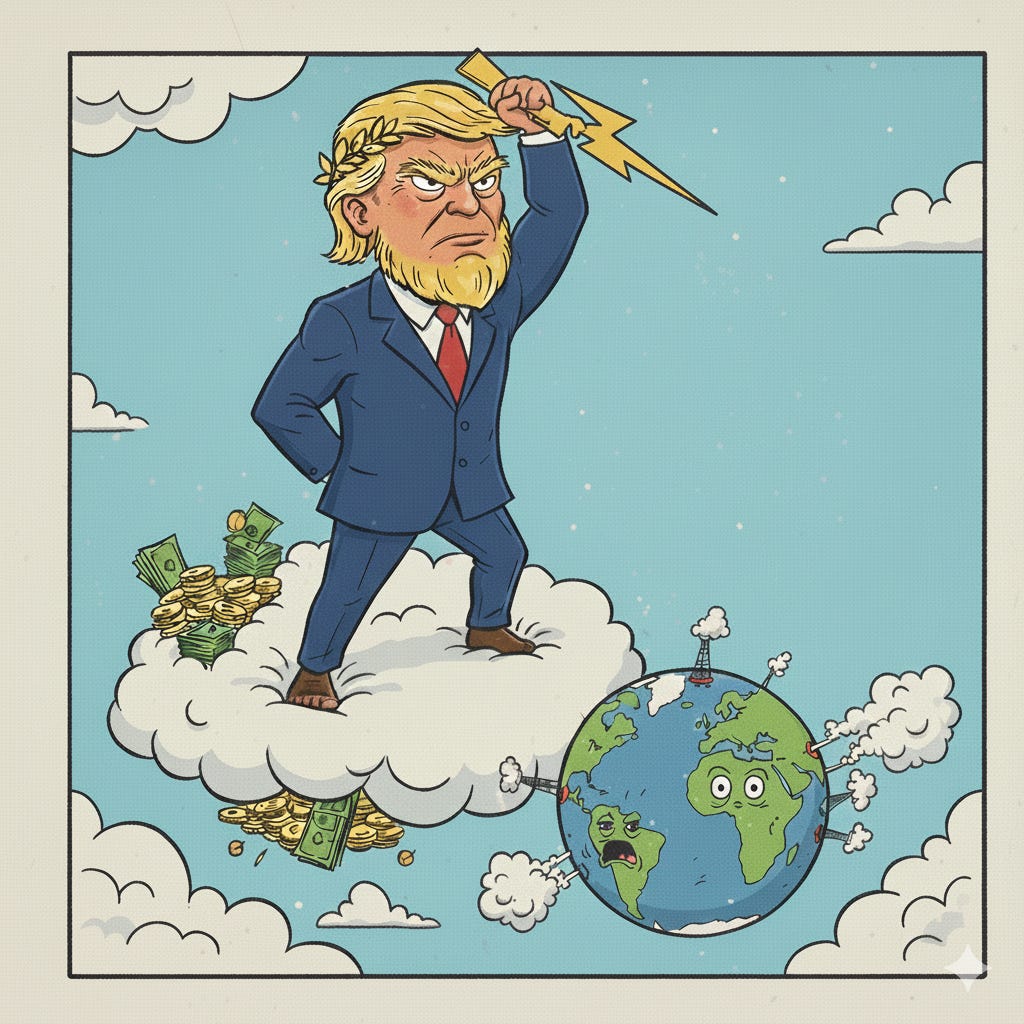
This is a likely template for what Trump will do for the rest of his second term. If it makes sense to him, he’ll do it. Legal barriers, criticism and even mockery won’t change his mind. If his moves end up unpopular, he might not especially care.
“There is a political revolution under Trump,” Eurasia Group president Ian Bremmer said during a January 5 briefing. “The United States today is, by far, the most politically dysfunctional advanced industrial economy in the world. We do not think the political revolution in the United States will succeed. We think it will fail. But we are quite confident it will get worse and more disruptive before it gets better. More things will break.”
[How much do you know about Venezuela? Take the Pinpoint Quiz]
In its outlook for 2026, Eurasia identifies a “US political revolution” as the top global risk for the upcoming year. The research and consulting firm compares America in 2026 to the USSR in the late 1980s: “The country is careening toward something, but nobody knows what.”
Trump telegraphs his priorities, and he probably intended the Maduro raid to show he plans to follow up threats with actions for the rest of his presidency. So everybody should keep in mind some other Trump ideas that once seemed fanciful but are now much more plausible:
Buying or seizing Greenland, even though it’s part of Denmark.
Bombing drug cartels in Mexico or other Latin American countries.
Letting the Cuban economy collapse by blocking badly needed aid from Venezuela.
Ditching NATO.
Backing away from longstanding commitments in Asia and other parts of the world.
The “Donroe Doctrine,” as Trump has begun to call his various plans, might seem arbitrary or random. But there are a few consistent themes:
1. Trump prioritizes physical assets, such as oil or critical minerals. Venezuela has both. Greenland has minerals. Trump initially framed his fixation with Venezuela as an effort to interdict drug traffickers. But he now says Venezuela will starting giving the United States oil, and it’s clear oil his been on of his main interests all along. Future Trump actions are more likely in places with assets he can claim.
2. Trump doesn’t like to share. Denmark is a NATO ally and Trump could be pursuing some kind of resource-sharing deal in Greenland that benefits locals as much as the United States. Maybe that’s what will end up happening. But the lesson of Venezuela is that Trump always wants to be in charge. Even if he’s in charge of a bad situation, which Venezuela could easily become.
[See 10 things that will matter in 2026]
3. Everything is about leverage. Trump’s trade wars flopped in 2025 partly because China and a few other countries had the muscle to stand up to Trump. After Trump imposed sky-high tariffs on Chinese imports, for instance, China retaliated by restricting the export of certain minerals and magnets that are crucial to the US defense sector. Trump had no answer for that, because China is the world’s dominant supplier. That led to a kind of trade truce last November, with Trump’s goal of sharply reducing Chinese imports to the United States unfulfilled. He may now be trying to check China’s advantages on minerals by establishing alternative sources.
If the Trump Revolution relies more on military might, there might be an upside: less economic warfare. Trump’s main tool for coercing other countries in 2025 was tariffs. Those import taxes backfired by raising costs at home and sending financial markets into occasional fits. They’re one of the reasons Trump’s approval rating has been sinking.
With Americans howling about affordability problems and the midterm elections coming up, Trump has been quietly rolling back some of those tariffs. “He’s going to be focusing more on the Donroe Doctrine,” Bremmer said on January 5. “And he’s going to have less of the ability to weaponize tariffs.”
[Can we undo Trumpism someday? Some if it, sure]
There could still be serious economic risks if some of Trump’s bolder maneuvers go off the rails. Trump’s pursuit of a Venezuelan tanker in the North Atlantic reportedly put US and Russian naval forces in dangerous proximity to each other. The US military is extremely capable, but excessive military adventurism raises the odds of deadly accidents or mistakes.
Russia, China or other acquisitive nations could interpret the Donroe Doctrine, rightly or wrongly, as a signal that the United States won’t interfere if they practice mischief in their own parts of the world. If China invaded Taiwan and the United States sat idly by, as one example, it would instantly upend the global tech sector and tank financial markets.
Maybe the worst won’t happen in 2026. But it won’t be a quiet year.
Trump mask's every thing in what we get. I do this an we get that.You start to think he is just trading tit for tat.What he does not seem to realize is we are losing our position in the world as a country that cares for other people.At the rate of belligerence he is showing we want have a ally on the planet before his term ends.