


Key takeaways: 😉
Trump will be rolling out a slew of affordability plans as the 2026 midterm elections approach.
He says he’s intent on lowering the cost of energy, housing, credit and health care.
But many of his plans are gimmicky and not likely to accomplish much.
We grade six of Trump’s affordability plans, with grades ranging from B to F.
Some of Trump’s policies—especially tariffs—make affordability worse, not better
~ ~ ~ ~ ~ ~ ~ ~ ~ ~
While campaigning in 2024, President Trump said he would lower costs immediately once he took office, to help repair family budgets wrecked by three years of high inflation.
What he did instead was promptly start imposing tariffs, which are import taxes that raise costs on business and consumers instead of lowering them. Not surprisingly, voters are still angry about high costs. So Trump is rolling out a slew of affordability plans in the months leading up to this year’s midterm elections to convince voters he really does care about affordability.
This will be an ongoing feature that grades Trump’s various proposals based on how plausible they are, whether they might work and whether Trump seems serious about following through. Anybody who thinks these grades are too harsh or generous should offer their own in the comments below.
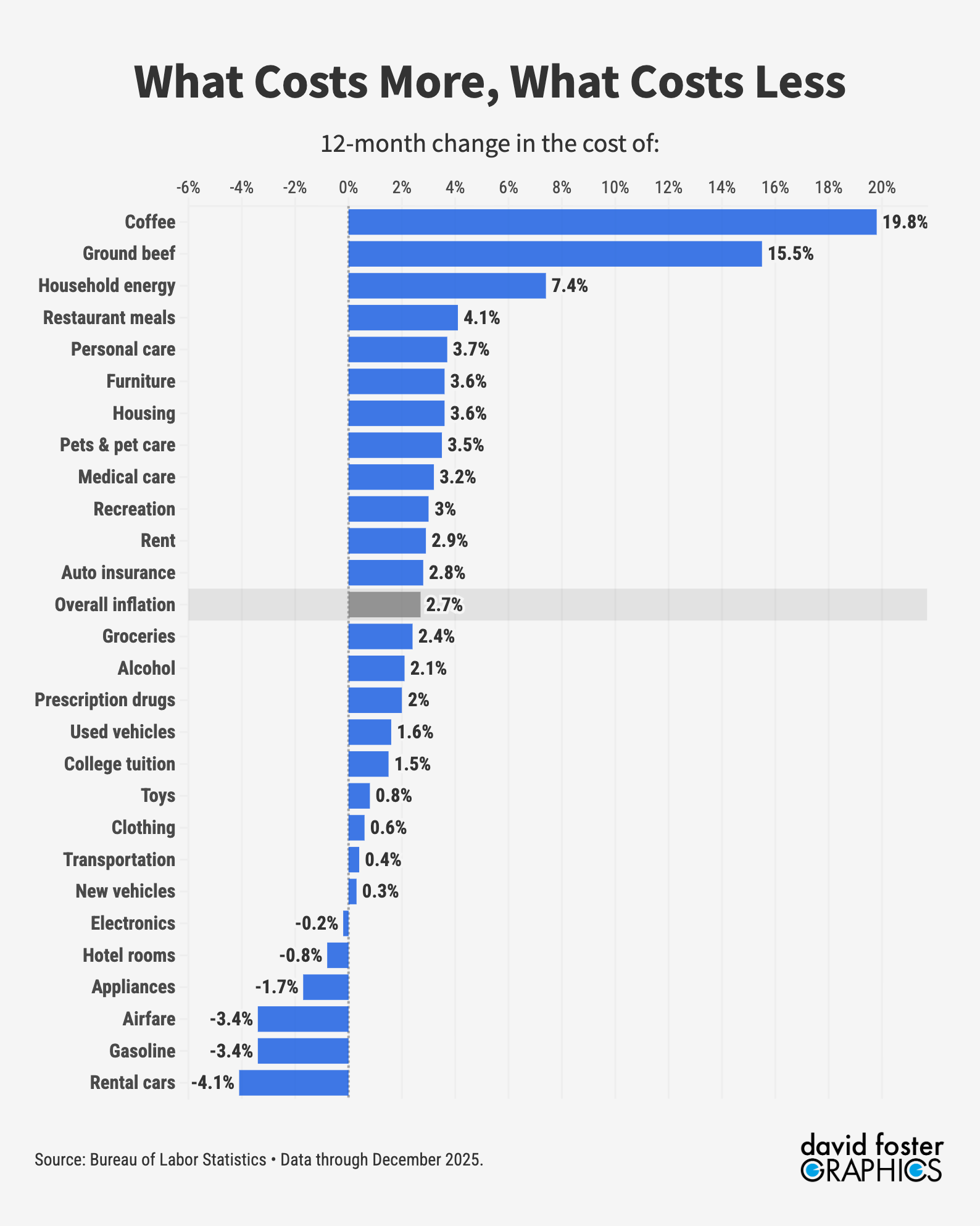
Lowering gasoline costs. Grade: B. This is likely to happen. Most forecasts call for oil prices to stay where they are or fall slightly, which will have the same effect on gasoline prices, now averaging a comfortable $2.84 per gallon. This is mostly due to a global oil glut, not anything Trump has done. But Trump’s oil-friendly and deregulatory policies don’t hurt. If he does acquire any oil from Venezuela, it will be a small amount relative to the size of the US market. But by November, Trump will probably be able to claim gasoline prices fell during his first two years
Lowering other energy costs. Grade: B-. Trump seems aware of the rising demand for electricity, and corresponding rise in prices. He’s making some effort to make big power users, such as data-center operators, pay more for power. And his deregulatory agenda might help speed projects needed to bring more power to the grid.
On the other hand, Trump’s efforts to throttle green energy are counterproductive. Most wind and solar projects would add incremental power to the grid rather than displacing fossil fuels. That would help lower costs in many areas. Most nonpartisan energy experts support an “all of the above” approach to keeping costs low by optimizing the best mix of fossil fuels and renewables. Trump is all fossils.
[More: You’re only better off under Trump if you own stocks.]
Housing affordability. Grade: C. Trump’s efforts here include several gimmicky ideas that could help a little bit but don’t address the main problem, which is that there’s simply not enough housing in America. Trump, for instance, wants to block institutional investors from buying single-family homes and lower mortgage rates through big government purchase of bonds from the public market. Both moves could have a minor effect. His idea for a 50-year mortgage rate seems dead. Another plan would let buyers drain their 401(k) or 529 savings plans to finance a down payment, which is basically just trading one kind of wealth for another.
Trump needs to try harder, perhaps by coming up with new federal incentives for municipalities to loosen zoning and land-use rules that often block new construction. He could also cancel tariffs on lumber and building materials, which directly raise the cost of construction. Oh yeah, deporting undocumented workers also leaves fewer roofers and other laborers to build houses, driving up costs. Maybe give it a rest?
Lowering health care costs. Grade: D. Trump unveiled the “Great Healthcare Plan” on January 15, calling it a comprehensive plan to lower drug prices and insurance premiums. Sorry, but even if these were the world’s best ideas, they would take years to make a difference given how complex the US healthcare system is. Plus, this plan includes no effort to actually lower the cost of providing care. It mostly just bashes insurance companies for having fat overhead and profiting at the expense of patients.
There’s some of that, for sure. But lowering costs for real would involve a ton of reforms that entrenched lobbying groups in Washington would fight to the death, such as limiting legal liability, rationing end-of-life care, and setting prices caps on routine tests such as MRIs. (If you want a deep dive on how to lower health care costs, check out this Atlantic interview with MIT health economist Jonathan Gruber.) That sort of stuff isn’t in Trump’s plan.
[More: Voters hate both political parties more than ever]
Plus, Trump wants to do everything through executive order, which is a lazy approach that guarantees years of legal challenges likely to grind the whole thing into dust. If Republicans passed serious reforms through legislation, it might make a difference. But the only serious health care change they’ve passed recently were cuts to Medicaid, the health program for the poor, in last summer’s tax bill. And the Republicans who control Congress let subsidies for insurance coverage affecting more than 20 million Americans expire at the end of 2025.
Lowering interest rates. Grade: D-. Threatening to prosecute Fed Chair Jerome Powell on bogus charges is dumber than dumb. If markets think the Fed loses its independence and comes under White House control, risk perceptions will skyrocket and long-term rates will rise, no matter what the Fed does on the short-term rates it controls. Trump’s other idea here is to cap credit-card interest rates, which average around 23%, at 10%. That would help some people financing credit card debt, but banks would respond by slashing credit and finding other ways to price in the odds of default by riskier borrowers. The unintended consequences aren’t worth it.
[More: Job growth cratered in 2025]
Auto affordability. Grade: F. That’s because Trump has no plan, at a time when the average price of a new car is more than $50,000 and auto affordability is well below historical averages. Trump’s tariffs are actually hitting the auto industry especially hard, keeping prices elevated when they might otherwise be coming down. His hostility toward electric vehicles and cheap imports means Americans can’t even buy economical vehicles available elsewhere.
Trump’s de facto auto-affordability plan is to nurse your old clunker for as long as you can. Something better, please.
In terms of healthcare, factor in Private Equity buying up hospitals and reducing care and staff. It’s already bad. Gonna get worse.
Trump is doing what he was elected to do and, that is to make the rich get richer. If your not buying stock's or playing the bitcoin market you want be making any money but, as you can tell on T.V. now all the commercials are there for the billionaires an millionaires to watch so they can make up their mind on Vance for four more years of kicking the middle class in the teeth.