


President Trump’s popularity is hitting new lows. In YouGov polling, Trump’s approval rating is 34%, while his disapproval rating is 62%. That’s worse than Joe Biden’s approval rating ever got, and tied with the low point of Trump’s first term, which was in January 2021, after the January 6 riots at the US Capitol.
The very unpopular Iran war is one reason Trump’s ratings stink. But even before the war, the US economy was underperforming in ways that matter to millions of Americans.
Our Better-Off Index tracks four aspects of the economy, comparing current conditions with levels of one year ago. Including all four metrics—job and income growth, home affordability, and stock values—the Better-Off Index sits at 105.6 in July. That means a 5.6% improvement during the last 12 months. (Here’s our methodology.)
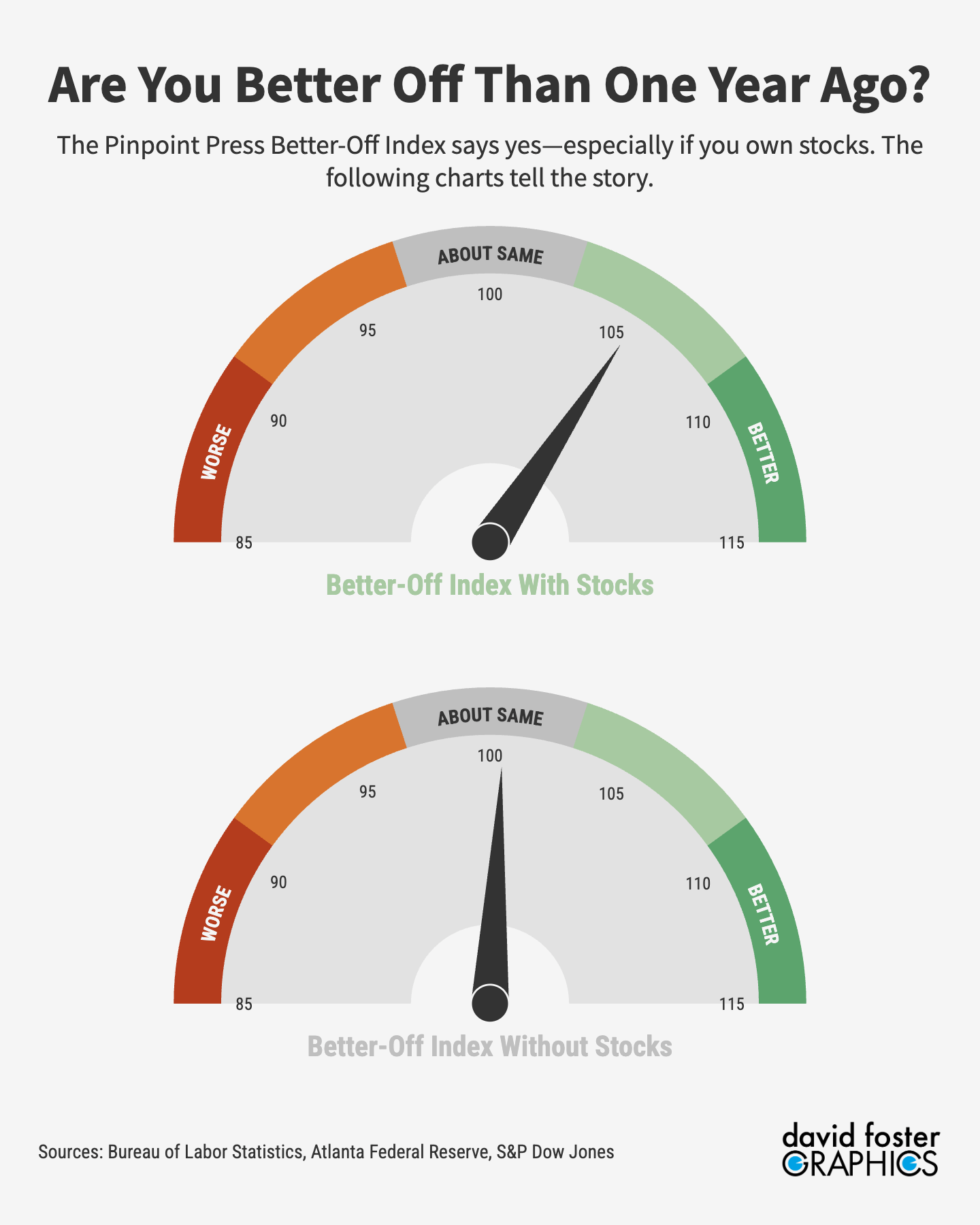
But stripping out stocks leaves the Better-Off Index at just 100.47. That means there’s been almost no improvement in job growth, income growth or home affordability. Those matter more than stock values to working-class Americans who earn most of their income from a job, rather than from investments.
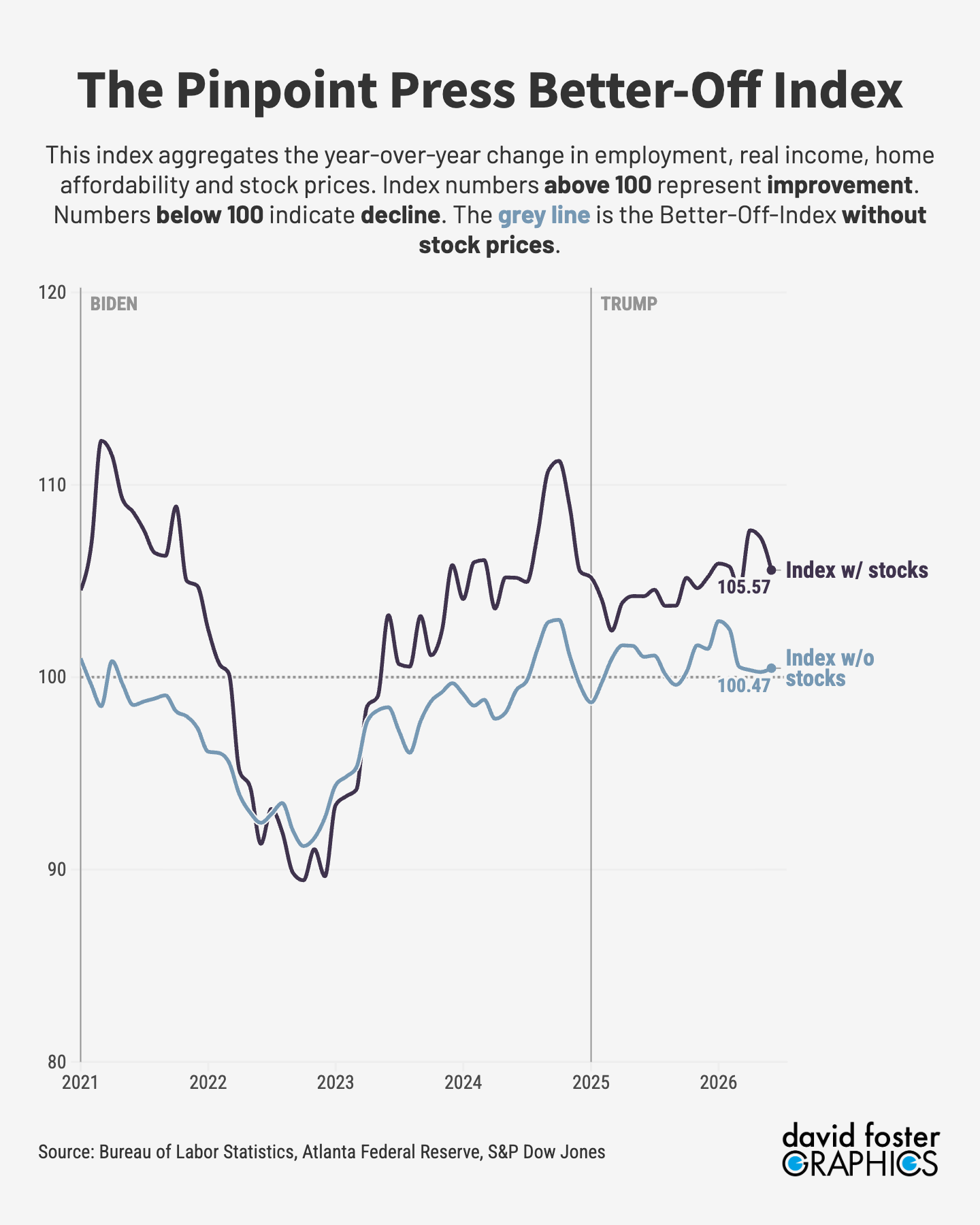
This pattern has been in place for most of Trump’s second term, and it illustrates the so-called K-shaped economy. People lucky enough to own stocks, a home, and other assets are generally on the upper slant of the K, and doing very well. Their spending is keeping the economy afloat.
[See the Democratic Socialists’ awful branding problem]
People who don’t benefit from the ownership economy are generally on the lower slant of the K. Those are the folks driving confidence surveys down to recessionary levels—and taking their ire out on Trump.
Looking at each of the four metrics isolates where the problems are. Total employment has risen just 0.3% during the last year. The unemployment rate is fairly low, at 4.2%, but Trump’s tariffs, the Iran war, and the artificial-intelligence buildout have made businesses cautious about hiring.
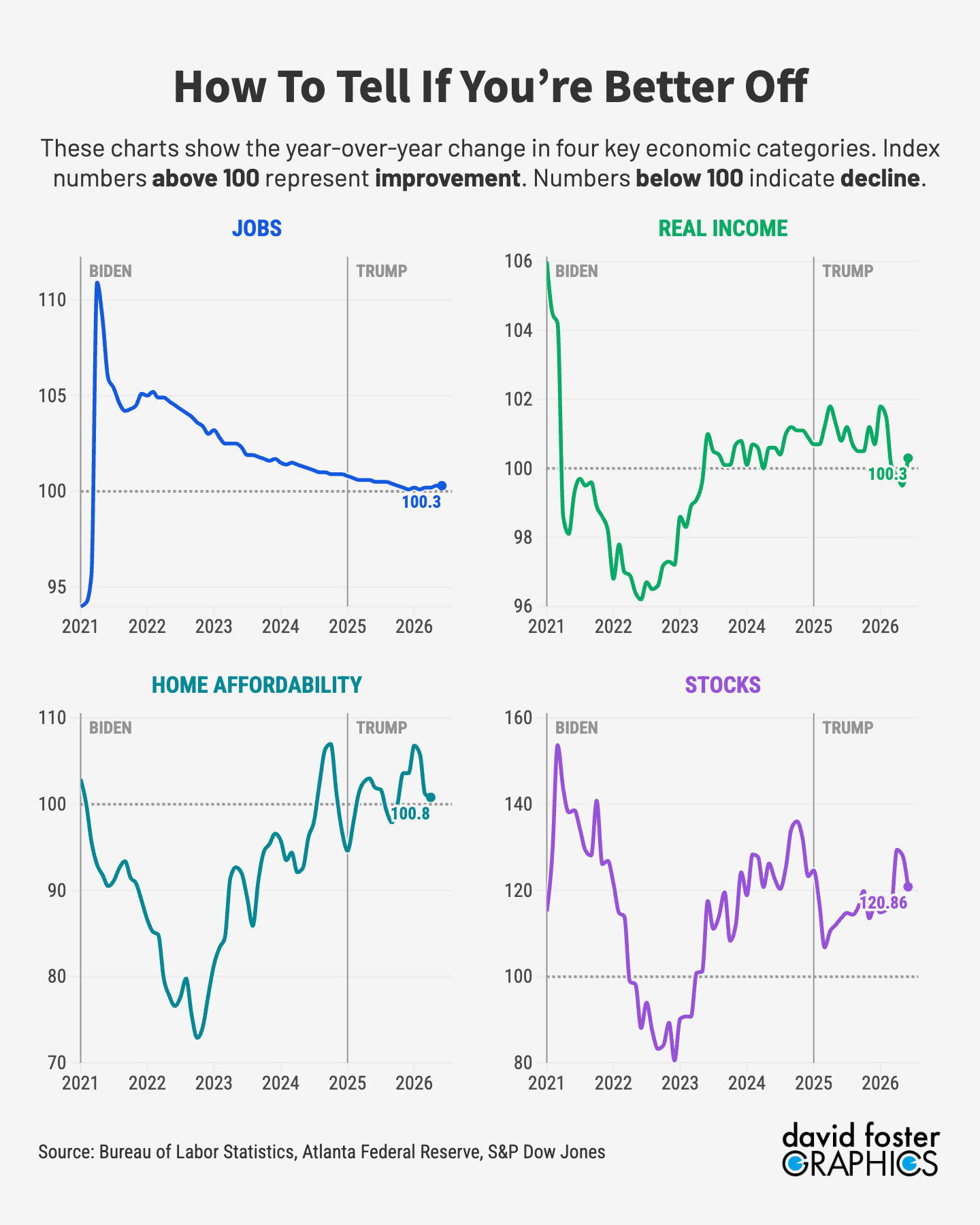
The biggest problem is real income, adjusted for inflation. When Trump took office in January 2025, workers were regaining ground lost to inflation during the Biden years. But the energy crisis spurred by the Iran war erased that progress.
[Check out The Weekly Matterboard: Missing Mitch Edition]
Real income growth turned negative in April, which means inflation was rising by more than incomes. Inflation has dropped back a bit, but during the last year, real incomes have inched up by just 0.3%, with the median family barely keeping up with inflation.
Home affordability has also worsened during the last few months. In February, before Trump launched the Iran war, mortgage rates were around 6%. They’ve since risen to about 6.6%, because an inflation surge usually pushes long-term rates higher. That raises a monthly mortgage payment by about $125 per month, or $1,500 per year.
The stock market, represented by the S&P 500 index, is up 21% during the last year, from the end of June 2026 through June 2026. Stocks have been on a tear since the end of 2023, driven mainly by the artificial-intelligence buildout.
[Why most Americans are missing out on an epic stock market rally]
Around 60% of Americans own stocks, so the rally has benefitted a lot of people. But most Americans hold stocks in retirement accounts that don’t help with real-time bills. And a record number of Americans are tapping retirement accounts to help cover everyday expenses, according to investing giant Vanguard.
When Trump ran for a second term in 2024, he promised lower prices and a booming economy. He hasn’t delivered either. Voters, as a result, seem even more disappointed with Trump than they were with Biden.
I think the real problem with Biden was everybody new his health had become an issue an a lot of people felt like he was being pampered by his party and, in the process everybody just gave up on the Democrat's . If you lie and,you get caught it then it is impossible to cover it up. The Dem's are going to have to come off with a better and younger politician to win.
I've been praying to Mother Gravity to come for Trump at some point soon (electorally speaking). This Nov looks like her best shot!