


If your surname were Hitler, you might change it. Why go through life stigmatized?
If you espouse socialism, you might have a similar branding problem, even if you don’t realize it. Socialism connotes failure and misery. There has never been a socialist nation that succeeded for very long. The most authentic example of socialism in the world today is Cuba, where there are dire shortages of everything. The biggest experiment with socialism in modern times was the USSR—the Union of Soviet Socialist Republics—which spectacularly collapsed in 1991.
Yet the hottest political movement in the United States right now is the rise of Democratic Socialists, a subset of the Democratic Party that’s winning a surprising number of elections—and drawing intense criticism from their Republican opponents.
Bernie Sanders, the OG Democratic Socialist, is the second-most popular politician in the nation, after (non-socialist) Barack Obama. Sanders acolyte Alexandria Ocasio-Cortez, the Congresswoman from New York, is the fifth most popular and a possible 2028 presidential candidate.
[The double-haters’ guide to the midterm elections]
New York City Mayor Zohran Mamdani proved last year that Democratic Socialists can win elections in certain left-leaning enclaves. Another 35 Democratic Socialists have won primary elections in this year’s Congressional races, and some of them are sure to make it to Congress. There could end up being more far-left Democrats in Congress next year than at any time in decades.
For Republicans, this is a rallying cry—and a possible bonanza. President Trump refers to liberal Democrats as “communists” and “Marxists,” with mainstream Democrats worrying these labels will stick. The risk is that centrists and Independents—swing voters—will get turned off by a relatively small number of strident leftists and vote Republican in this year’s midterm elections, or just stay home instead of voting Democratic.
Those mainstream Democrats are right to worry, because socialism is generally unpopular. In Gallup polling, 57% of respondents have a negative view of socialism, while only 39% have a positive view. The portion with a positive view of capitalism has slipped from 61% in 2010 to 54% in the latest numbers. But capitalism still outperforms socialism by 15 points.
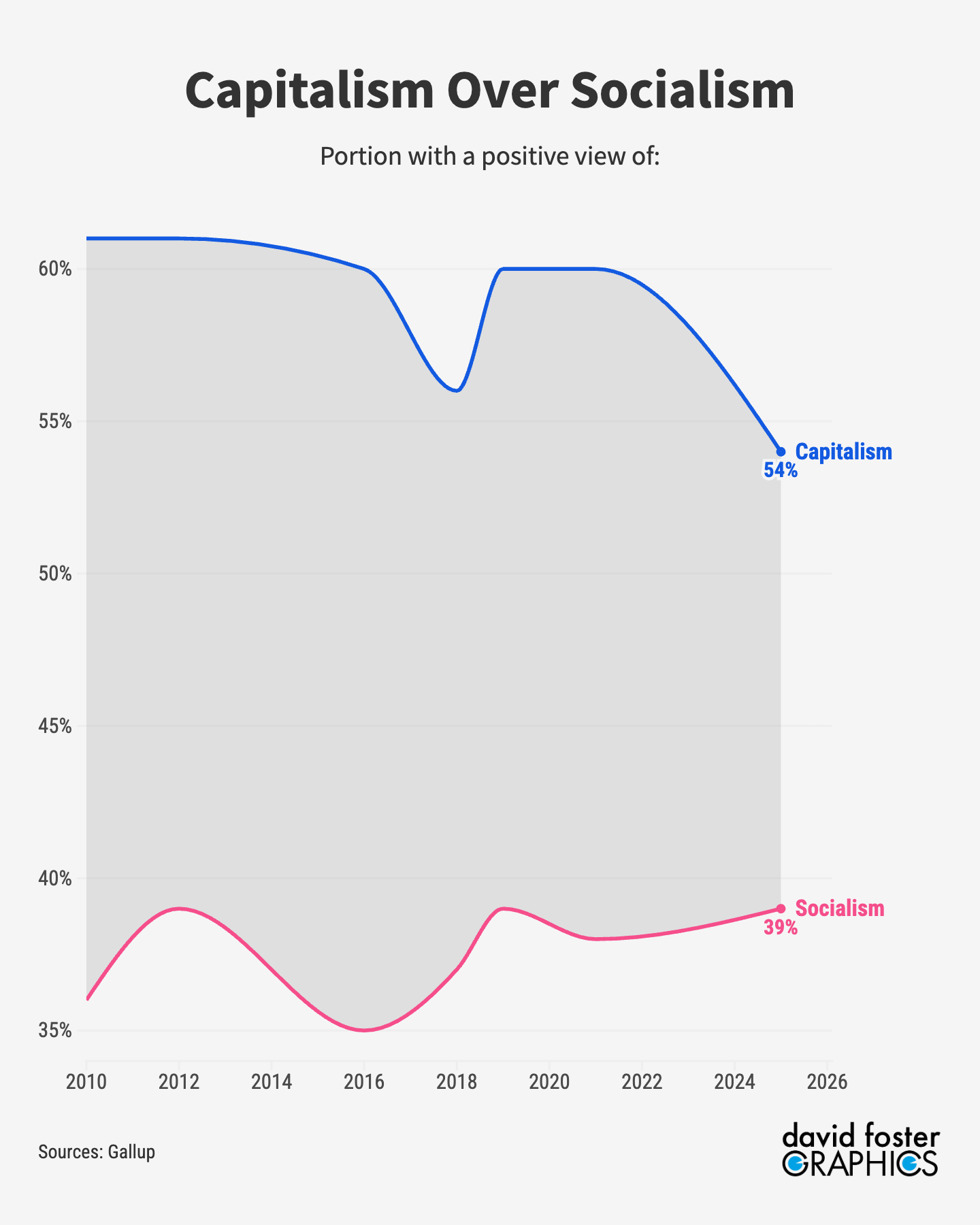
“Socialism” means different things to different people, and there’s probably an age gap between those who remember the fall of the Soviet Union and those who don’t. The formal definition of socialism is government control over business and industry, with few ownership rights. But survey data shows that many Americans simply think of “socialism” as a catch-all word for better economic equality and higher living standards.
[Check out The Weekly Matterboard, where we rank the news that’s worth your time. ]
Fueling the socialist upsurge is the Democratic Socialists of America, or DSA, the political movement that springboards many of the most leftist Democrats into office. The DSA espouses utopian Marxism of a sort that has never existed anywhere. It wants to abolish the police and the prison system and defund the Defense Dept. The DSA would get rid of the presidency and the Supreme Court, as if there’s no gigantic constitutional barrier. The government would own all big corporations and guarantee everybody a job.
Economically, these are dreadful ideas that would make the whole country much worse off. One polling firm asked how Americans feel about five top DSA priorities, and support ran from 26% to 33%. That’s around the portion of Americans who support President Trump’s open-ended war with Iran.
There are many problems in the American capitalist system, but fixing them should start with what works best in American capitalism. And the standout feature of American capitalism is spectacular wealth creation.
Capitalism is the best system ever devised to create wealth. Among the world’s advanced economies, the United States may be the least socialist, with relatively low taxes that generate an extremely powerful profit motive. Here’s how we stack up with other major economies, in terms of wealth.
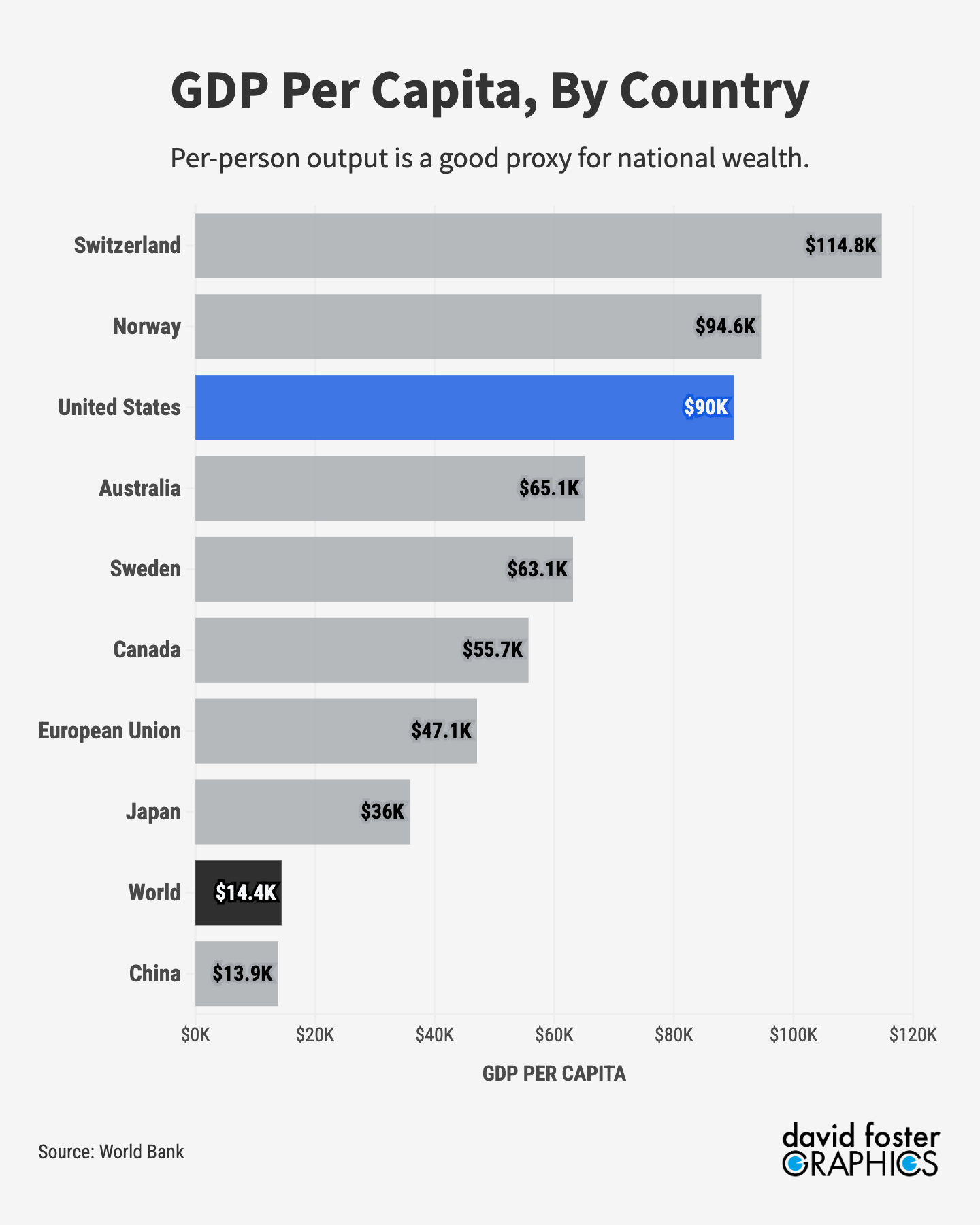
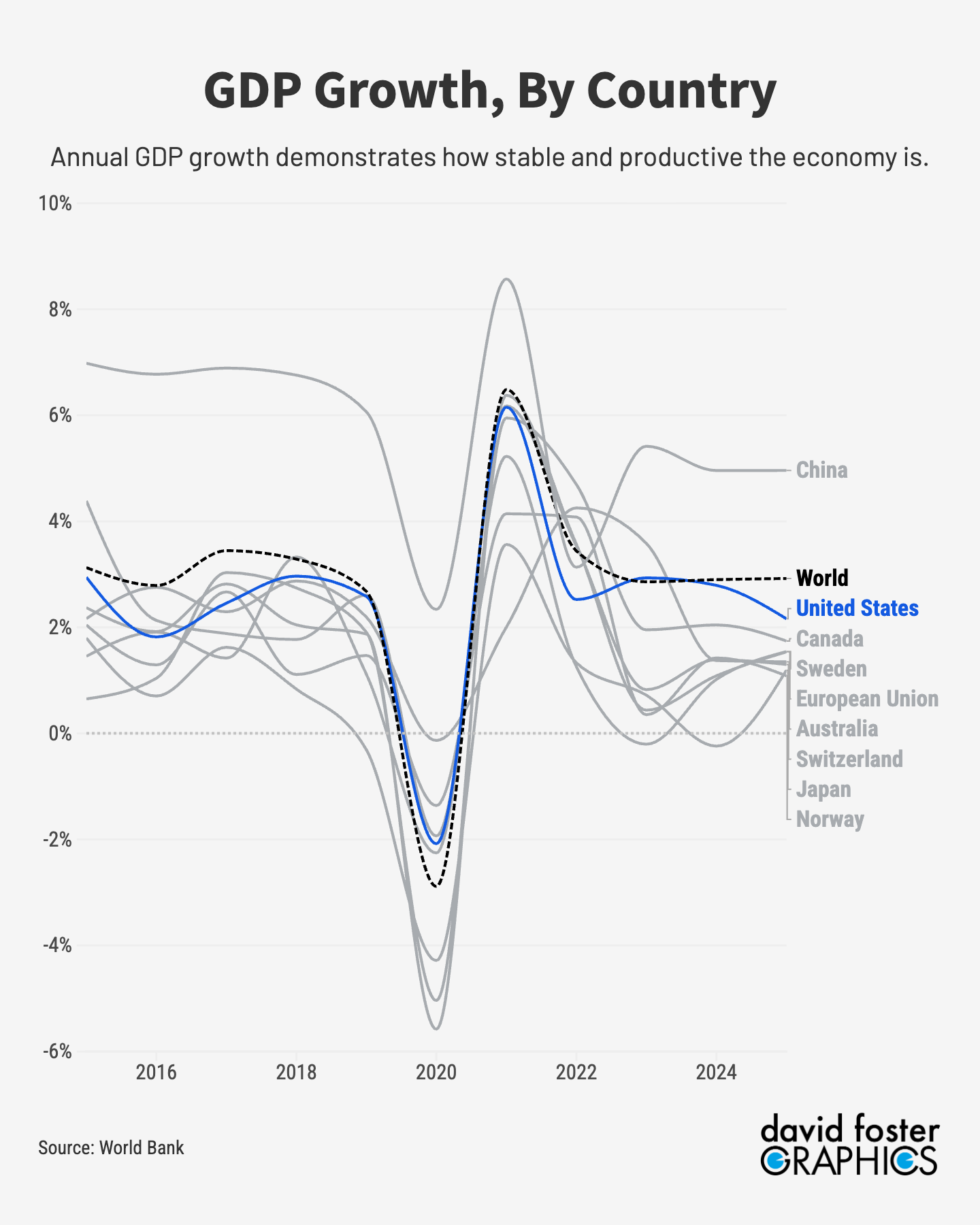
Most of Europe is more socialized than the United States. The basic system is capitalist, but there are generous social benefits funded by higher taxes. Except for rich countries that are small and fairly homogenous, such as Norway and Switzerland, Europe’s wealth and output significantly undershoots that of the United States.
[It’s a “big yawn” to Trump, but the new housing law could help millions]
China’s government is communist—but its economy is a market-based system known as state-sponsored capitalism. China’s leaders figured out 30 or 40 years ago that capitalism was the pathway to wealth and power. They were right, and that’s why China is now America’s most significant rival.
The way to fix capitalism isn’t to adopt socialism, which creates very little wealth and leaves everybody poorer, in the aggregate. The way to fix capitalism is just to manage capitalism better.
That’s what Norway and other Scandinavian nations that always lead quality-of-life rankings do. Those are not socialist countries. They’re capitalist countries with strong private ownership rights, plus high taxes that fund numerous social benefits. There’s also general agreement in those countries that high taxes and generous benefits are the way to go—a consensus that doesn’t exist in the United States.
[Most Americans are missing out on an epic stock-market rally]
Americans would be a lot more satisfied with capitalism if a few things were different. One is that the United States should have universal health care, where everybody can get coverage. It doesn’t need to be run by the government, but the government should run backstop programs for everybody who can’t get coverage any other way. The Affordable Care Act brought us closer, but lingering opposition in some corners still leaves 10% of the population without coverage and others with coverage they can barely afford. This is a ridiculous failure and also an economic liability for the whole country.
Wealth inequality in the United States has gotten out of control, with too few Americans benefiting from the vast accumulation of financial assets during the last 30 years. Basic wages have not kept up with the rising cost of child care, college, housing, and even food. The $40 trillion national debt is prima facie evidence that taxes have been too low for 25 years, with the wealthiest benefiting the most. Capitalism simply doesn’t benefit enough people.
It doesn’t take socialism to fix these problems. Socialism would leave less wealth to distribute and in general make everything worse. The solutions are right there in front of us, in the way Scandinavian nations operate and even in our own past, when labor unions were stronger, taxes on businesses and the wealthy were higher, and more Americans participated in the nation’s economic success.
One of Bernie Sanders’ hallmark proposals is “Medicare for All.” How about “Capitalism for All?” This would be a system with policies and benefits meant to give every American the best-possible skill set, from birth, so that more people find more opportunities to create even more wealth, and keep it for themselves and their families. Fine, raise taxes on the wealthy. They’ll be okay. But get the highest possible return on that money with the bottom-line principle of teaching every American how to learn, innovate, spot opportunity, and prosper.
Unattainable? Maybe. But the DSA vision of utopia is one in which some unidentified entity creates a massive amount of wealth that the government doles out as it wishes. In real socialism, there is precious wealth to dole out, unless it’s stolen. Capitalism, by contrast, produces wealth in abundance, leaving only the problem of how to divide it. That’s the better problem.
Enjoy a cartoon.
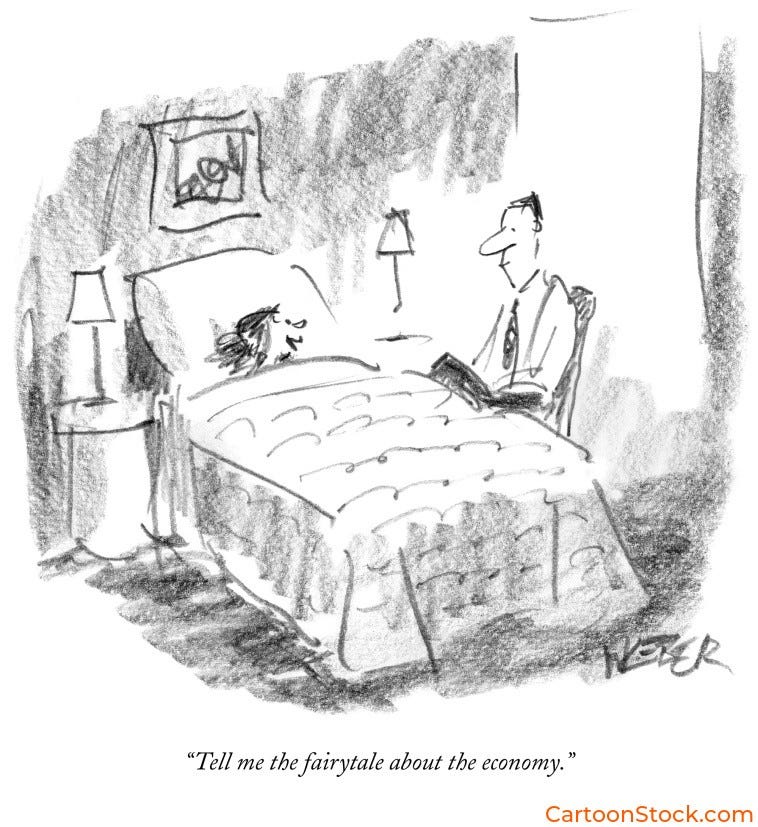
You can order this cartoon👆 and play cartoon-themed puzzles and word games at CartoonStock.com.
Excellent post, Rick! Kudos.
There's so much fighting going on over semantics (with Trump as usual inflaming things further with his 'Marxist" and "communist" epithets) --- what has been missing is a plain description of the options and our current problems like the one you laid and the simple prescriptions you laid out for solutions.
Once again, great job!
Great reporting and, A+ on the report.Rich folk do not want to share. That is why this article is the truth but,the truth does not ring well . Sharing in the wealth make's rich folk think they have less and they just can not have that.Some if not most never think they have enough.Rich folk.