


You might be tuning it out by now, but the Iran war is not over and President Trump is struggling to get oil shipments through the Strait of Hormuz back to normal.
The sniping is taking on the characteristics of a weekend affair, with US and Iranian forces shooting at each other for a couple of days, then wrapping everything up before US markets open on Monday morning. Trump clearly doesn’t want any more energy shocks rocking his presidency. But Iran is still fighting to control the vital shipping lane out of the Persian Gulf, and not yielding much. This could go on indefinitely, with unhappy implications for oil and energy prices.
The latest dustup illustrates what Iran is trying to accomplish—and why it might work. Before the war, there was one main shipping channel through the middle of the Strait of Hormuz, which is 21 to 24 miles wide. That route is now mined.
So now there are two other routes—one that hugs the Omani coast, to the south, and another that passes close to Iran, to the north. Iran wants all ships to take the Iranian route, so it can charge hefty tolls or otherwise manage traffic as it sees fit. But Trump says that’s unacceptable, since it would violate global shipping norms and give Iran more power over Middle East energy shipments than it’s ever had.
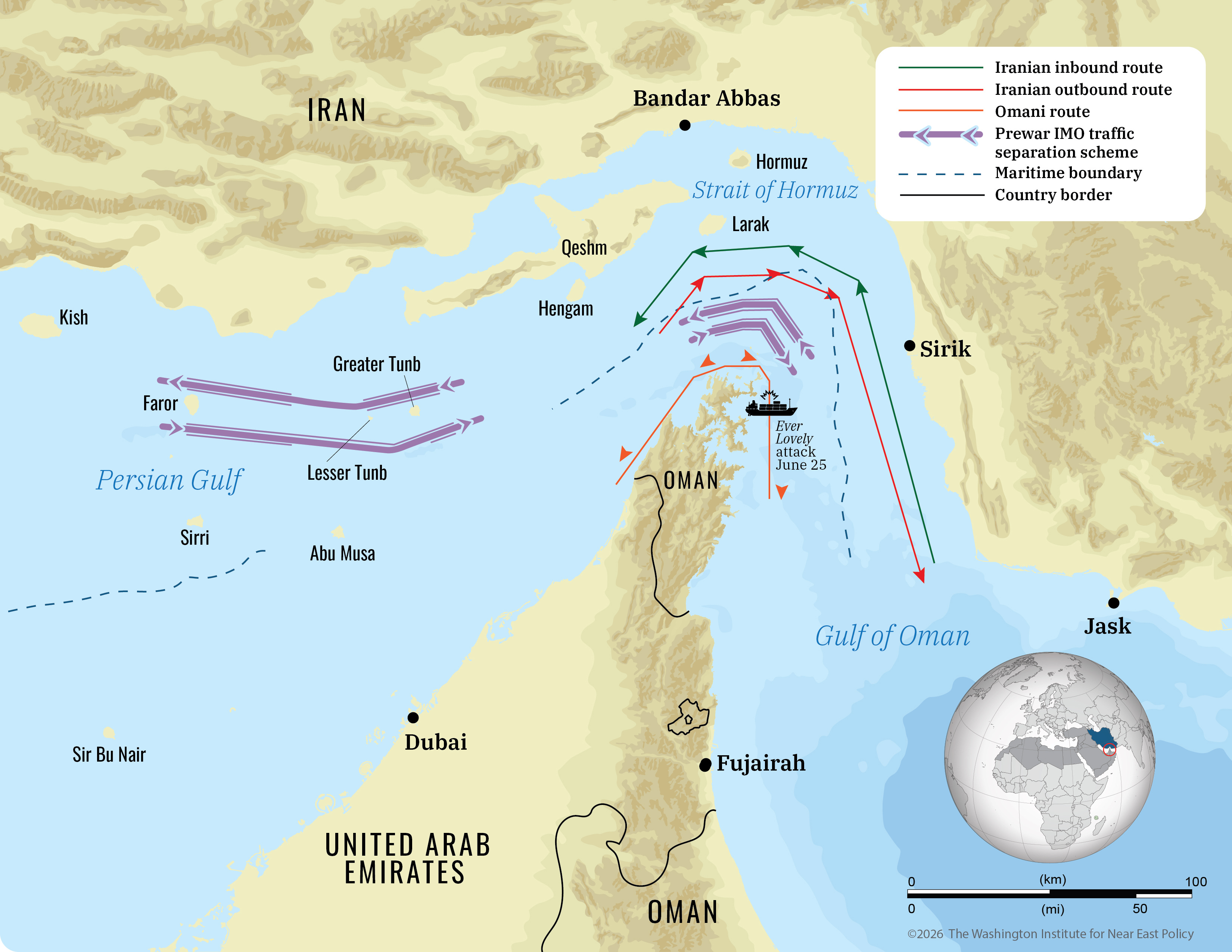
On Thursday, June 25, Iran struck a container ship exiting the Persian Gulf with a drone, because it was taking the wrong route, the southern one near Oman. That was an obvious violation of the US-Iranian ceasefire agreement. So on the evening of Friday, June 26, Washington, DC time—after markets closed for the week—US forces retaliated by attacking Iranian military facilities along its southern coast.
[The Weekly WTF: Algae and Iran conspire against Trump]
Iran responded to that by hitting a Qatari oil tanker with a drone the next day. US forces hit more Iranian targets. Iran launched drones and missiles at US bases in Kuwait and Bahrain. Then on Sunday, June 28, American officials told media outlets that the United States and Iran had decided to stop attacking each other. Stocks rose when the markets opened on June 29, and the big story that morning wasn’t Iran but a flurry of controversial Supreme Court rulings.
Did Iran really agree to no more attacks? Doubtful. Iran continues to warn shippers that the Iranian route through the strait is the only acceptable one, and to threaten attacks against ships that don’t comply. “This aggressive behavior will likely continue,” Noam Raydan of the Washington Institute for Near East Policy wrote in a June 26 analysis. “The United States and its regional partners will need new policies and measures to ensure that Iran is not the only authority dictating rules in the strait.”
[There’s a new kind of inflation to worry about]
A cycle of Iranian attacks, US counterattacks and relative calm by Monday morning could continue for months. Iran knows that Trump’s hope for an easy military victory blew up in his face, and that he’s now eager to move on to something else. Trump himself is very likely the one dictating that episodic US military action always wrap up by Sunday night, lest markets get rattled and oil prices soar again. That means Iran knows it can pop a tanker or two late in the week, absorb a day or two of American strikes, then get a respite before doing it all over again the following week.
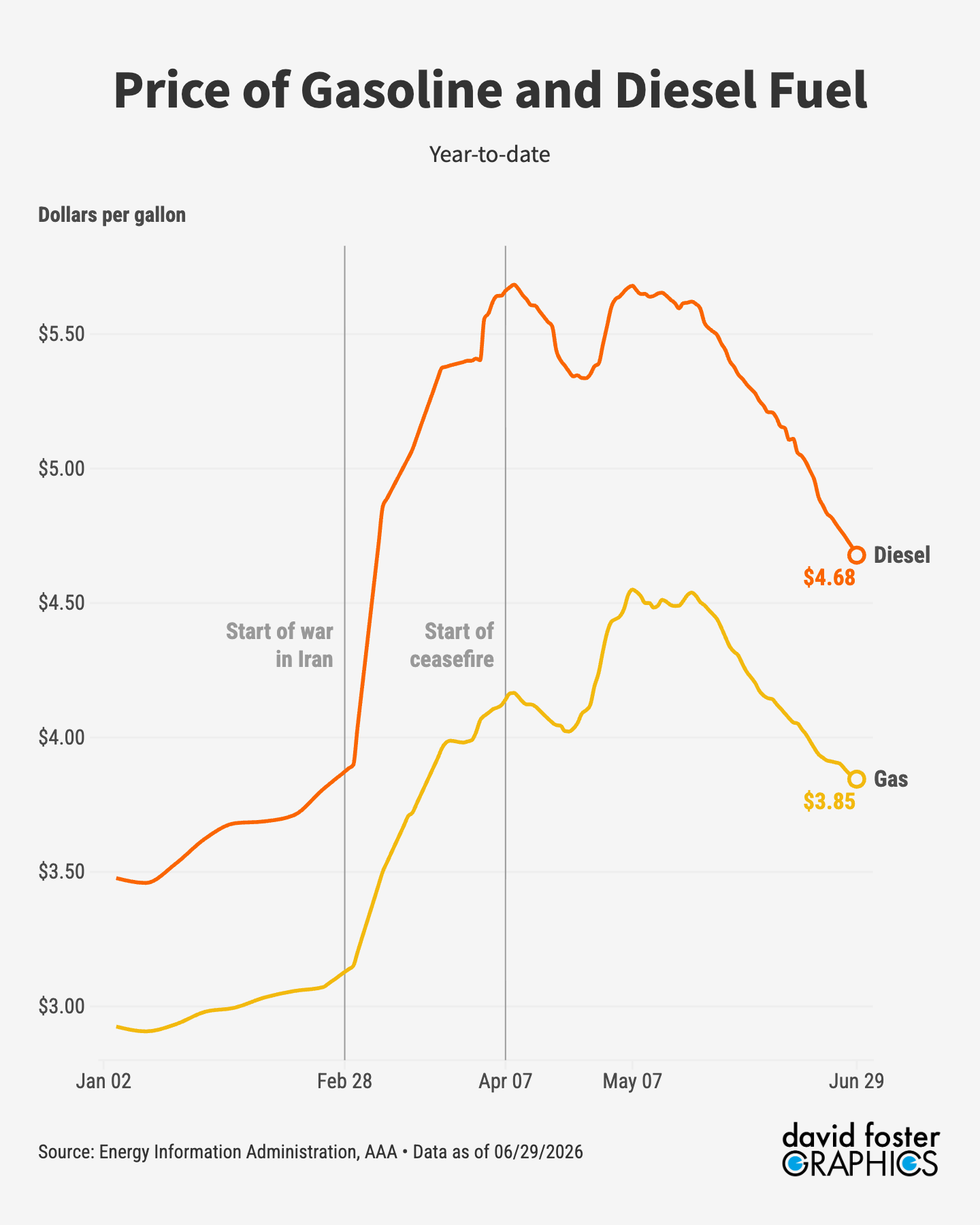
As this porous ceasefire has gone into effect during the last few weeks, oil prices have tumbled by way more than almost anyone expected. At around $73 per barrel, Brent crude prices are almost back to pre-war levels. That’s not because there’s a gusher of oil suddenly flowing out of the Gulf. Tanker traffic through the strait is still a fraction of normal levels.
Traders do think, however, that both sides have incentives to get the oil flowing, and they’re not especially worried about Iran charging tolls. Prices are down because traders think oil markets will be flush with supply sometime soon. If tanker traffic remains snarled and those supplies don’t materialize, physical shortages could push prices back up.
[Are you better off that one year ago? Only if you own stocks]
This might be the way it goes for the foreseeable future, with Iran and the United States shooting at each other periodically on what they think is a proportionate basis. Iranian attacks are meant to show the regime isn’t intimidated and plans to control the Strait of Hormuz. US counterstrikes are meant to show that the cops are still trying to police the neighborhood. Sure, there could be a miscalculation that leads to worrisome escalation. But Trump would probably have to break his usual Sunday evening deadline for that to happen.
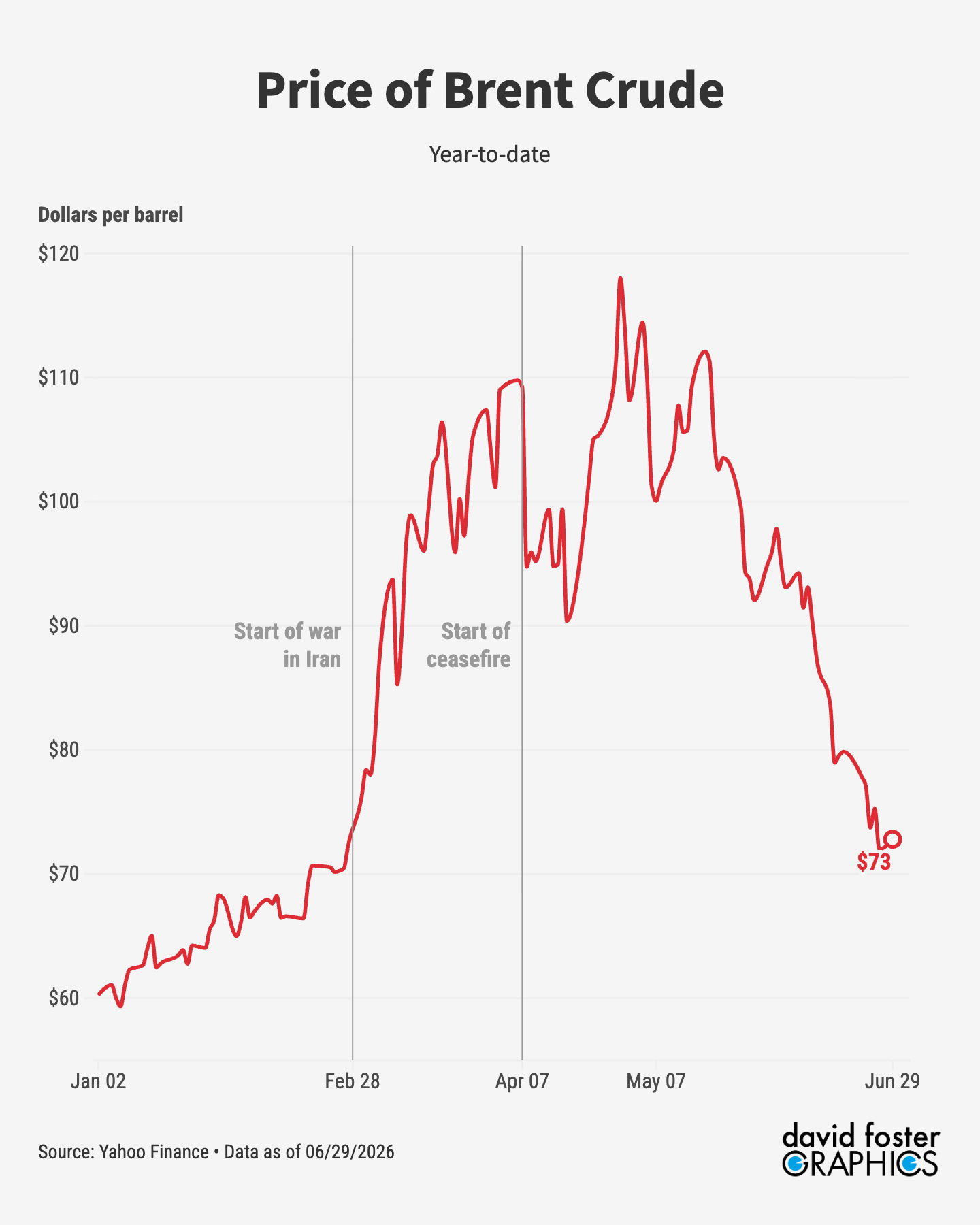
Trump’s Iran war is unpopular, with solid majorities of Americans opposed to it. But it was probably more unpopular when oil was at $115 per barrel and gas was getting close to $5 per gallon. Gas prices are now back below $4, Americans are heading to the beach, and whatever is happening in the Middle East is becoming background noise. Trump wants to keep it that way.
Enjoy a cartoon.
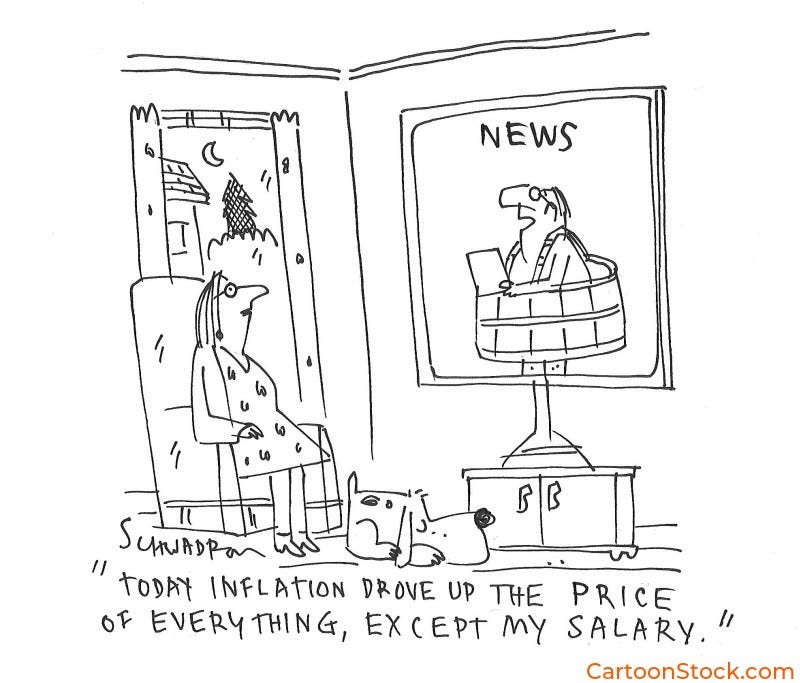
You can order this cartoon👆 and play cartoon-themed puzzles and word games at CartoonStock.com.