


This is an updated version of a story we first published on April 9.
~ ~ ~ ~ ~ ~ ~ ~ ~ ~
The war with Iran that President Trump launched on February 28 has settled into a tense and costly standoff. Bombs are no longer flying, but Iran has de facto control over the Strait of Hormuz and a chokehold on world energy markets. Hardly any cargo is clearing the strait, with no end in sight. Investors and business owners want to look past the war, but sporadic surges in energy prices and other collateral damage from the war are still rattling markets.
Everybody knows the war has raised gasoline prices. It’s now affecting the economy in other serious ways. Here’s where we stand:
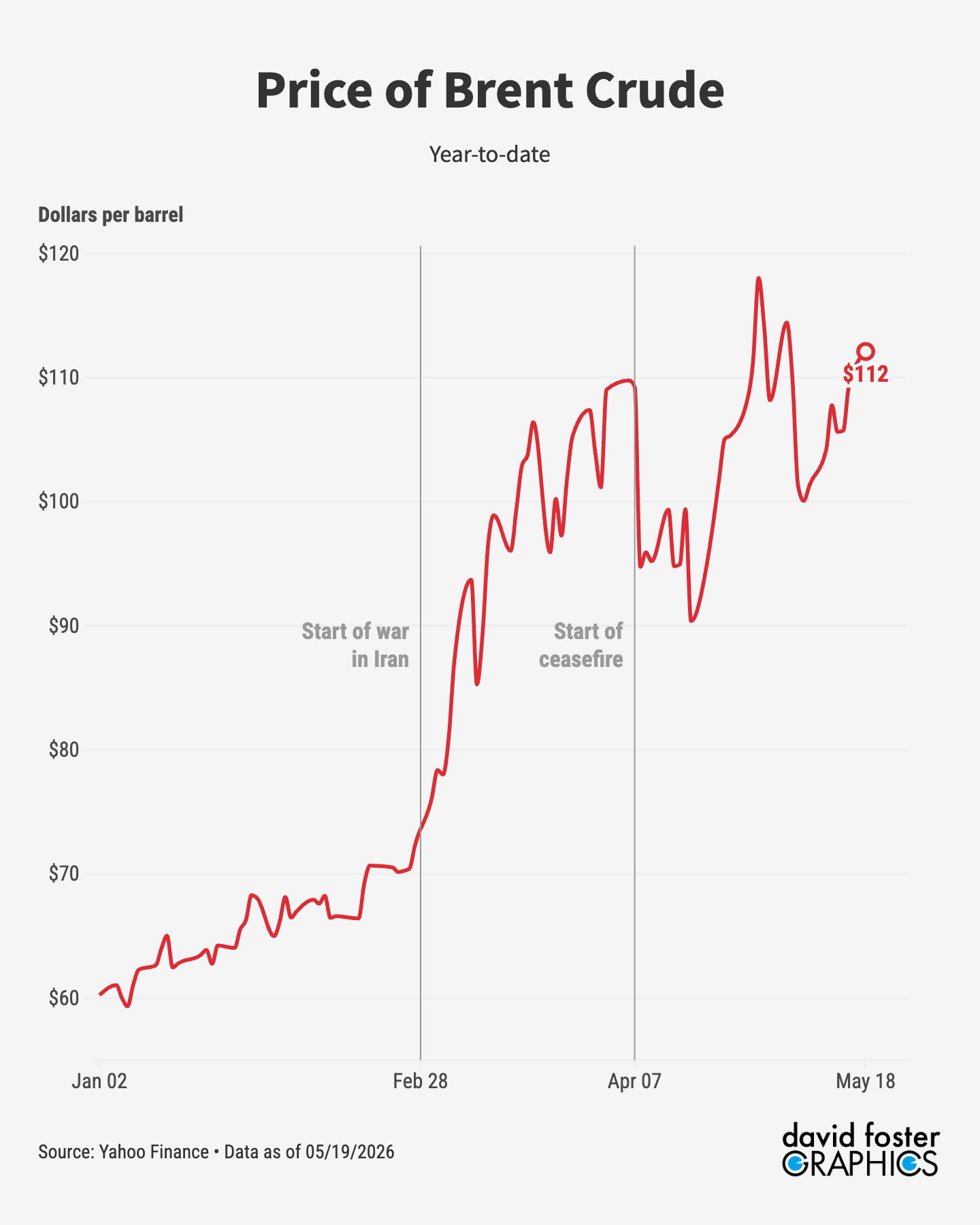
Oil prices jumped from about $68 before the war to as high as $110 in early April. Prices then dipped after Trump announced a ceasefire on April 7, and traders hoped that oil shipments through the strait would resume. They haven’t, and prices have drifted back up to the $110 range. Physical inventories are now running low, causing painful shortages of refined products such as jet fuel.
Gas prices have risen by about 50% since the war started, to a national average of around $4.50 per gallon. A $1.50 jump in gas prices costs a typical driver about $60 a month in higher costs.
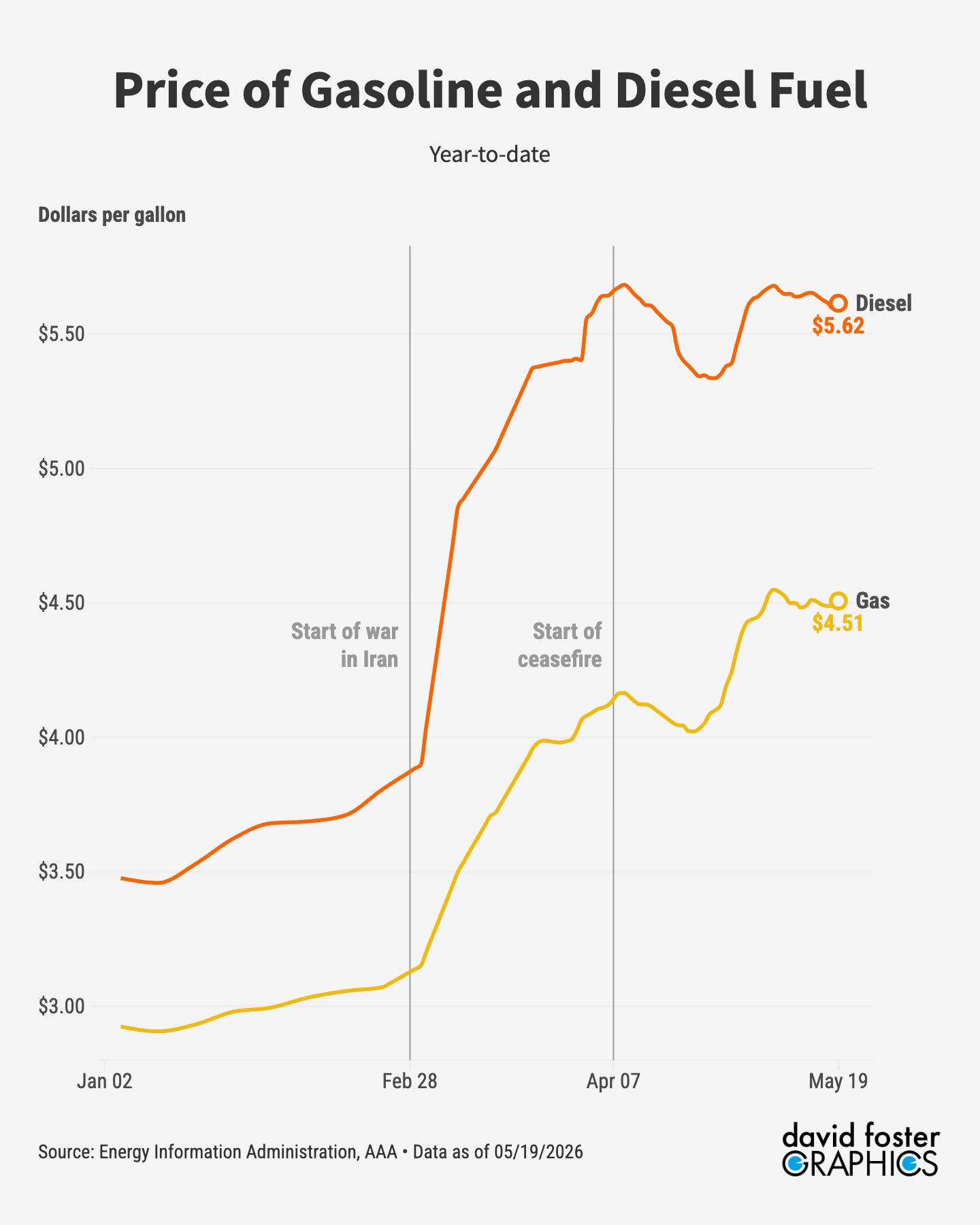
Diesel prices have jumped too, and that’s making it more expensive to produce and transport food and many other products. That’s pushing overall inflation higher.
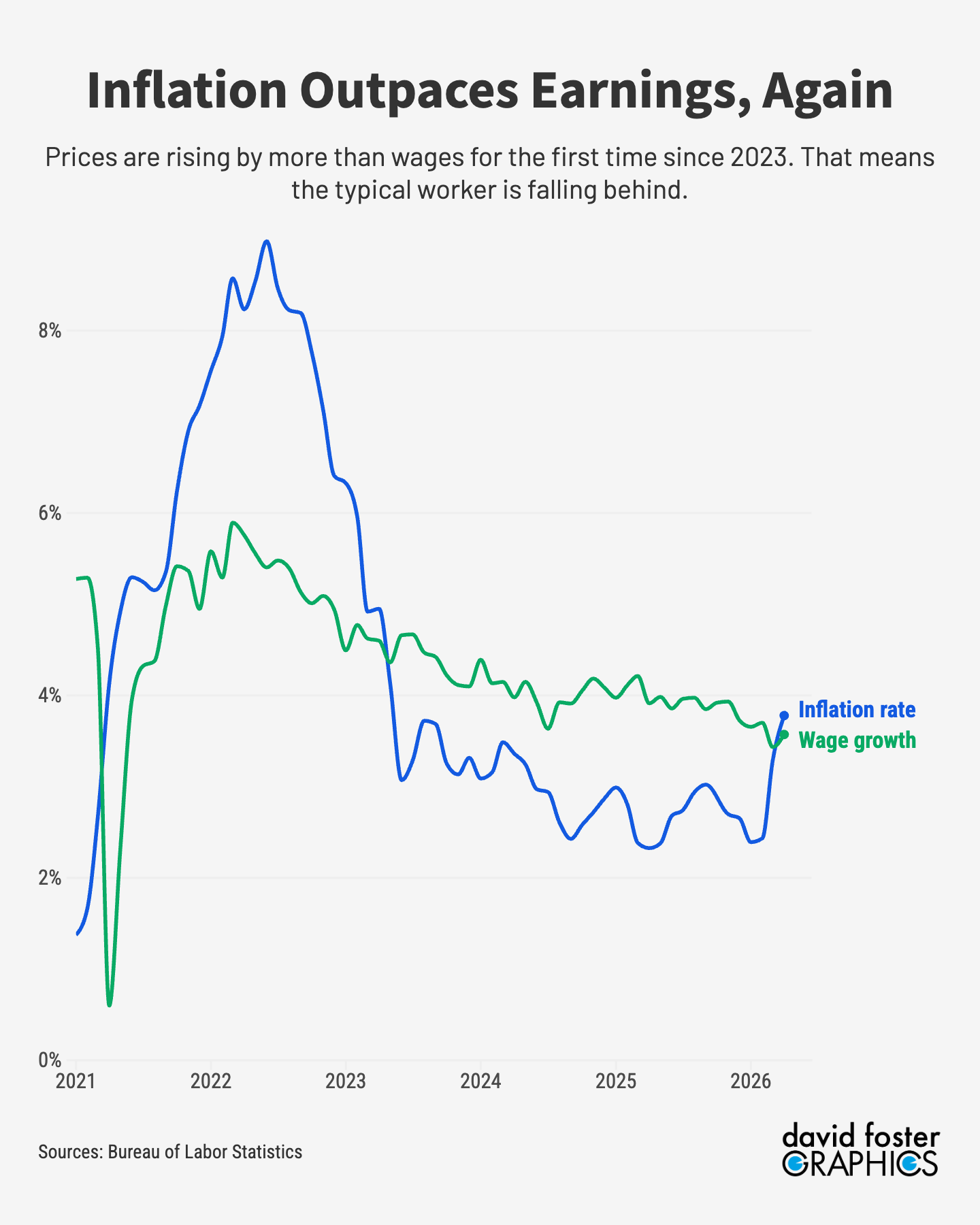
Inflation is now growing faster than incomes, for the first time since 2023. This is a gloomy milestone that indicates the typical worker is falling behind.
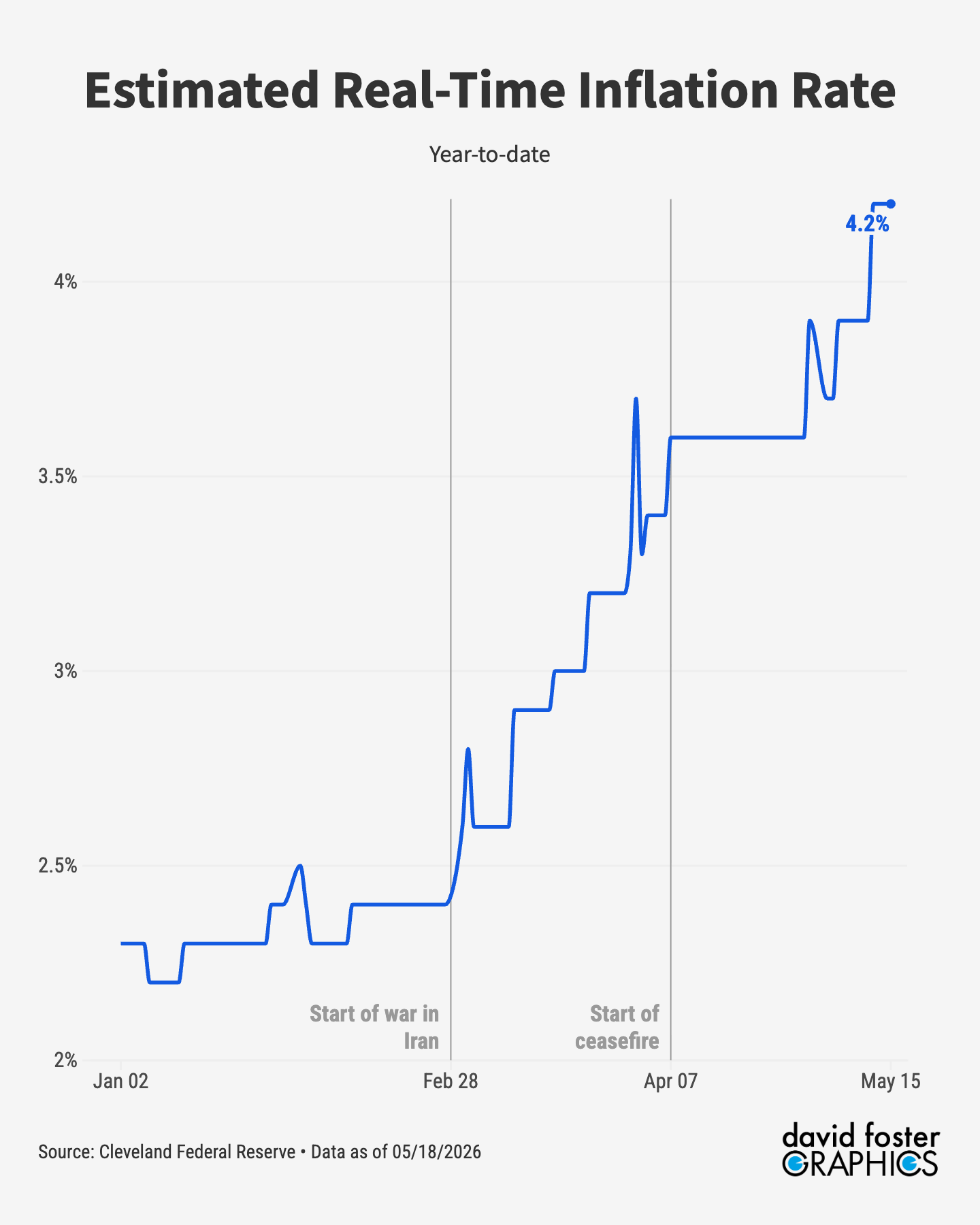
Most economists think inflation will go even higher this year, since it takes a while for higher production and transportation costs to move through the supply chain, all the way to consumers. The Cleveland Federal Reserve’s “nowcasting” tool suggests inflation today is around 4.2%, up from 3.8% in the latest official report, which was based on surveys from mid-April.
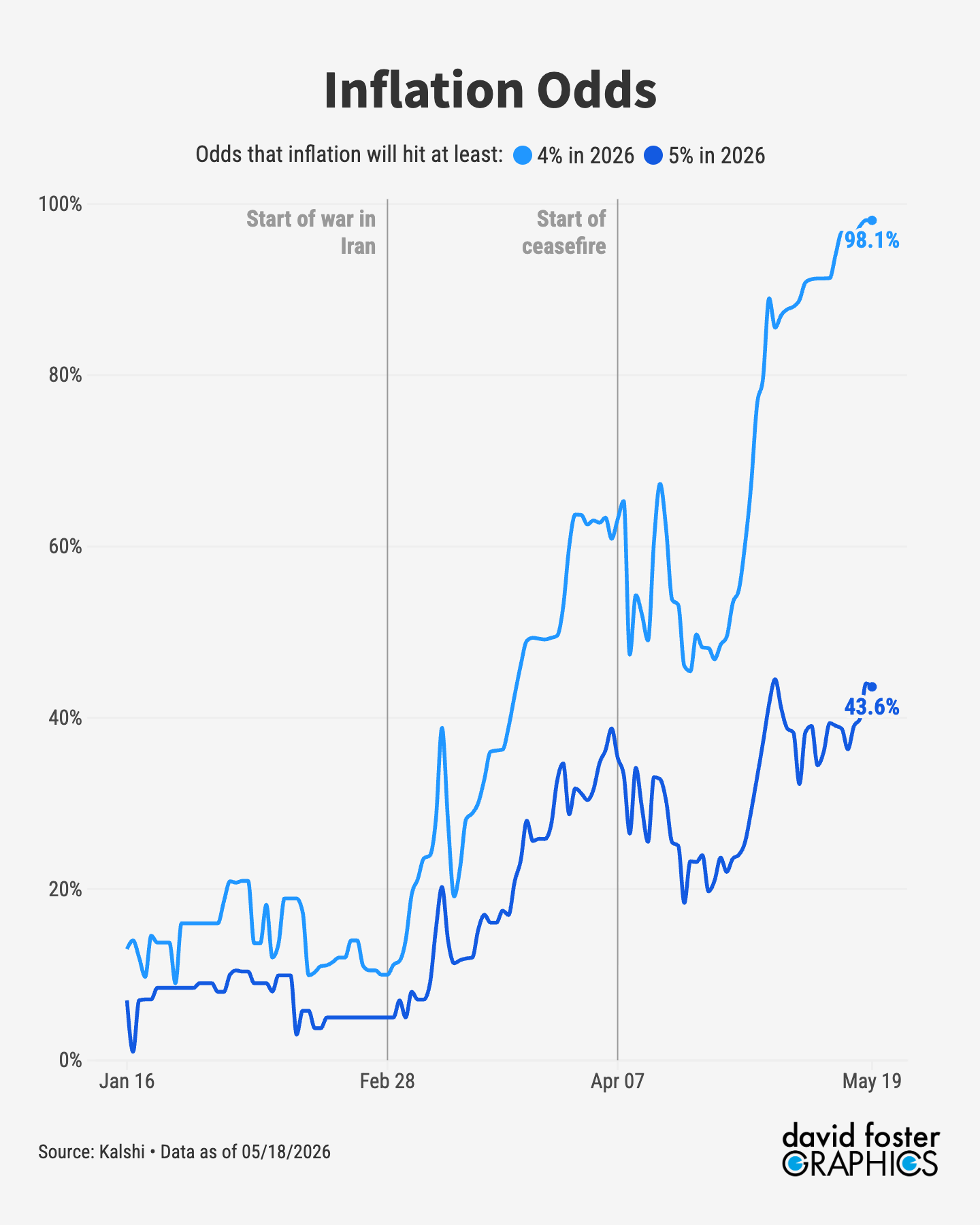
There’s a nearly even chance inflation could hit at least 5% this year. Here’s how the odds of higher inflation have risen on the prediction site Kalshi:
Interest rates usually rise when inflation goes up, since bond buyers demand a higher return to compensate for the eroding value of money. The rate on the benchmark 10-year Treasury note has jumped from about 4% before the war to 4.6%, with rates on consumer and business loans rising in similar measure.
[The Weekly WTF: To hell with affordability]
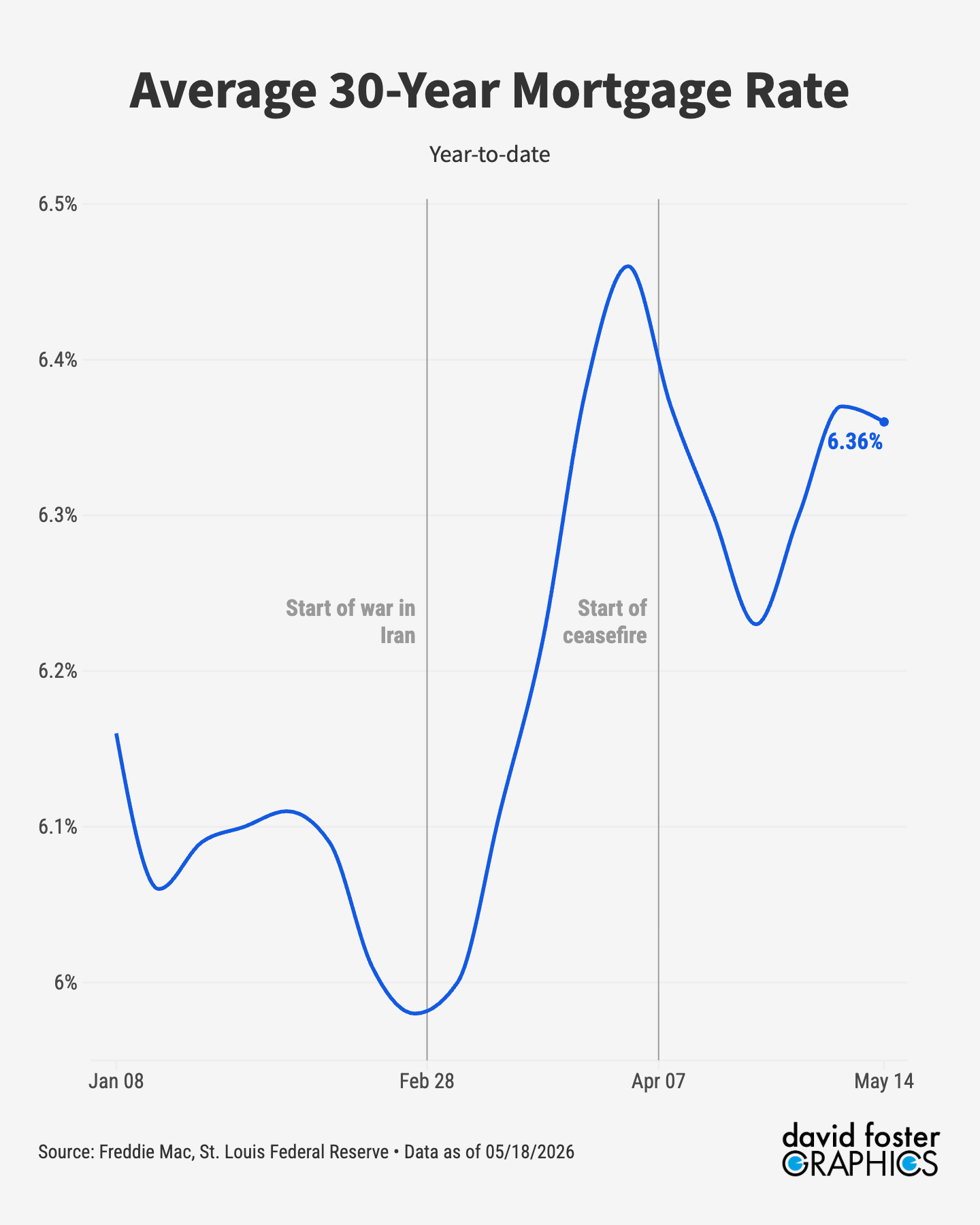
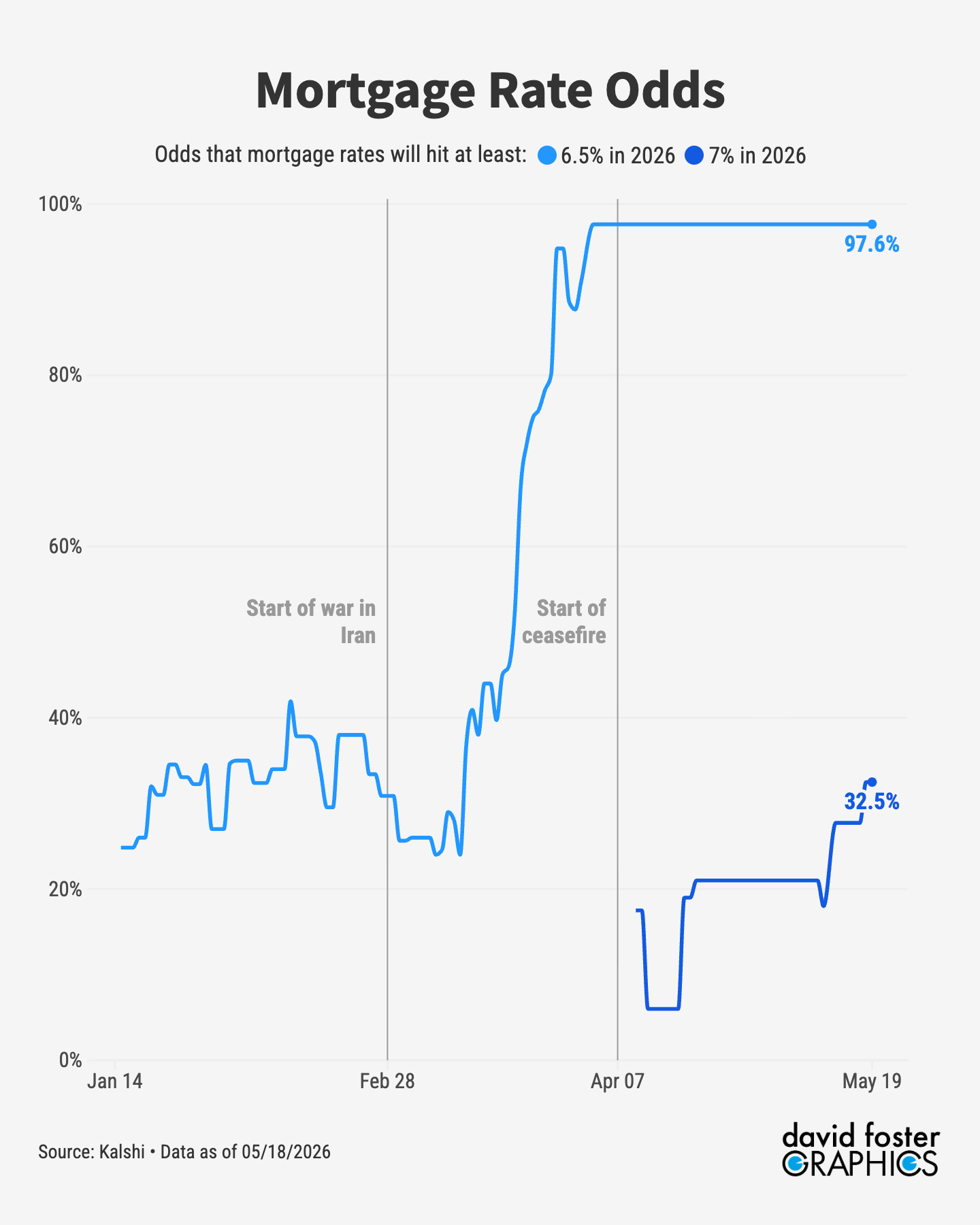
Mortgage rates were slowly declining before the war, but have since gone back up, by about four-tenths of a percentage point. That raises the monthly payment on a typical mortgage by about $80.
Rates could go higher. Here’s how the outlook for mortgage rates has changed on Kalshi:
[5 things to know about this year’s midterm elections]
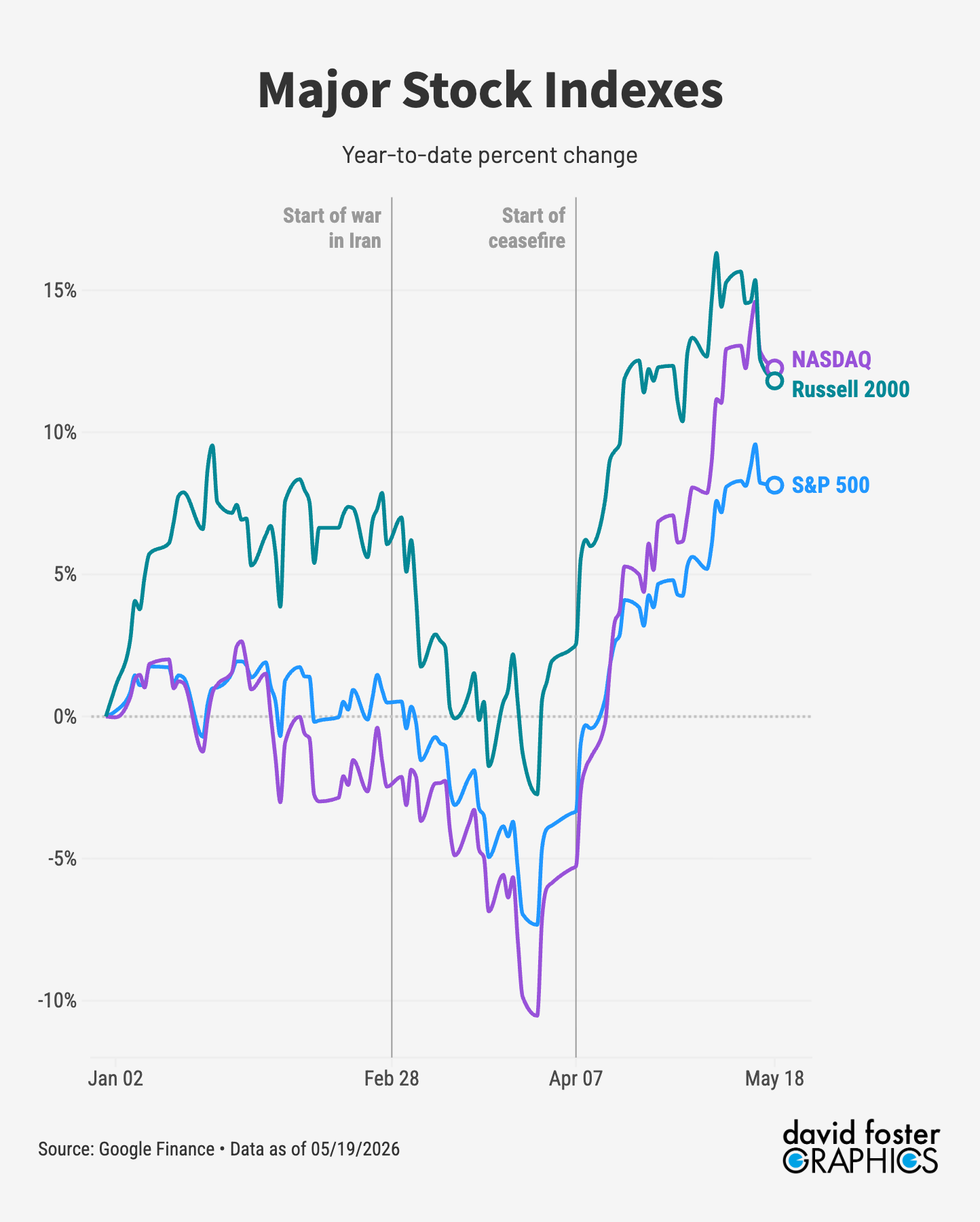
Stocks sank early in the war, then rallied after Trump announced the ceasefire. The AI boom is boosting earnings and growth, with many buyers reluctant to sit on the sidelines, even amid an energy shock. But the war is probably still depressing stock values. University of Michigan economist Justin Wolfers estimates that stocks are about 5% lower than where they’d be without the war. Stockholders are making good money, but they’d be making more if oil prices had never spiked.
GDP growth will probably end up lower because of the war. In late February, right before the war began, the Atlanta Federal Reserve’s GDP Now model estimated that first-quarter GDP growth would be 3.1%. The estimate declined as fighting raged for six weeks. First-quarter GDP growth ended up at 2% in the actual data.
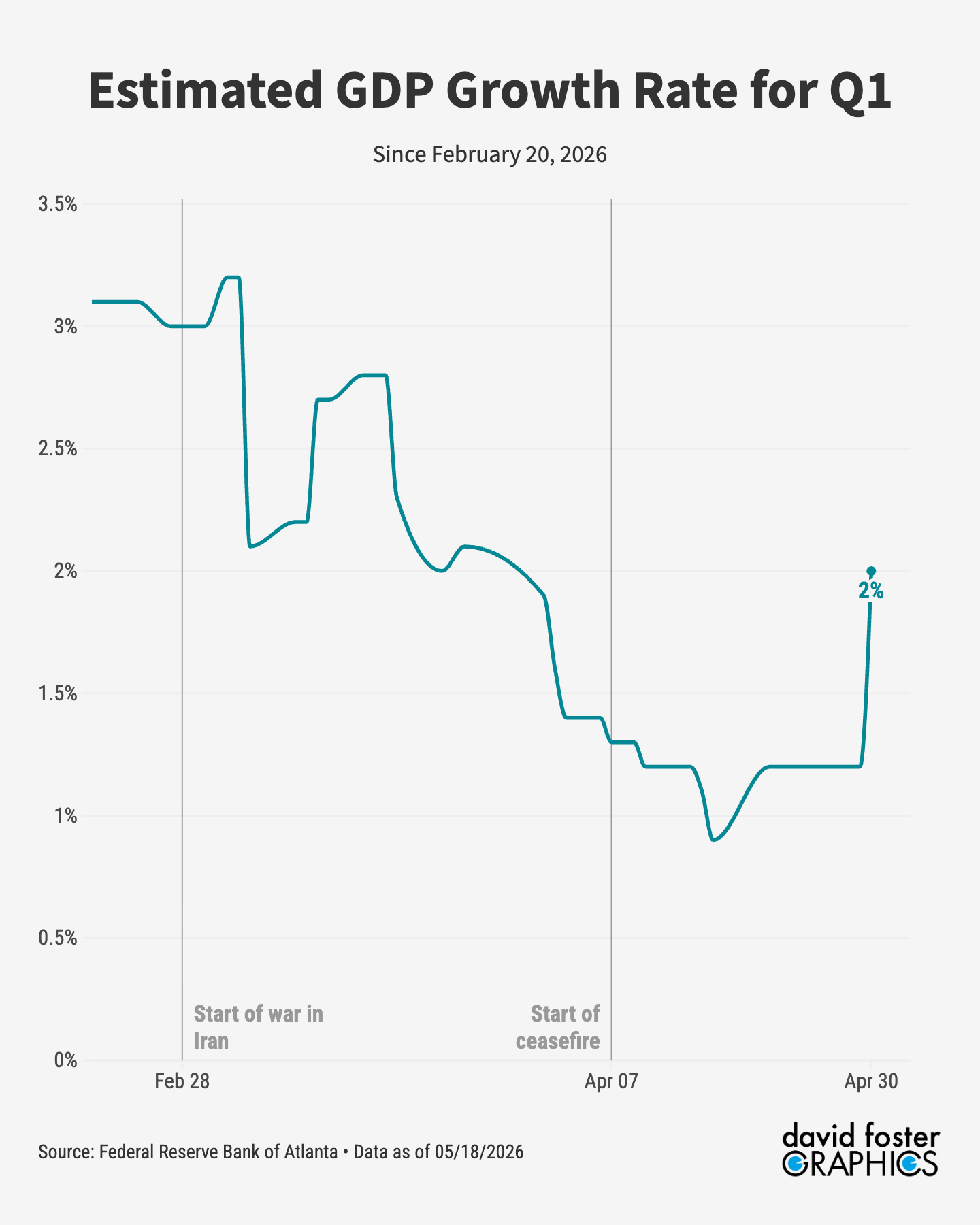
The effects of the war could suppress growth for as long as the Strait of Hormuz is closed. Most economists don’t expect a recession. But consumer confidence is at recessionary levels and Trump’s approval rating is at its lowest point ever. The military outcome of the war remains uncertain, but economically, it’s a loser.
Enjoy a cartoon.
You can order this cartoon ☝️ or others like it, plus merch featuring cartoons, at CartoonStock.com.
Hey Rick did you see what those Uber taxi cab's were doing on the streets of Austin and, California as they rock and,rolled every were while going no were.Test drives just do not seem to work out very well for these product's. I no AI is very high on the list for the NEW World.I still think that in America we get way ahead of our self's on the merit's of new chip's and the Hope of excellence.