


There was an important improvement in the economy recently that almost nobody is going to notice. The Iran war has already negated it.
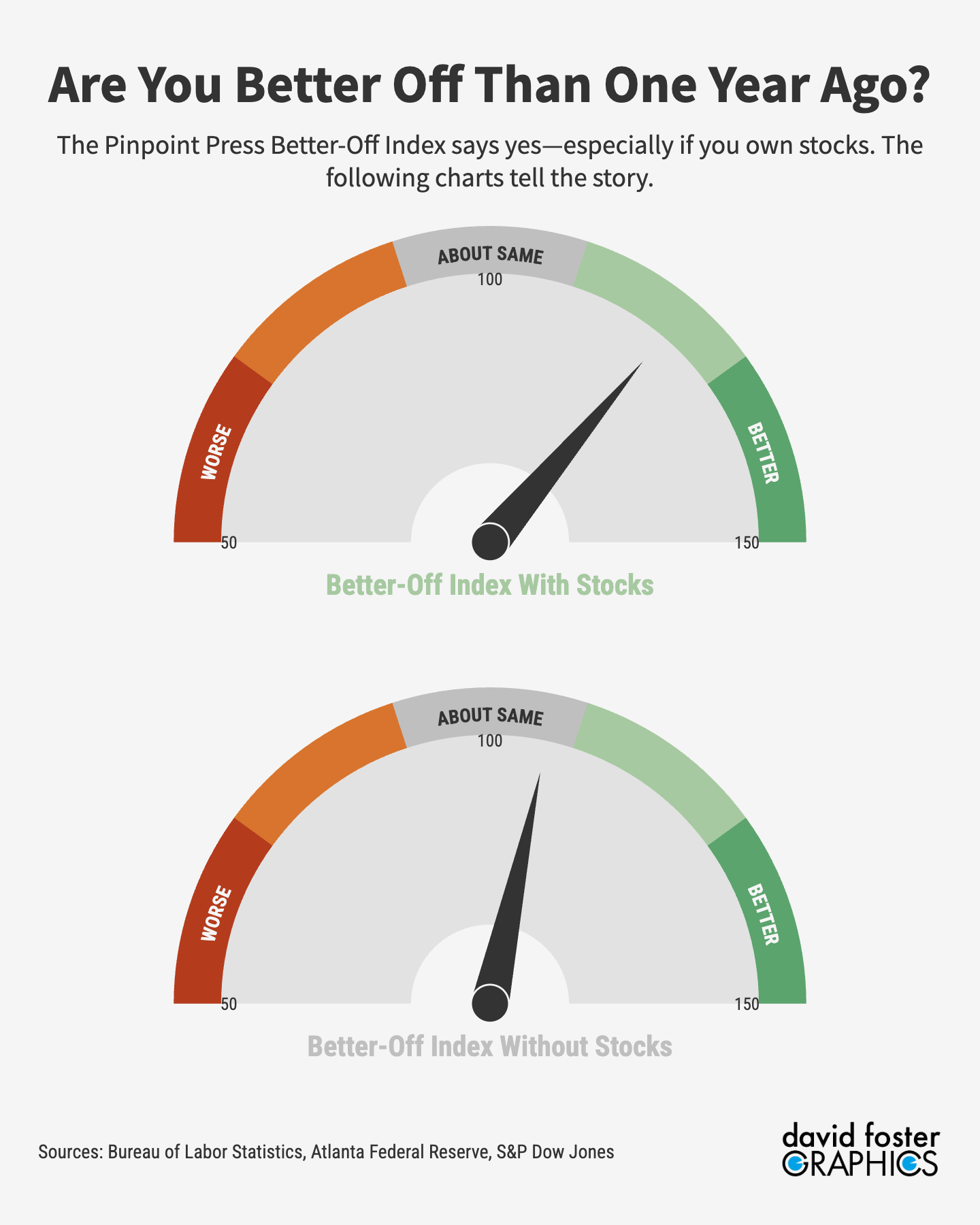
The March rendition of the Pinpoint Press Better-Off Index rose 5.5 points from its February levels. The Better-Off Index measures four economic indicators—employment, real income adjusted for inflation, home affordability, and stock values—compared with levels from 12 months earlier. It answers the basic question, are we better off than we were one year ago?
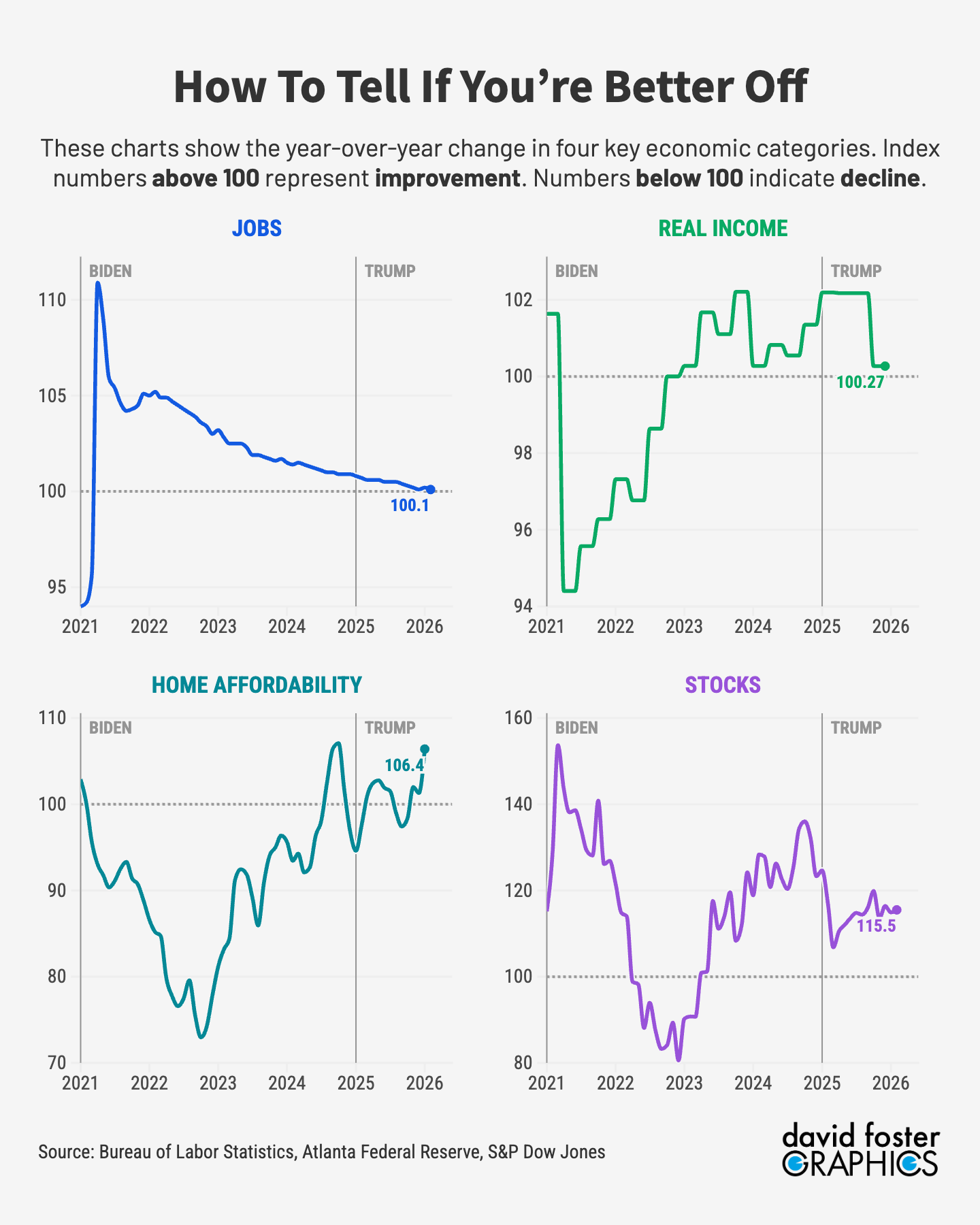
The main change in the latest index is an improvement in home affordability. The median home price dropped slightly, to about $391,000, according to data from the Atlanta Federal Reserve. Mortgage rates dropped as well, to an average of 6.1%. That added up to a 6.4% improvement in home affordability, year-over-year.
[Four ways Trump’s war is costing you.]
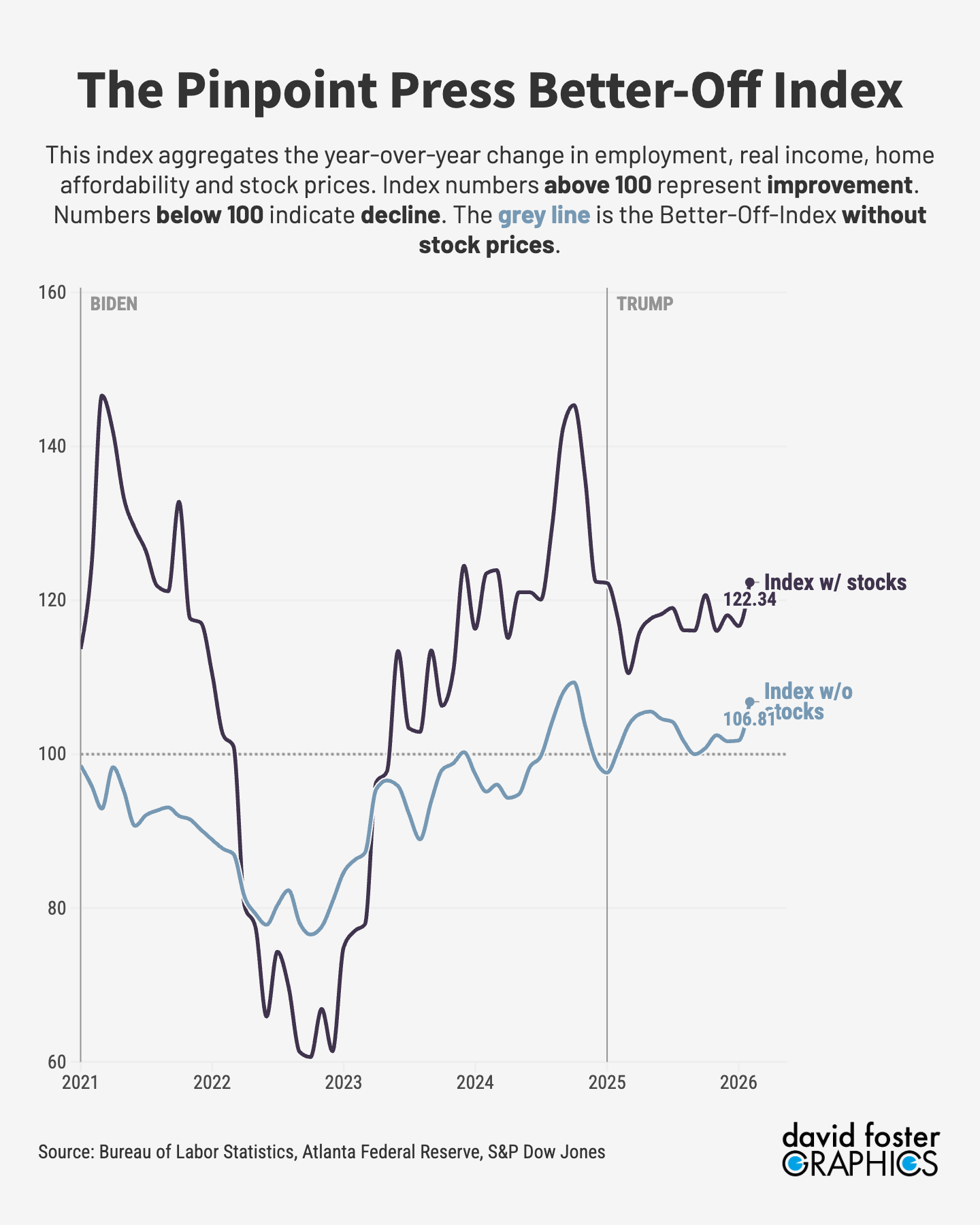
That pushed our Better-Off Index from 116.6 in January to 122.3 in February. Any number above 100 indicates improvement, which is what you’d expect in a growing economy. Numbers below 100 indicate a worsening economy. The last sub-100 index number was in May of 2023, largely because soaring inflation sharply eroded buying power, turning real incomes negative. (Here’s a cool interactive version of these charts.)
The problem with home affordability is the Iran war has put stress on financial markets and quickly pushed interest rates back up. Daily tracking by Bankrate shows the average mortgage rate to be around 6.33% as of March 18.
Long-term rates on most loans have jumped by a similar amount, about one-quarter of a point, since the Iran war began on February 28. The Middle East war has squeezed oil supplies and pushed crude prices up by about 40%, which is likely to force overall inflation higher. When inflation expectations rise, lenders demand higher interest rates to compensate for the deflating value of money.
Despite the recent improvement, home affordability is still lousy. An “affordable” market is one in which a typical mortgage payment requires 30% of median income, or less. The typical monthly payment now requires 41% of median income. But that’s better than the 45% of median income required at the nadir of affordability, in the summer of 2024.
As just about every home buyer knows, home prices spiked during the Covid pandemic, when monetary stimulus by the Federal Reserve drove mortgage rates to the lowest levels in modern times. Record-low borrowing costs led to a buying binge, and the increased demand sent real-estate prices soaring. Then interest rates rose as Covid faded, the economy recovered, and the Fed reined in monetary stimulus.
[Don’t expect the US Navy to solve the oil crisis.]
The housing market is beginning to rebalance, but it could take years before affordability returns to historical norms. Elevated housing costs stress renters too, because higher real-estate values mean higher costs for landlords, who have to charge more for rent.
There’s another warning sign in the Better-Off Index. Employment has improved by just 0.1% year-over-year, the most anemic job growth since the tail end of the Covid pandemic in 2021. In January, the economy actually lost 92,000 jobs. A weak labor market is one of the biggest concerns Americans voice in consumer confidence surveys, which show confidence to be at recessionary levels.
Real incomes are holding up okay, with inflation-adjusted wages up 0.3% from one year ago. But that is also a slowdown from stronger income growth in the middle of 2025. If high oil prices do stoke inflation, real incomes will worsen.
[Tariff inflation out, oil inflation in.]
The one thing that’s been going right during the Trump presidency is the stock market, which is a major source of wealth for older Americans and retirees. The S&P 500 index rose 15.5%, year-over-year, at the end of February, though stocks have also suffered from the Iran war. Since it began, the S&P is down about 2.4%.
As we’ve reported before, the biggest factor helping people get ahead during the Trump presidency is stocks, especially for those not exposed to home affordability pressure. While the overall Better-Off Index is now 122.3, it’s just 106.81 when we strip out stocks and only gauge employment, real income and home affordability.
With a downturn in home affordability now likely in the next set of numbers, there could be no noticeable year-over-year improvement in the economy other than stocks during the next few months. And that’s only if stocks hold up. The war may not be that friendly.
Valuable analysis! Nothing says "K-shaped" better than showing clear separation in the pair of curves on each graph or the two different-looking dials based on whether or not a household owns stocks. Trying to bring the two tines of the "K" closer together, i.e. reducing disparity, has got to be one of our country's long-term goals (and I say this as a near/partial/recent retiree owning stocks).
If you can not see were Wall Street is heading i will clue you in on were it will be in three months.A very bad place.Most folks do not on stocks because, it takes money to buy them and, most folks are spending most of their income on living expenses.Wall Street is in the business of make it while you can an get out quick if you can.Some folks no when it is time to get out an some do not.This economy will end up on the bottom of the list long term.God Bless!