


Everybody’s focusing on oil and gas prices, which have jumped 30% or more since President Trump’s war against Iran began on February 28. Those are probably the most visible costs of the war so far.
But other costs are rising, too, as risks of a prolonged energy shock grow and spread throughout the economy. If the war ends soon, the damage could be minor. Yet it comes on top of financial pressure millions of Americans already feel due to elevated costs for housing, transportation and other necessities.
The longer energy prices stay elevated, the more they will cause other prices to rise because of higher transportation costs. Goldman Sachs estimates that a sustained 10% rise in oil prices boosts inflation by about one-fifth of a point. Oil prices now are about 40% higher than before the war. So that could bring a meaningful bump in the cost of food, appliances, airfare and other things sensitive to energy costs.
New inflation risks push interest rates higher, which costs borrowers. When investors expect higher future inflation, they demand a higher return on their money, to hedge against the erosion of their buying power. That’s the main reason the 10-year Treasury rate has jumped by about one-third of a point since the war. Almost all other consumer and business rates follow the 10-year Treasury.
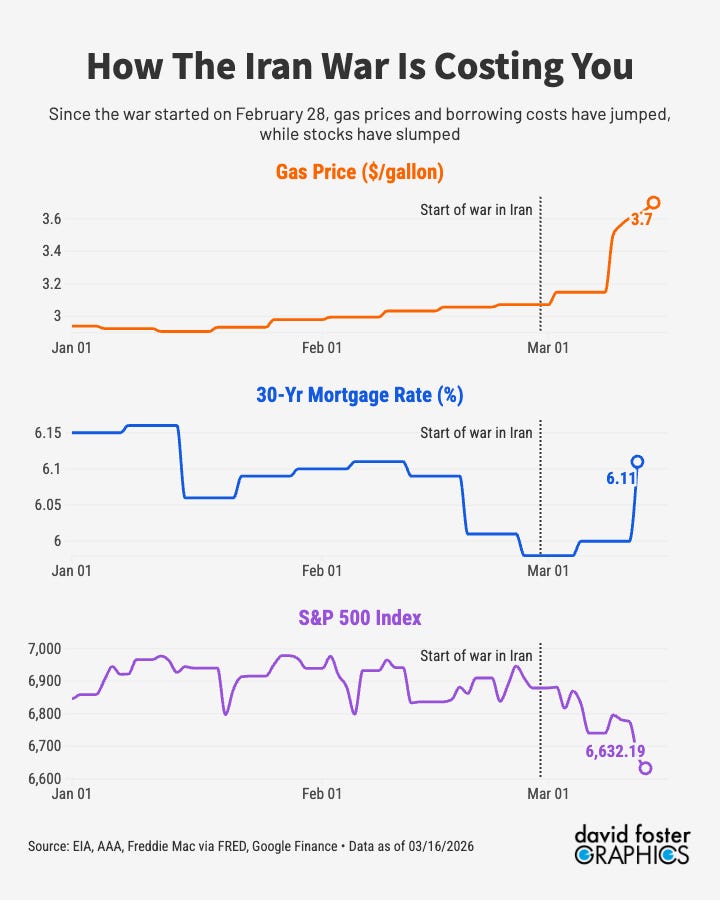
Mortgage rates at the end of February had fallen below 6% for the first time in nearly four years, a hopeful sign for buyers struggling with the worst home affordability in years. But they’ve now popped back up to nearly 6.3%. Every tenth-of-a-point increase adds about $20 to the monthly payment on a $400,000 home.
The stock market has also struggled with the war, since higher energy costs negatively affect the profitability of most businesses. The S&P 500 index is down 2.5% since the war started. The narrower Dow Jones index, which crossed the 50,000 threshold for the first time on February 6, is now around 46,560. Trump bragged about Dow 50,000 in his February 24 State of the Union speech, just a few days before ordering the launch of the Iran war that brought it back under 50k.
One exception to the stock selloff has been the energy sector, up by 3.1% since the war started. But that sector is up because consumers will be spending more for their products, leaving less for other stuff.
Pump prices have soared since the war started, from $2.92 per gallon at the end of February to about $3.72. The typical household burns about 90 gallons of gasoline per month, so an extra 80 cents per gallon means an additional $72 per month to gas up. Hikes in heating fuel and electricity costs amplify the pain.
Trump will have to make the case to voters that all of this is worth defanging the hostile Iranian regime. It might be shrewd to do that before people start seeing gas prices that start with a 4.