


We need villains.
When something’s going wrong—which it always is, somewhere, for somebody—there has to be somebody to blame. Quite often, it’s the opposing tribe. If you’re a Democrat, you blame Republicans, and vice versa.
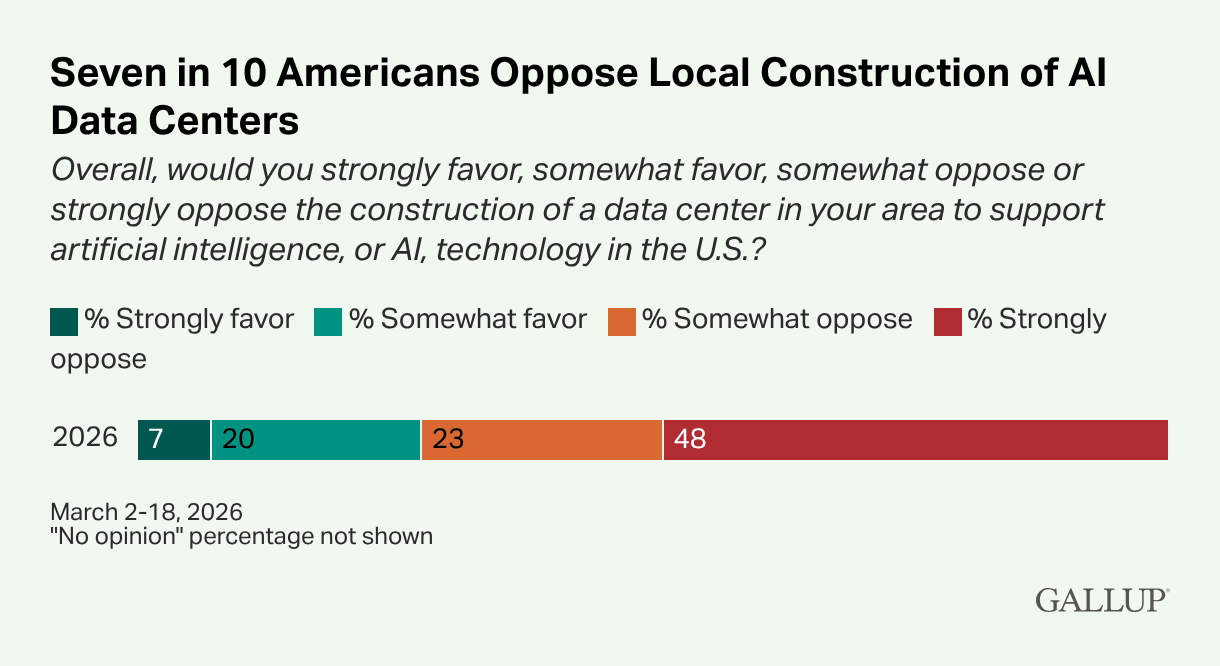
Rare unity seems to be breaking out as Americans gang up against a new bogeyman: the data center. They’re just buildings, yet opposition to data centers has soared from 42% to more than 70% in a single year. These computing hubs are suddenly a hot election issue, and if you’re a politician who ever supported them, you’re in trouble.
At least 16 states are considering banning data centers or pausing their construction—including business-friendly Texas. There’s even a commercial that jokes about throwing urine on data centers. That may not say much about advertisers’ creativity, but it tells you somebody’s market research department decided you can’t harm the brand by bashing Big Tech.
What did data centers do that’s so awful? Mainly, they came along at the wrong time.
Three trends have been agitating Americans. One is the affordability crisis that’s been straining family budgets for the last five years. Second is disgust with the robber-baron tech oligarchs racking up obscene amounts of wealth. Third is fear that, while artificial intelligence funnels even more wealth to the top, it will hollow out the working and middle classes.
[It’s time to revise the American Dream]
Data centers touch on all three. They require gobs of electricity, which can mean higher energy prices for consumers. They’re tentacled to the technology-industrial complex that’s already too dominant. And they’ll enable the AI dystopia that will soon render humanity a purposeless entity doing little more than taking up space on the planet.
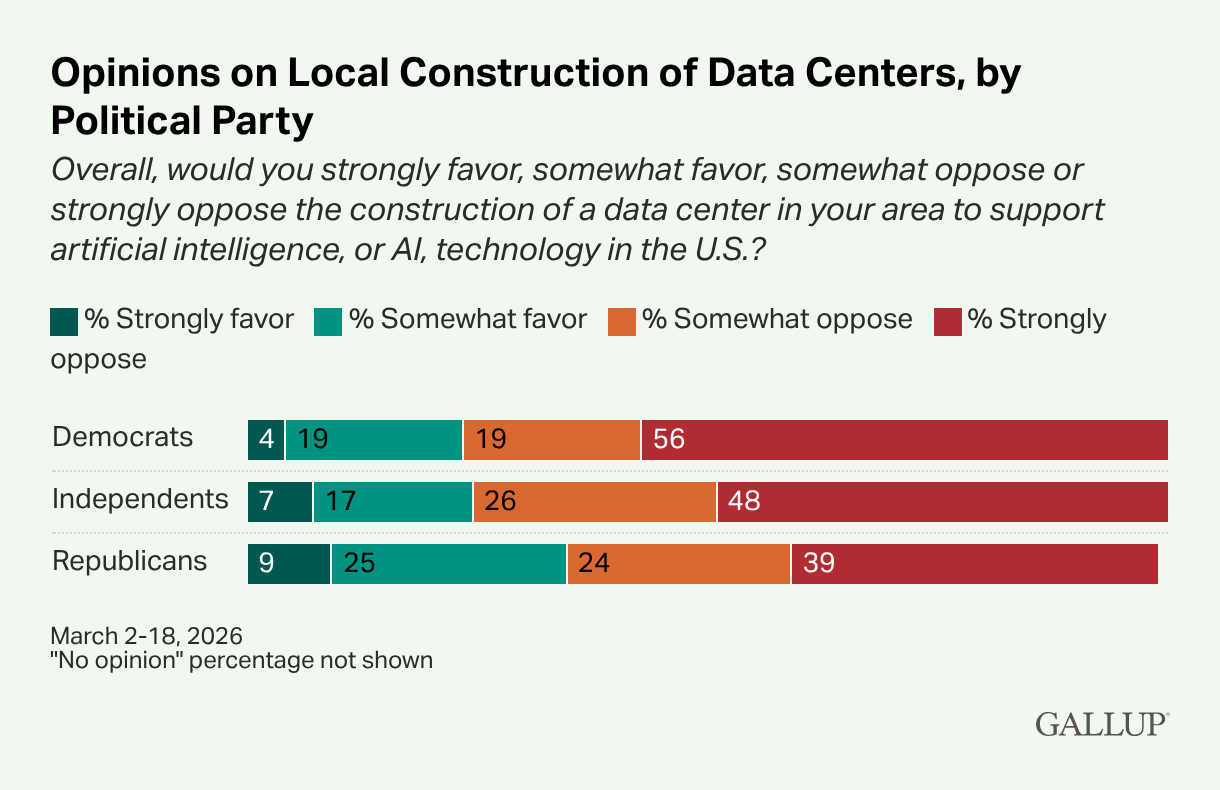
What’s not to hate? Most Americans probably don’t know that much about data centers, but voters express themselves through proxies. And data centers are the latest manifestation of what ails America: The game is rigged toward insiders and nobody cares about the little guy.
Except this assumes that data centers sprout from the ground on their own, like nuclear weeds nobody can control. The reality is that states and municipalities can call the shots—if they want to—and strike deals with tech companies that could make their communities better off for years.
The traditional economic development method—offering tax breaks to lure companies and the jobs they [might] create—is an obsolete model. That has produced boondoggles such as the Foxconn fiasco in Wisconsin and become politically unpopular.
[How Trump’s trade war with Canada could backfire]
Money-minting tech giants such as Amazon, Microsoft, Meta, and Alphabet don’t need the tax breaks, and data centers don’t generate many jobs anyway, once construction is complete and the facilities are up and running. Some states that offered this sort of corporate welfare in recent years are now tearing up those deals.
Data centers do generate a lot of revenue and technology investment, however, and that’s the opportunity for communities. Research by the Brookings Institution suggests localities should focus far less on jobs directly related to the early phases of these projects and a lot more on using them as hubs for regional technology development. A Microsoft data center in Mount Pleasant, Wisconsin, for instance, involves partnering with the state university to train students for AI-related jobs, building local AI infrastructure, and incorporating the new technology into businesses already operating there.
What fool wouldn’t want this? A scream-out-loud lesson of the digital revolution is that you win by capitalizing on new technology and you lose by fighting it. Politicians natter on about protecting the manufacturing jobs of the past. Sorry, but the high-value-added jobs of the future are better. Data-center electricians in some places are earning more than $250,000 per year.
[Why Trump is stuck with rising interest rates]
Data centers can also lower costs for locals, instead of raising them. In areas such as Loudoun County, Virginia, Quincy, Washington, and DeKalb, Illinois, taxes paid by firms operating data centers allowed local governments to reduce property taxes paid by residents.