


KEY TAKEAWAYS:
The Trump economy, at the one-year point, ranks 5th out of the last 7 presidential terms
Going back to the 1970s, the Trump economy ranks 8th out of 13 presidential terms
The Pinpoint Press Trumponomics Project includes data on six key economic indicators during the last 13 presidential terms
Trump is doing best on GDP growth
Trump is doing worst on job growth
~ ~ ~ ~ ~ ~ ~ ~ ~ ~
The first year of President Trump’s second term was tumultuous and unprecedented. One thing it wasn’t: An economic winner.
Trump says the last 12 months were “the greatest first year in history, just based on the numbers.” He’s looking at the wrong numbers. If he looked at the real numbers, he’d see an unflattering story.
In economic terms, Trump’s first term was below average, compared with prior presidents going back to Jimmy Carter in the 1970s. Among the 13 presidential terms since 1977, the Trump economy ranks 8th. Among the 7 presidential terms of the 21st century, the Trump economy ranks 5th.
These rankings come from The Pinpoint Press’s Trumponomics Project, with data provided by Moody’s Analytics. The data covers employment, manufacturing employment, incomes, inflation, stock values and GDP growth. Each metric is indexed to the start of the presidential term, so it measures change beginning that January. The current rankings cover the Trump economy through December, compared with the same time period in the preceding presidential terms.
In this story, we’re presenting select charts comparing the last seven presidents. For more data on all 13 presidents, check out this interactive. Our full methodology, with more charts, is here.
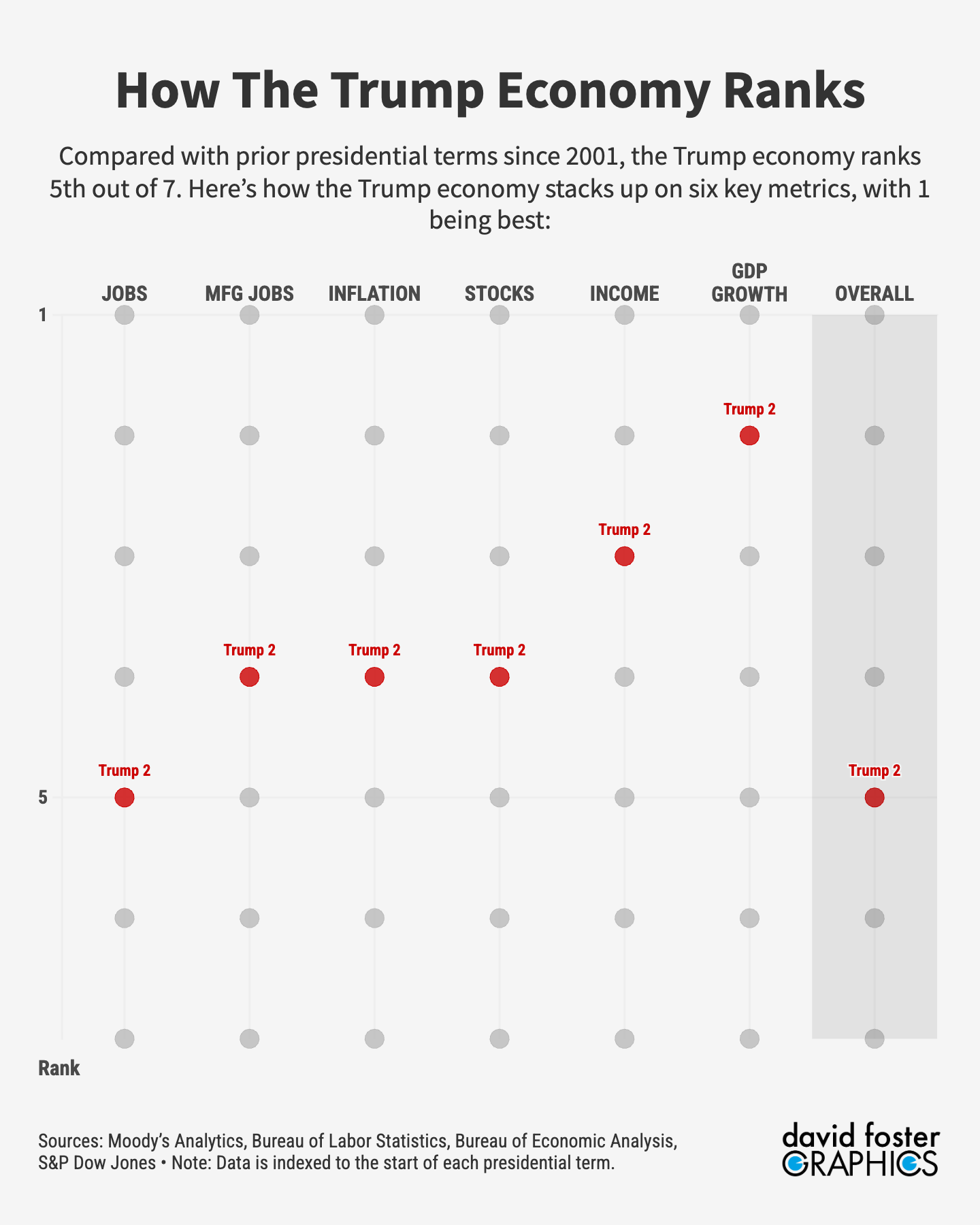
Trump is doing best on GDP growth, ranking 2d out of the last 7 presidents. He’s doing worst on employment, where he ranks 5th out of the last 7. On the other metrics, he’s middling.
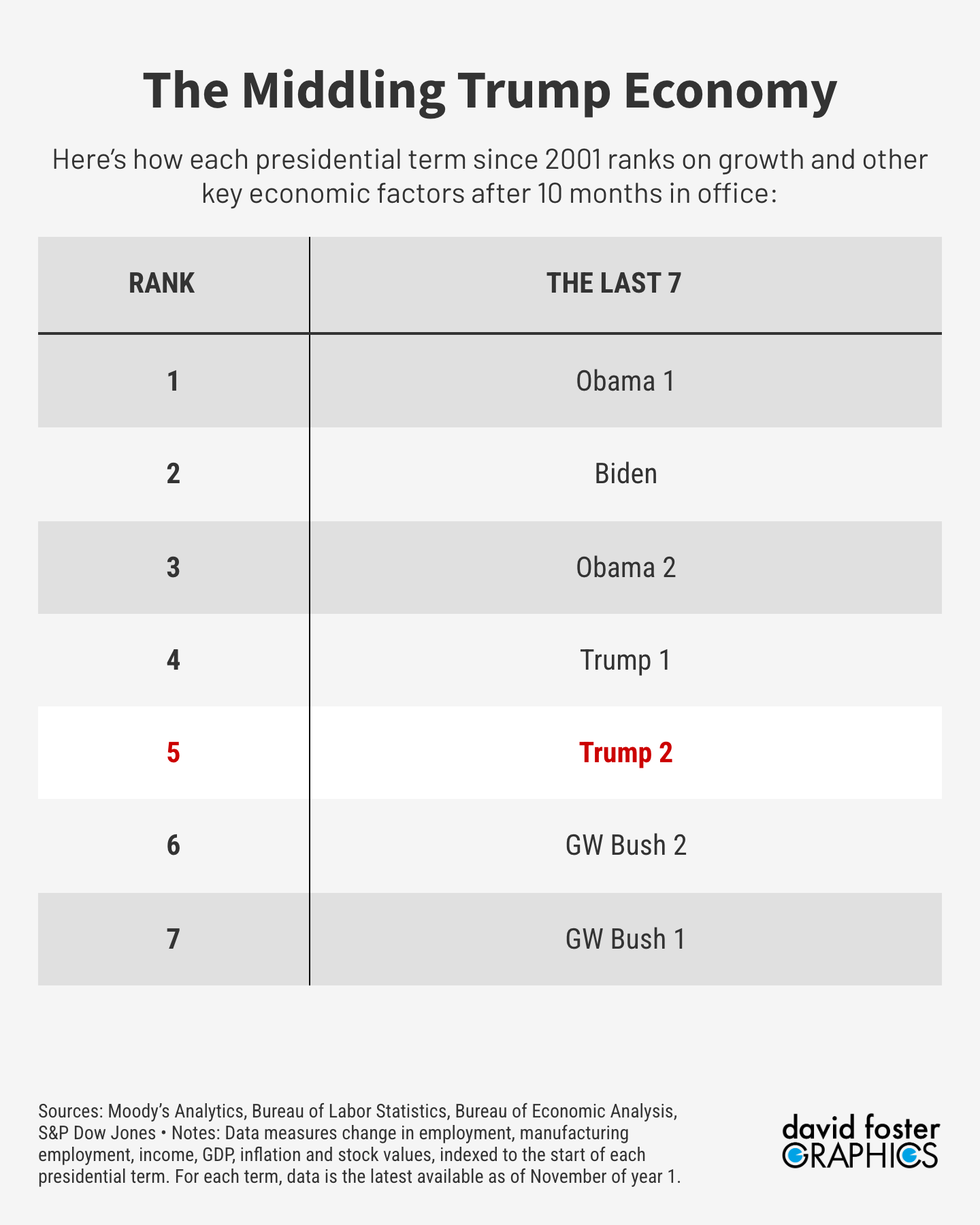
The best performance since 1977, after 11 months, occurred during Barack Obama’s first term in 2009. That’s because the Great Recession ended shortly after Obama took office, with a recovery under way for most of Obama’s first year. The worst performance was George W. Bush’s first year in office, in 2001, mainly because a recession began in March of that year.
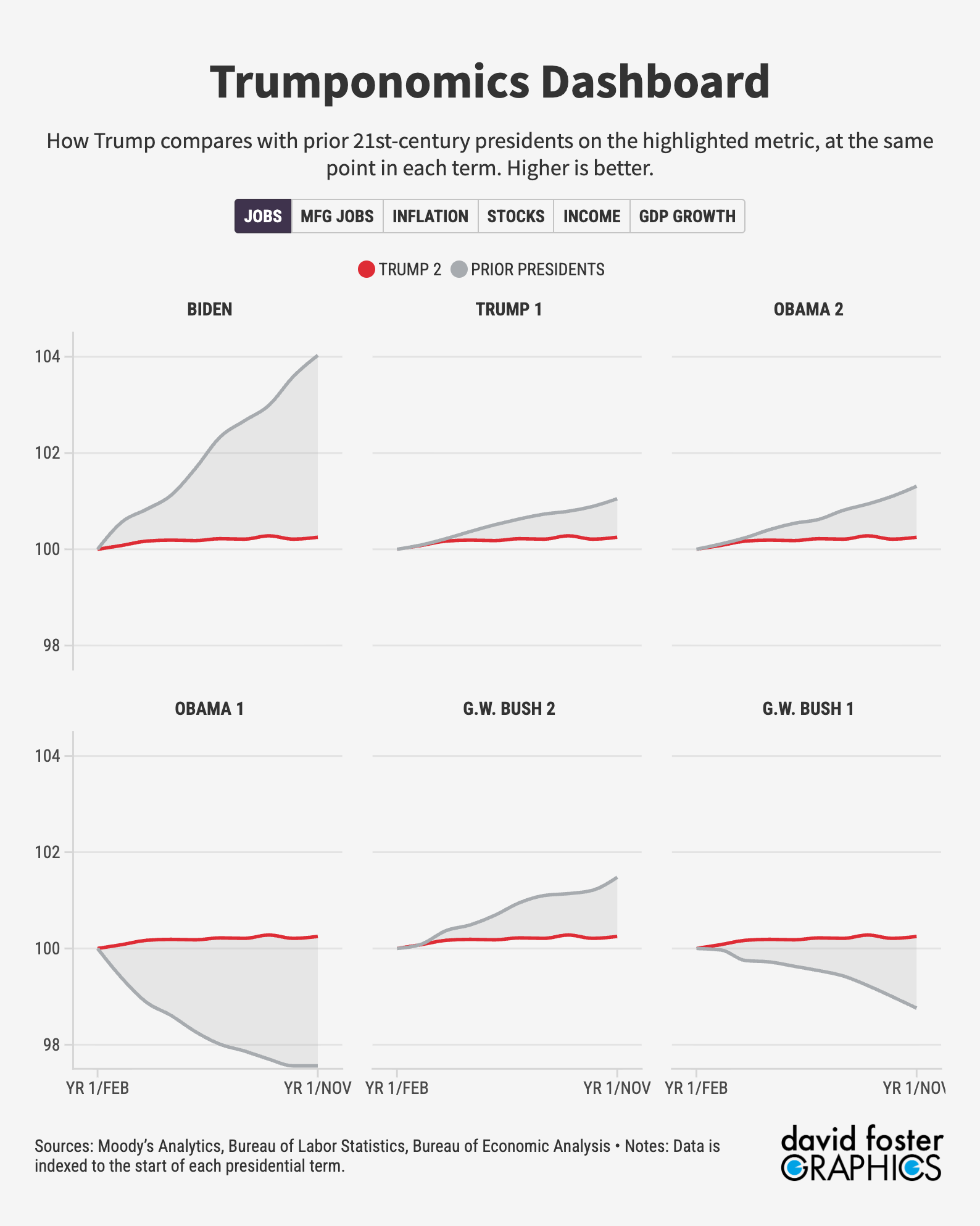
Trump inherited a solid economy in January 2025. Job growth was strong and inflation, the bane of Joe Biden’s presidency, had fallen from a high of 9% in 2022 to just 3%. The biggest change under Trump has been a pronounced slowdown in hiring. Employers added 168,000 new jobs per month, on average, in 2024. The average for 2025 was 49,000 new jobs. During the last three months of 2025, employment actually declined by 67,000 jobs.
Here’s how Trump compares with his six predecessors on jobs:
The manufacturing renaissance Trump promised is nowhere to be seen. Trump ranks 4th out of the last 7 on manufacturing employment, and 7th out of the last 13. The manufacturing sector lost 68,000 jobs in 2025. At least Trump can say that’s better than 2024, when manufacturing lost 105,000 jobs.
Here’s how Trump compares with his six predecessors on manufacturing jobs:

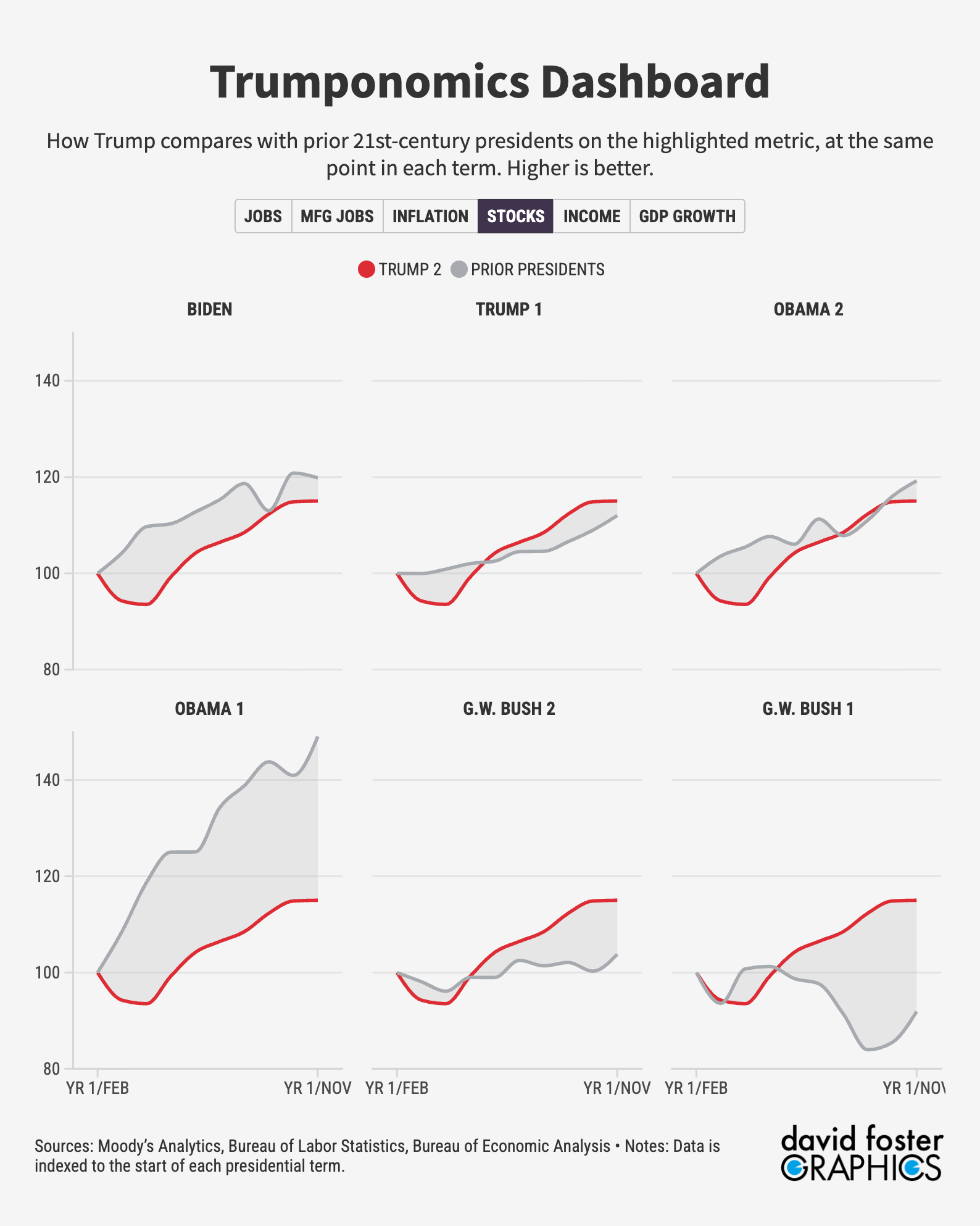
What about stocks? Didn’t stocks do well in 2025? They did, with the S&P 500 index up about 16%. But the stock market usually goes up, and the S&P performed better at the same point in Biden’s first term, and both of Obama’s terms.
Here’s how Trump compares with his six predecessors on stocks:
Presidents get credit or blame for what happens in the economy, but don’t have as much power over growth, inflation and the job market as many voters think. George W. Bush didn’t cause the recession that hit early in his presidency. Obama didn’t time the Great Recession to end shortly after he took office.
[See how Trump’s affordability plans stack up.]
Trump is somewhat different, because he has aggressively imposed unorthodox policies specifically meant to alter the economy. His tariffs are a tax on imports that drive up costs for businesses and consumers. Deporting several million undocumented migrants removes a source of cheap labor, also driving up costs.
Not surprisingly, voters associate the hiring slowdown and the rising cost of some items with Trump’s policies. Trump’s overall approval rating has slid from 49% to 42% since he took office, according to YouGov. His approval rating on the economy has fallen more, from 49% to 35%.
Despite his tone-deaf boasting, Trump may be getting the message. For months, he dismissed affordability problems as a “hoax,” yet he’s now rolling out a raft of new programs to lower the cost of food, housing, credit and other things. He has also pared back some of his tariffs.
The economy, at least, isn’t in a recession. Most forecasts call for decent growth in 2026, with the boom in spending on artificial intelligence infrastructure a solid positive. Yet voters are restless and the numbers show why.
Duh! Wait till he invades Greenland and, see how that work's out for him.