


As US and Israeli forces continue to pound Iran with airstrikes, diminishing returns will set in. Most of the targets hit on the fifth or tenth day won’t be as valuable as those hit on the first or second. The onslaught, for instance, killed “supreme leader” Ayatollah Ali Khamenei and many other senior leaders in one of the first waves. There aren’t many of their peers left.
At the same time, the cost of the war to President Trump—who single-handedly controls the timing—will gradually rise. Disruptions to oil shipping will push prices higher. US casualties will mount. Regional allies will lose patience with Iran’s retaliatory strikes on their city centers.
If the war goes on for a few weeks or more, an operation that looked like a dazzling success at the outset will seem like more of a grind, tarnishing the man who calls himself the “peace president” and is famous for his “America first” agenda.
So how does Trump end this war? Four factors come into play:
Oil prices. Iran says the Strait of Hormuz is closed and it will attack any ship that tries to pass. But it hasn’t mined or blocked the critical chokepoint for 20% of the world’s oil. With much of Iran’s navy sunk and its coastal batteries under bombardment, closing the strait may not even be a possibility anymore.
The bad news is that many of the insurers that provide coverage for oil tankers have issued cancellation notices due to the outbreak of war. That means dozens of oil tankers are sitting idle, either laden with oil or en route to loading it. Some OPEC nations can produce a little more oil that gets to market in other ways. But supply will be tight, and prices elevated, until tankers can once again pass freely through the strait.
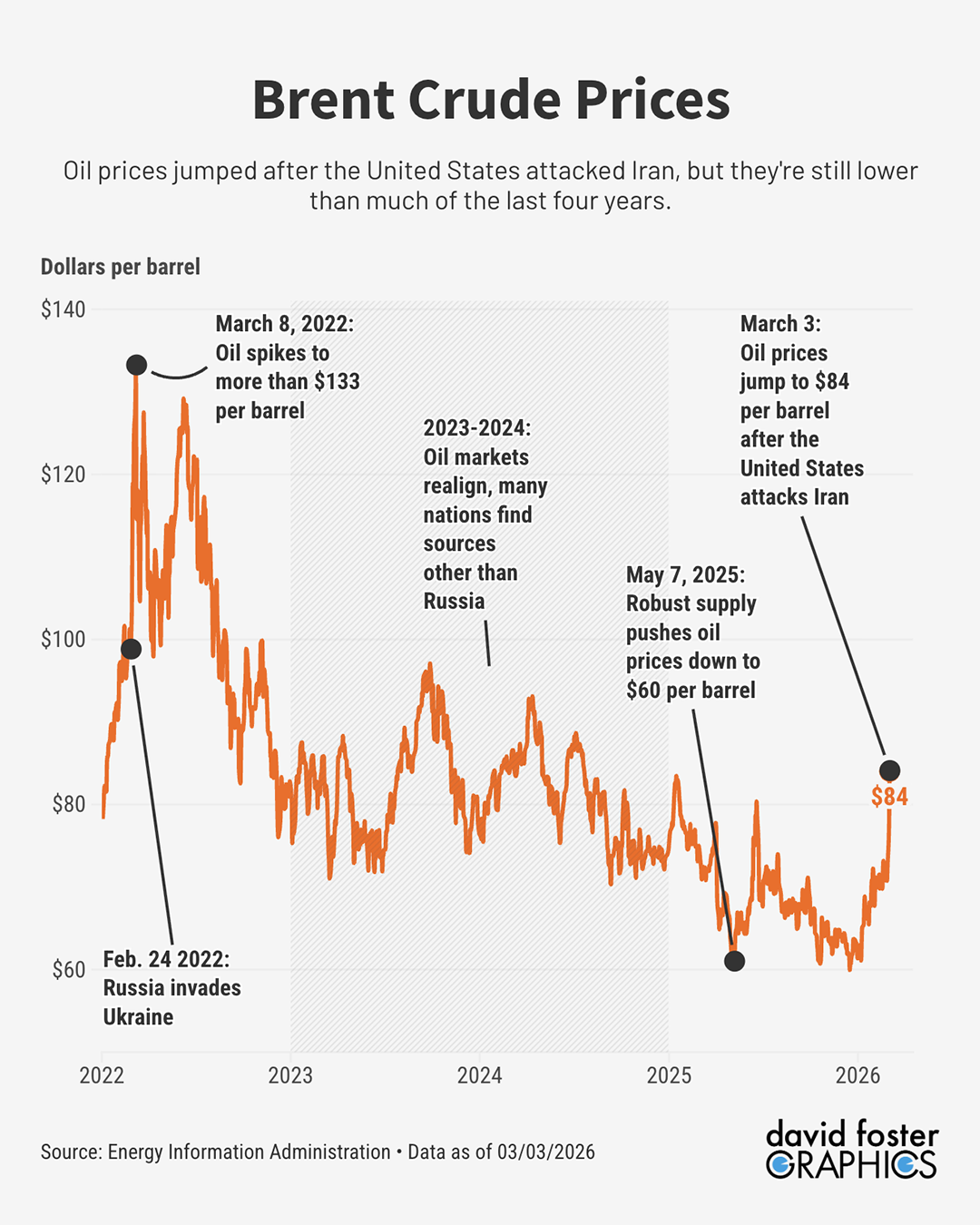
That has pushed oil prices up from about $71 before the war to around $84, an 18% jump. That will show up imminently in higher US gasoline prices, which is anathema to Trump. Oil fears are also beginning to cause a global stock-market selloff. Trump did nothing to prepare Americans for higher energy prices or any other costs related to the war. So rising oil prices and shaky markets ought to pressure him to find an off ramp.
China. Trump is scheduled to visit China starting March 31 for a high-profile meeting with President Xi Jinping. This meeting is important to Trump, and China buys a lot of Gulf oil. It is also largest purchaser of Iranian oil. That would make it problematic for this summit to occur if Trump’s war with Iran is impeding China’s energy purchases. “This meeting with Xi may serve as a de facto deadline to end the strikes, as Trump looks to turn the page to his next foreign policy focus,” Beacon Policy Advisors explained in a March 2 analysis.
“Regime change.” When he announced the start of the war, Trump told the “great proud people of Iran … when we are finished, take over your government. It will be yours to take.” Technically speaking, that would mean the ruling theocracy cedes power to somebody else. Yet that is very unlikely, even with Khamenei and many of his top honchos dead. There is no meaningful opposition group in Iran and the ruling mullahs would give up all of their wealth and power if they left. Without a massive invasion force in the country, there’s almost no way to force the current government out.
[More: The craziest part of Trump’s Iran war]
So Trump most likely is going to come up with a creative way to define regime change. He could already claim that since Khamenei and most of his lieutenants are dead, the old regime is gone. That would probably require a new leader willing to grant many of Trump’s demands, such as an end to the nuclear weapons program and leniency toward protesters. It would surely help if Iran dropped its “death to Israel” and “death to America” bullshit. Given that Trump has left much of the Maduro regime intact in Venezuela, even though he removed Maduro himself, Trump might make due with a new Iranian leader who says the right things.
The “big wave.” Trump and his aides are warning Iran that a lot worse could be on the way. “We haven’t even started hitting them hard,” Trump told CNN. “The big wave hasn’t even happened. The big one is coming soon.”
Secretary of State Marco Rubio said the next phase of the war will be “even more punishing on Iran than it is right now.” Trump and Defense Secretary Pete Hegseth have suggested they’d send ground troops into Iran if necessary.
This sounds like a coordinated PR effort to intimidate whoever is running Iran. Assuming Trump is not planning to nuke the country, it’s hard to imagine what could be more punishing than wrecking Iran’s air-defense network and air force, sinking its navy, pulverizing its missile force and killing the equivalent of the entire US cabinet. This all sounds like bluffing—which could be a good thing, if it indicates that Trump is trying to coax whoever is leading Iran to the bargaining table.
Iran, of course, gets a say in when the war ends, too. And a government that has miscalculated over and over could remain belligerent for weeks, as attacking forces create smaller and smaller bits of rubble. But there are ways out once both sides are ready. Sooner or later, they will be.
Excellent analysis!
Like you said all this could have been avoided if this "Death to Israel" and "Death to America could have been less of a chant from the Mulla party.All of this come down to one big problem."Money"The leaders are as hungry for it as any billionaire tycoon in America.So it will more than likely have to come from someone in Iran who has a "can't we just get along attitude.