


The President Trump who ordered the February 28 attack on Iran, killing its 86-year-old leader, is different from the President Trump who ordered the January 3 raid in Venezuela. The “Donroe Doctrine” does not apply to Iran, which is obviously far beyond the western hemisphere Trump once said was his main concern. Nor does Trump’s “America first” mantra fit, since Iran doesn’t directly threaten the United States, as Trump falsely claims.
Trump has suddenly become a military adventurer willing to take far more risk than the man who campaigned for president in 2024.
The United States will win the military war with Iran. For a nation with the most powerful military in world history, that’s the easy part. The hard part will be forging an outcome that’s demonstrably better than Iran before February 28.
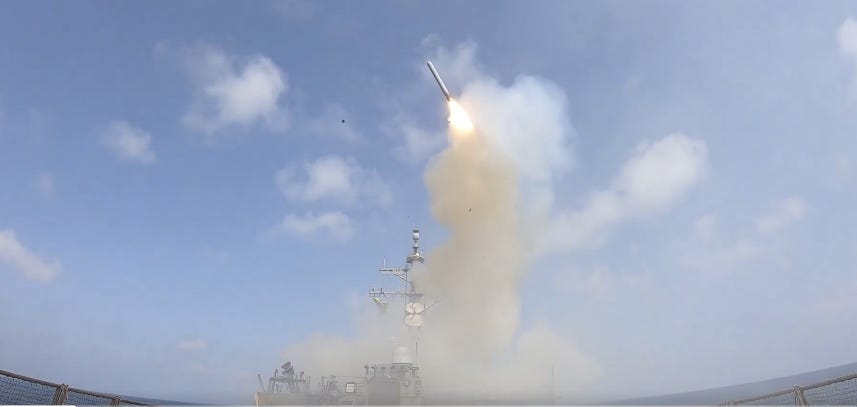
The bombing attack killed Ayatollah Ali Khamenei, who was Iran’s “supreme leader” for 36 years. Few despots deserve to be on the receiving end of a missile as much as Khamenei and his legions of goons, who have killed as many as 30,000 Iranian protesters during the last couple of months. The world is a better place with him gone.
But that doesn’t mean Iran’s next leader will be better. Trump seems to think that with Khamenei gone, the door is open for ordinary Iranians to depose the hateful clerics who have been running Iran since 1979 and end Iran’s Islamic theocracy once and for all. “To the great proud people of Iran, I say … when we are finished, take over your government,” Trump said in an 8-minute video posted on social media in February 28. “It will be yours to take. This will be probably your only chance for generations.”
That’s an extremely risky proposition for ordinary Iranians, who could end up facing even more bloodshed and tyranny. It is notoriously difficult to end loathsome regimes by airpower alone, even when you kill some of the top dogs. This is a basic tenet of military operations well understood by the generals and admirals at the Pentagon.
“Here is the strategic reality most people are missing,” military historian and airpower expert Robert Pape wrote on social media on February 28. “Airpower alone has never produced positive regime change. I don’t mean rarely. I mean NEVER.”
Regime change can be perilous even with an invasion force on the ground, which is not part of Trump’s plan for Iran. It took US forces nine months to capture Saddam Hussein after invading Iraq in 2003. That entire war is now viewed as folly driven by hubris.
Trump, in his video, addressed the Iranian military, saying they’d receive immunity if they lay down their arms, or “face certain death” if they stand and fight. This is so naïve that it raises the question of whether the Trump administration, perhaps working with Israel, has some kind of secret plan with a coalition inside Iran to install a new leader who can deal with Trump. One can dream.
If there is no such plan, it takes a lot of imagination to understand how any kind of reasonable government could take power in Iran. American bombs and Israeli assassins might be able to keep killing top leaders. But the real problem is Iran’s Revolutionary Guard Corps, or IRGC, which numbers nearly 200,000, including affiliated groups.
The IRGC basically controls Iran, including the entire government, the oil industry and all the economic levers. Ceding power would mean ceding wealth and control, plus facing retribution from the millions of Iranians who have suffered at their hands.
It doesn’t matter if they’re loyal to Khamenei or to the fanatical principles of the repressive regime. They’re fighting for themselves now, and amnesty from Trump is pretty meaningless compared with the wrath they’d face if ordinary Iranians got a shot at them.
The “great people of Iran,” who Trump wants to take control of their country, don’t have the means to do so. There are more than 90 million Iranians, including many who hate the regime and are probably cheering Khamenei’s death. But the IRGC are the ones with the guns, and “one percent of society can make life hell for 99 percent of society,” as Middle East expert Karim Sadjadpour of the Carnegie Endowment for International Peace said recently on this podcast.
So how does this end? Trump certainly has leverage. He can continue attacking targets vital to the IRGC, raising their pain threshold. Maybe some regime figure will emerge who’s more moderate than Khamenei and can offer Iran a kind of fresh start. If something like that happens, Trump’s risks might have been worth taking.
The IRGC, however, might rule Iran as repressively as ever. Terrorist attacks down the road are one obvious risk. A civil war could also erupt beneath the American bombs. As the generals often say, wars are easy to start and hard to end.
I invite everyone interested in following the Iran war closely to sign up for a Twitter (X) list I maintain that includes many experts offering outstanding insights on global hotspots. I originally set up this list to help me follow the Ukraine war after Russia invaded in 2022. I expanded it to include several Middle East experts after the Hamas attack on Israel in 2023. You can find my WarWatch list here, and if you have a Twitter account, you should see a FOLLOW button that will add it to your own lists.
I agreed with your previous assessment that Trump would not attack Iran. Well, that aged like unpasteurized milk left outside on a hot day. ;-) I think we gave Trump too much credit in terms of taking on board sane advice from the few remaining adults in the room (mostly military leaders inc. Gen. Caine).
I think Trump was ultimately driven by the same kind of "sunk-cost fallacy" we discussed earlier that held sway in the lead-up to the Iraq war of 2003. All we can do now is hope/pray for the best possible outcome (for our military, for the Iranian people, and for our allies) from this dangerous gamble, one that was entirely of choice.
Have I been living in a bubble? I didn’t hear a word about Reza Pahlavi the exiled crown Prince? Has he been eliminated? Is that a fantasy?