


Employers have sprung to life. Hiring is robust. Yet voters are unimpressed. Where have we seen this before?
During the last two years of his presidency, Joe Biden bragged repeatedly about booming job creation. The facts supported his claims. But voters had other things on their minds, mostly high inflation and stretched paychecks. Elevated prices wrecked Biden’s approval rating starting in 2022, and he never recovered.
Trump finds himself in the same spot. After weak job growth in 2025, hiring has picked up, with the economy adding 172,000 new jobs in May. The average of the last three months is 188,000 new jobs per month. That’s good news, especially with the Iran war clouding the outlook.
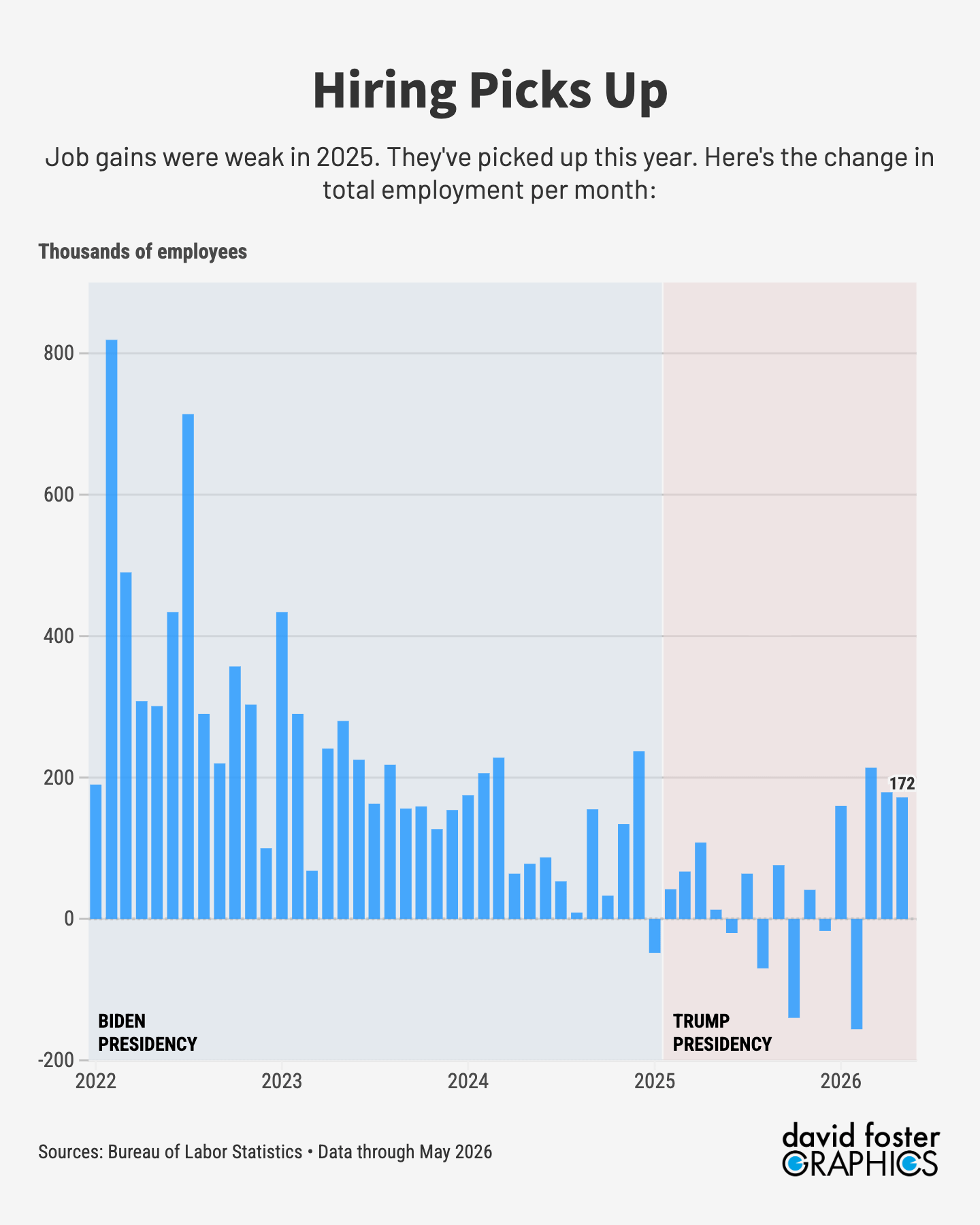
But this aggregate view of the labor market isn’t something ordinary Americans intuitively relate to. Prices, on the other hand, are personal. Everybody notices when rent, food, or gas prices go up. Especially when prices go up by more than incomes, which is happening now.
[Why most Americans are missing out on an epic stock rally]
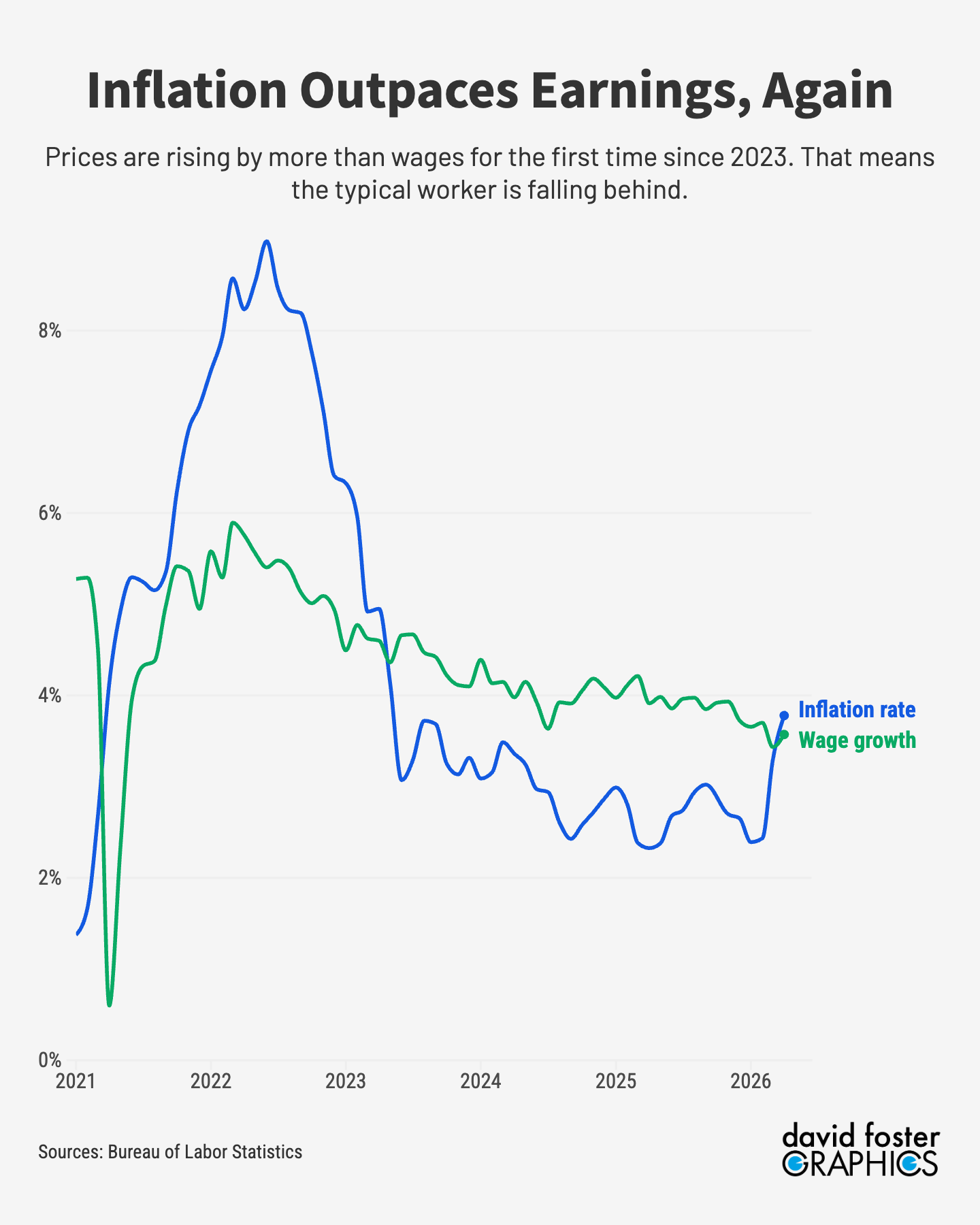
Real income growth, adjusted for inflation, turned negative in April for the first time in three years. It’s likely to get worse. Wages are growing at 3.7% year-over-year. Inflation will probably jump from 3.8% to around 4.2% when the next set of numbers comes out June 10. When prices rise by more than earnings, the typical paycheck buys less. The average worker falls behind—and gets angry.
That trend is likely to persist through 2026—and it’s largely Trump’s own doing. Trump has done two things that are pushing prices higher. First, he’s imposing tariffs, which are taxes on imports that raise costs throughout the supply chain, all the way to consumers. Courts have struck down many of Trump’s tariffs, and he’d be wise to take the hint and knock it off. Yet, he persists. He’s now rolling out a whole new set of tariffs to replace some of the ones the Supreme Court killed earlier this year.
The other source of inflation is the Iran war Trump launched on February 28. A shaky ceasefire has been in place for nearly two months, but Iran is still blocking most shipments of oil and other commodities through the Strait of Hormuz. If the strait opened tomorrow, it would still take months for markets to normalize and price shocks to fade. And Iran might be able to keep the strait closed for months.
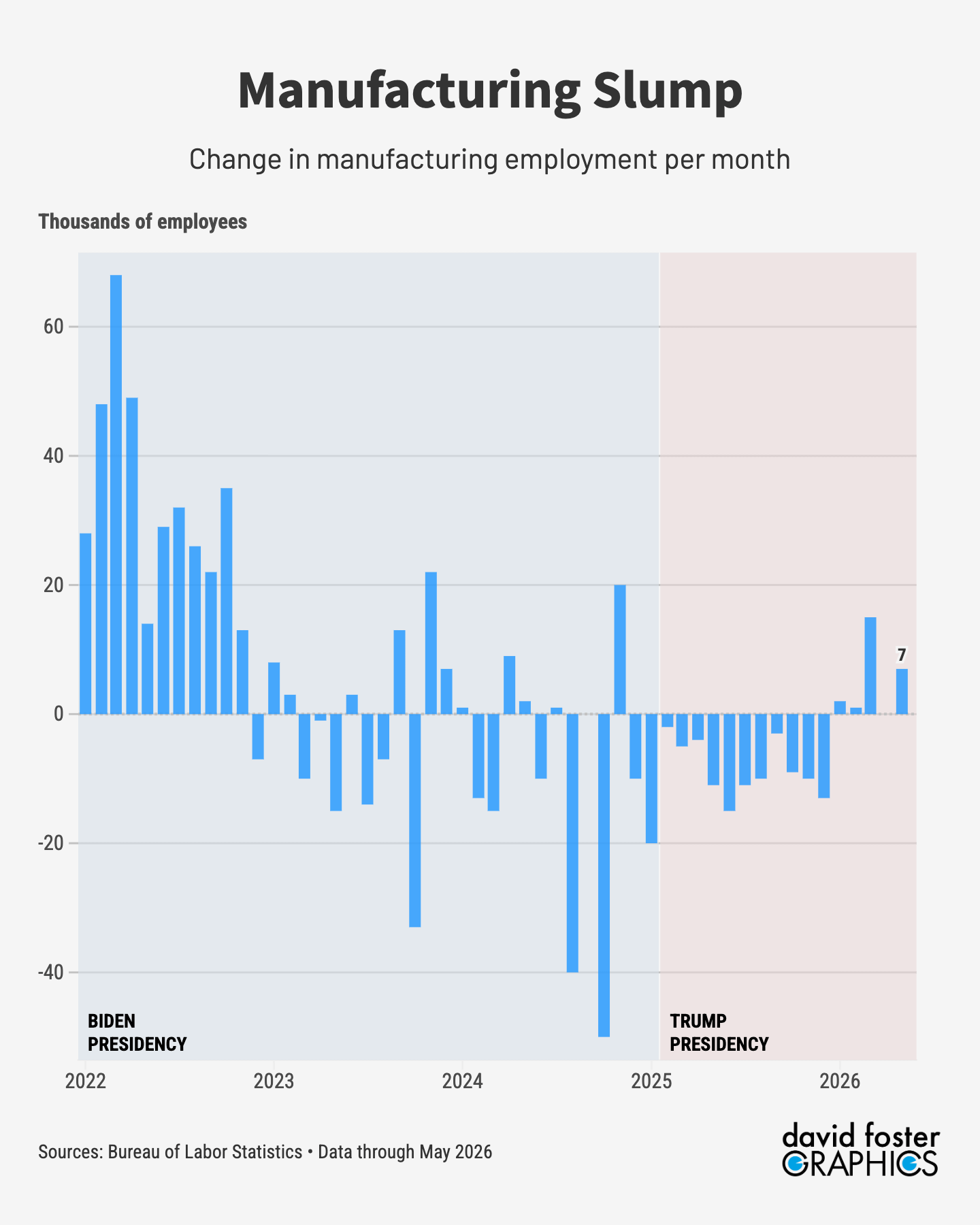
Even with solid topline job growth, the details show a spottier picture. There’s been no revival of manufacturing jobs, which is the stated purpose of Trump’s tariffs. Most economists say tariffs will never boost manufacturing on the whole, because for every protected industry there’s another paying more for inputs due to the tariffs. Job numbers bear that out.
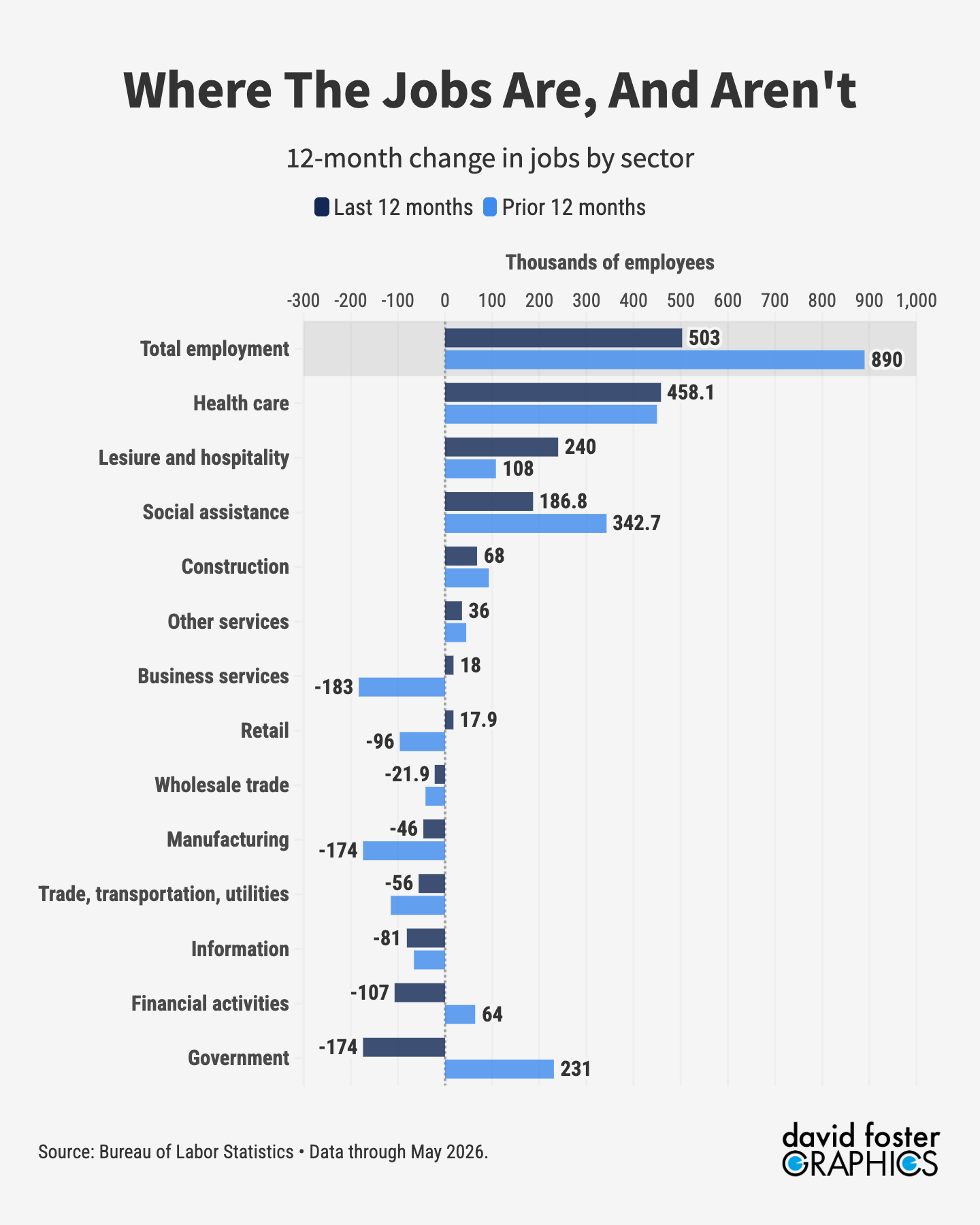
Most of the job growth is also in health care and social services, which isn’t bad. But that’s part of the economy where spending is somewhat mandatory and supported by a lot of government payments. Job growth in other parts of the economy isn’t so great.
There’s been a net gain of just 18,000 jobs during the last year in business services, where there are a lot of good-paying white-collar jobs. Six of 13 major categories have lost jobs during the last year. In financial activities, which includes banking, insurance, investing and real estate, there’s been a loss of 107,000 jobs during the last year. More white-collar anxiety.
Trump’s approval rating is around 35%, which is the lowest level of his two presidential terms. His ratings on handling inflation and the economy have collapsed. Consumer sentiment is dismal, according to a variety of surveys. Ordinary Americans clearly think something is wrong.
[See the middling Trump economy, in 9 charts]
Trump has been bragging about the “great jobs report,” just as Biden did many times. But a president boasting about data seems out of touch when household finances are stretched. A second president in a row is now falling into that trap.
Check out how many homes in the Dallas,Collin, and other counties are going up for sale simply because hard working people can not make the payment's.It is just getting started a lot of folk in Texas are going to lose their home's simply because, Trump's policies are a joke.His career has been in debt dealing an it is his best talent. BOY just look at that Wall Street Market. Just can't wait to get into that. Everyone is in LOVE with "AI".