


There’s an unsettling national concern that the US economy has become overdependent on artificial intelligence, like we’re sleepwalking into some kind of financial disaster. The most obvious parallel is the dot-com boom and bust of the late 1990s and early 2000s, which was characterized by a stock-market mania that led to a crash and recession. Investors struggled through seven painful years before stocks regained the peak they hit in 2000.
If there is an AI bubble that bursts, however, nobody can say the carnage came from nowhere. Central banks, Wall Street firms, research outfits, and many of the world’s shrewdest investors have been warning that the AI boom seems unsustainable. The warnings date to at least 2023 and have reached a crescendo. “The only question is if it’s a soft recession or something more dramatic,” former SEC Chairman Gary Gensler said on CNN on November 16. “I would be battening down some hatches.” He thinks the storm will hit within two years.

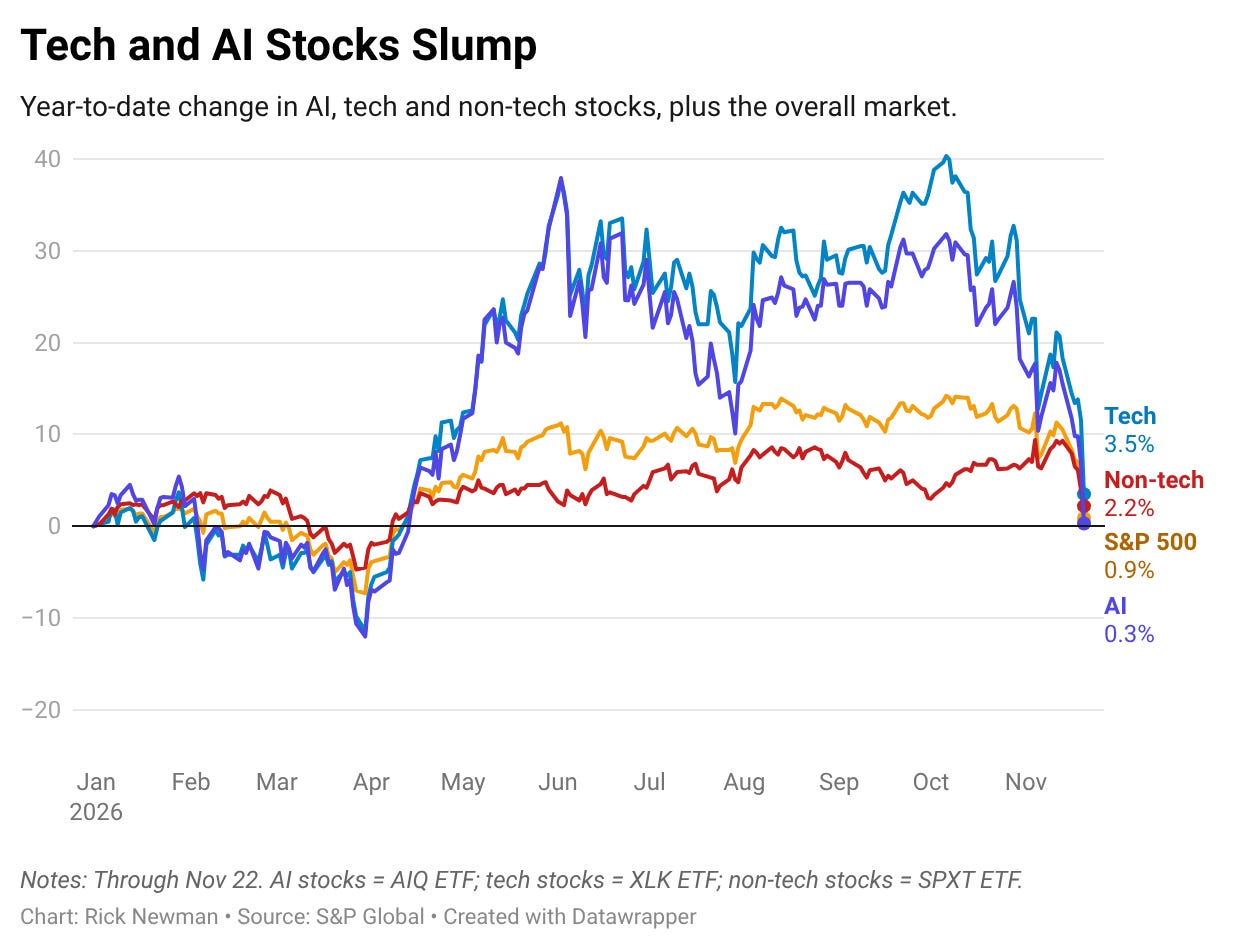
Investors seem to be paying attention. Since peaking on October 6, tech stocks have dropped by 25%%. They’re still up 3.5% for the year and 61% during the last three years. Investors keep buying the dips, figuring short-term selloffs are a temporary reckoning that won’t interrupt the broader rally.
The November 19 public offering of AI giant Anthropic will test the bubble theory—and it could reignite the AI rally. There’s been strong demand for Anthropic shares, suggesting the stock price could pop once public trading begins. If it does, demand for other AI shares could surge as well.
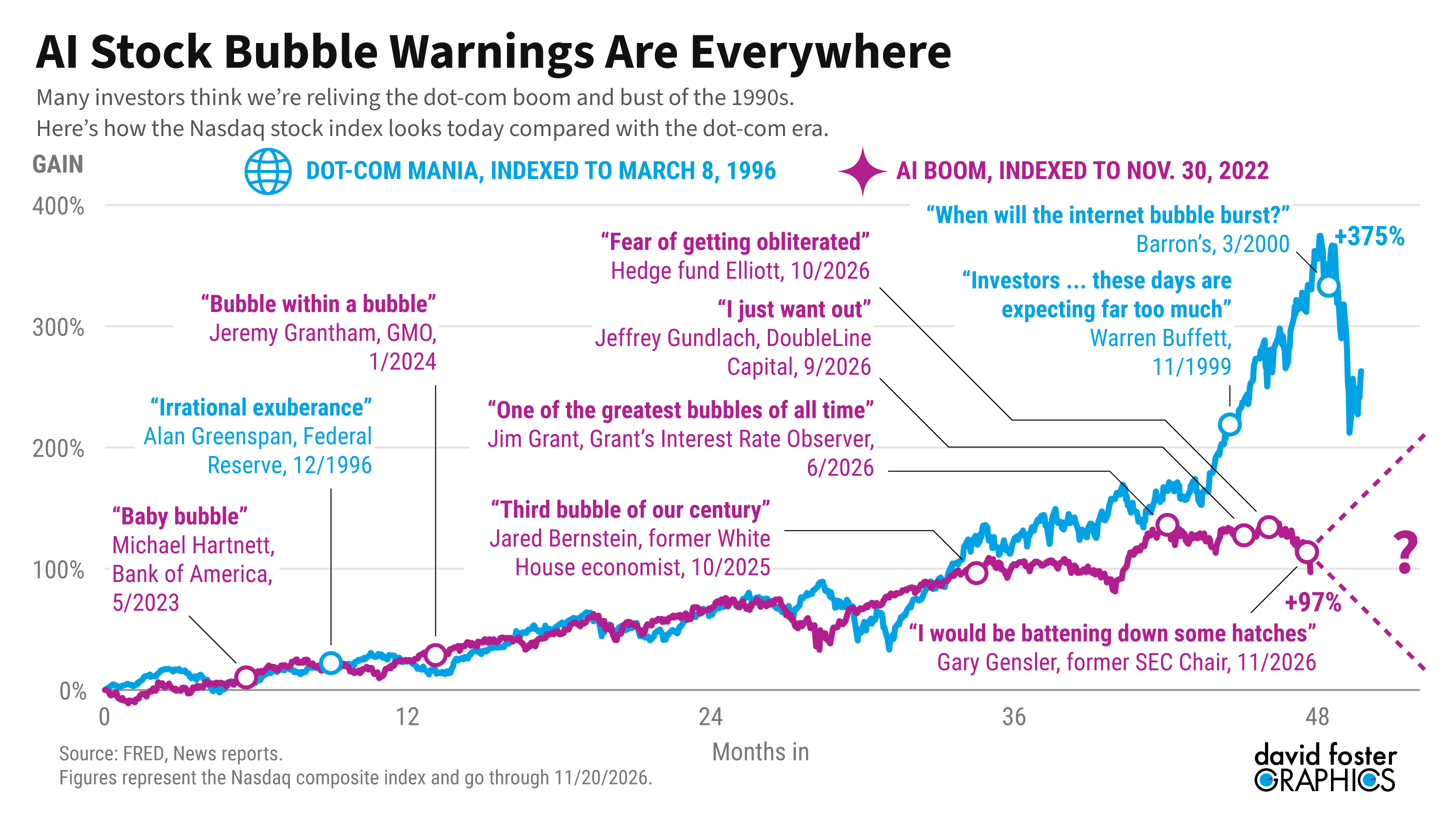
The AI stock doomers don’t argue that AI is overhyped vaporware or a passing fad. Like the onset of the internet in the late 1990s, AI is probably a game-changing technology. The general concern is that trillions of dollars in spending on the AI buildout won’t yield the returns necessary to justify stock values that have doubled or in some cases tripled for firms at the epicenter of the craze.
[These numbers say there’s no AI bubble]
An alarming October report by research firm Gartner predicted that 80% of specialized computing companies known as “neoclouds” could go bust by 2030. The thesis is that revenue for these firms will never reach levels sufficient to justify the vast sums they’re spending to build AI infrastructure, forcing losses, write-offs, and industrywide consolidation.
Neoclouds are a small portion of the AI industry, but similar concerns about subpar return on investment extend to many other companies, including tech giants such as Alphabet, Meta, and Nvidia. Those are extremely profitable companies, but some are depleting cash cushions they’ve built for years and starting to borrow to fund what seems like bottomless AI capacity.
[What you should know about the Nvidia Chinese honeypot spy scandal]
A simple web search for “AI bubble” will highlight the many titans of industry and finance who think this will end badly. In an October newsletter, hedge fund Elliott Management warned that FOMO, fear of missing out, was being replaced by “FOGO”—fear of getting obliterated. “Virtually every alarm bell warning of a substantial bear market ahead is rising,” the firm wrote, according to the Wall Street Journal.
Famed short-seller Jim Chanos has been warning that the AI era is a “golden age of fraud.” Billionaire investor Jeffrey Gundlach of DoubleLine Capital advises investors to completely divest from AI. Even the staid Bank of England has warned that a bursting AI bubble could cause financial shocks that the UK must prepare for.
Could the doomsayers be wrong? Some market experts think so. Economist Ed Yardeni of Yardeni Research maintains a “Roaring 2020s” thesis while forecasting that the S&P 500 will reach 10,000 by the end of the decade. That would be a 37% gain from current levels, roughly an 11% annual return during the next three years. He foresees “speed bumps” that will slow the AI buildout, but nothing that will stop it.
For all the worries about a bursting AI bubble, no major Wall Street firm is predicting a bear market in stocks, and most foresee modest stock gains in coming years. Economic growth is reasonably healthy, at around 2%. Unemployment is low and there’s no sign yet of AI displacing human workers on a meaningful scale.
Some soothsayers achieve lasting fame for calling bubbles when few others see them—but there are also many gloomy predictions that never materialize. Some bears warned of a tech bubble in the latter part of the 2010s, when the “FANG trade” was hot and the valuations of those companies seemed unsustainable. A 2018 CNBC headline, for instance, warned that the “tech bubble is larger than it was in 2000, and the end is coming.” But nothing much happened.
[Nvidia is still a powerhouse]
Even Alan Greenspan’s infamous warning about “irrational exuberance” in the stock market was significantly premature. Greenspan made that warning on December 5, 1996. Stocks kept climbing for more than three years, with the S&P 500 notching a 105% gain after the Maestro put everybody on notice.
If an AI bubble does burst, it will probably be different from what happened during the dot-com bust of the early 2000s. That wipeout involved obscenely high stock-market valuations for companies with little or no revenue and poor prospects for future profitability. Valuations are more grounded now, as we showed recently in this chart:
It’s also possible that the downturn in tech stocks during the last six weeks is a bubble deflating—without bursting. That would be a rosy scenario in which the market self-corrects, causing anxiety—but not mayhem.
So what should ordinary investors do about the risk of an AI bubble bursting? There are defensive strategies for those who prefer caution, but doing nothing special is also an option. Buy-and-hold investors who have been in the market for several years have already enjoyed terrific gains. Nobody should chase speculative manias, but running from them might not be wise either—especially since nobody really knows if a bubble exists until after the fact.
Enjoy a cartoon.
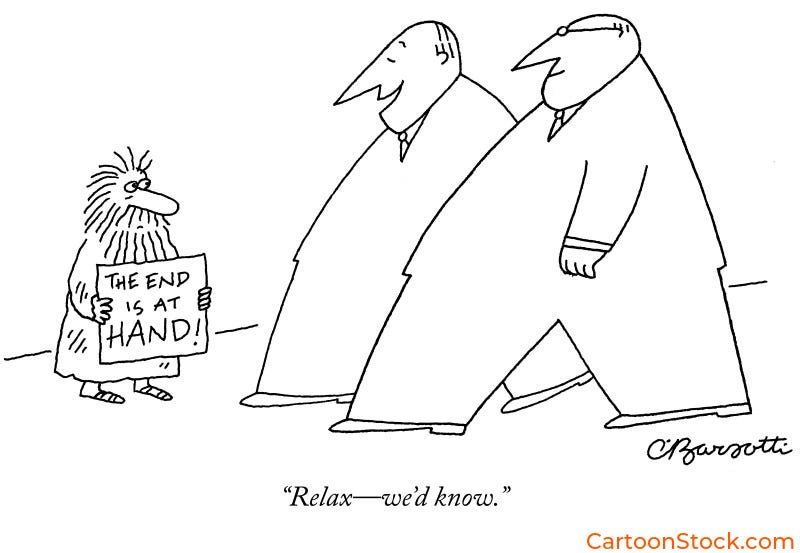
You can order this cartoon👆 and play cartoon-themed puzzles and word games at CartoonStock.com.
Click here to see more from The Pinpoint Press