


One thing everybody ought to know about President Trump by now is that he’s a preemptive blamer. He anticipates events that might turn against him and lines up scapegoats before the setback actually happens.
He’s doing that now with the legal challenge to his emergency tariffs. On November 5, the Supreme Court heard a landmark appeal that could invalidate at least half of the import taxes Trump has imposed so far in his second term. Skeptical remarks by a majority of the justices suggest the court will rule against Trump. Two lower courts already found those tariffs illegal, and it won’t be controversial if the court upholds those rulings.
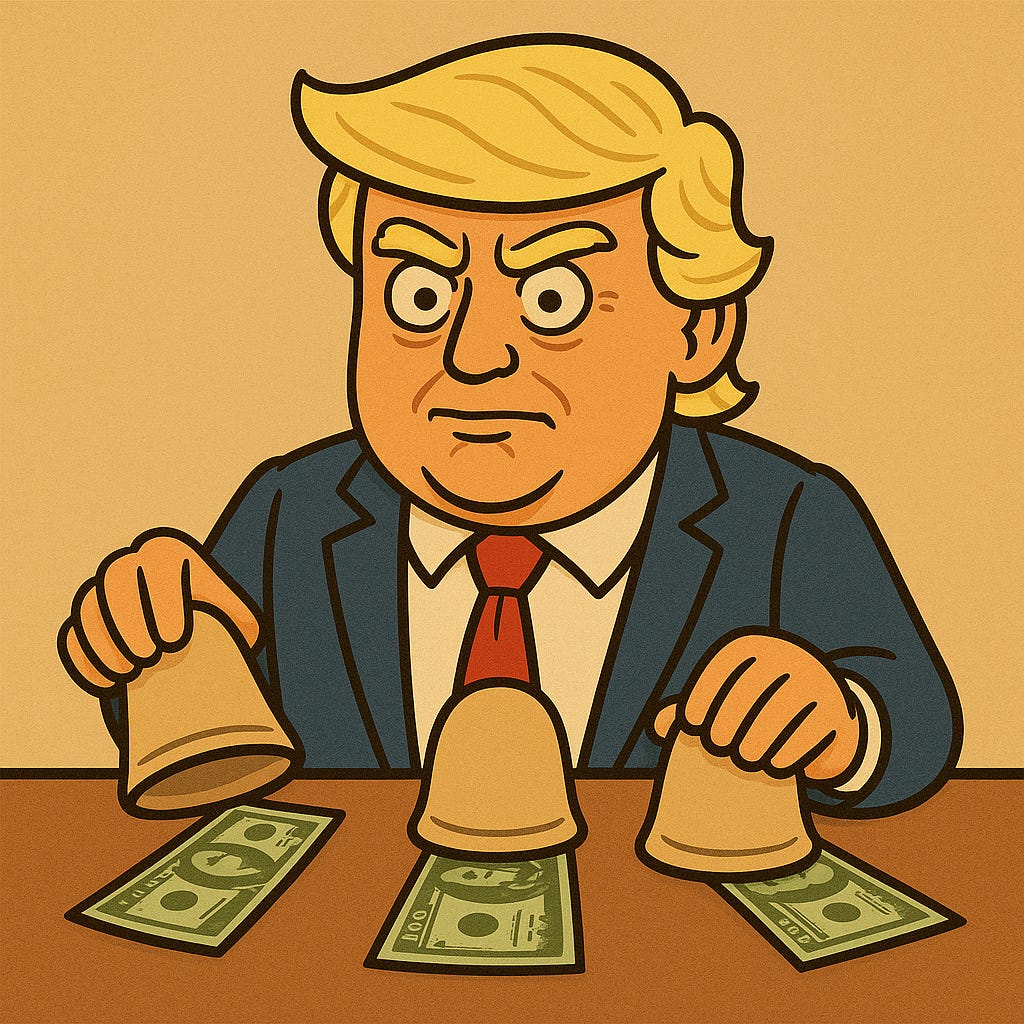
Four days after that hearing, Trump proposed a $2,000 “dividend” payment to most Americans as a way of sharing the tariff windfall with taxpayers. Was the timing a coincidence? Almost certainly not.
Trump’s $2,000 tariff rebate would only work if there’s tariff revenue to cover the cost. And it would require a lot of revenue. One round of tariff rebates could cost as much as $600 billion, and Congress would have to approve it through legislation.
All of Trump’s tariffs combined ought to raise around $270 billion per year in new revenue, according to the Yale Budget Lab. If the Supreme Court knocks down the emergency tariffs, new tariff revenue would drop by nearly half, to about $140 billion per year.
So without the emergency tariffs, it would take four years of tariff revenue to generate the $600 billion needed to finance those $2,000 checks. Congress, of course, could send out the checks with or without the revenue to pay for them, by simply borrowing the money. But there would be no Democratic votes for that, and there aren’t nearly enough Republican votes for stimmy checks that would add another $600 billion to the already gargantuan $38 trillion national debt.
[More: Trump is way behind the affordability curve]
Trump is girding for the Supreme Court kill his emergency tariffs. Then he’ll blame the Supreme Court for blocking his $2,000 tariff rebates, since they shut off the revenue stream that would have financed those rebates. If you’re wondering why your $2,000 check didn’t arrive, it’s the Supreme Court’s fault.
There are other types of tariffs Trump can impose if the court rules his emergency tariffs illegal. Trump’s tariffs on specific products such as autos, auto parts, steel, copper and aluminum aren’t emergency tariffs, and they’re not at stake in the Supreme Court case. He could push those taxes higher or impose similar tariffs on other products.
But Trump’s tariff push is losing momentum and an adverse ruling by the Supreme Court could pump the brakes harder. Voters sent Democrats to sweeping victories in this year’s elections as a rebuke to Trump and his tariff agenda. Trump, in response, is now honing an “affordability” message. That has already included tariff rollbacks on dozens of food items.
“Taking the tariffs off and leaving them off could achieve the inflation depression the White House is looking for,” Henrietta Treyz of research firm Veda Partners wrote in a November 16 analysis. “Signals are popping up all over the place.”
If Trump doesn’t get his $2,000 rebate checks, he’ll characterize that as a huge loss for taxpayers. But American businesses and consumers are paying his import taxes in the first place, and if half of those taxes disappear it will ease cost pressures everywhere. Trump’s phantom tariff rebate could be the best $2,000 check nobody every got.