


Sometimes a sharp stock pullback can be healthy, if it settles some froth and keeps markets rational. Investors hope that’s what is happening now with semiconductor stocks.
Semis have been on a tear since 2023, driving much of the overall stock market’s gain since then. The trigger has been the artificial-intelligence buildout, with unrelenting demand for chips from the likes of Nvidia, AMD, Broadcom and Micron.
But the semiconductor sector is now undergoing a correction, with the S&P 500 semiconductor sub-index down 10% in just five trading days. There’s no single cause for the selloff, but investors seem to be growing cautious after an epic runup.
Semis have outperformed the S&P 500 index for three years, with an explosive breakout beginning this April as first-quarter earnings results blew past expectations. From March 31 through June 2, semis soared by an almost unimaginable 63%. The S&P 500 during that time rose by just 20%. Semis accounted for nearly the entire gain in the overall market.
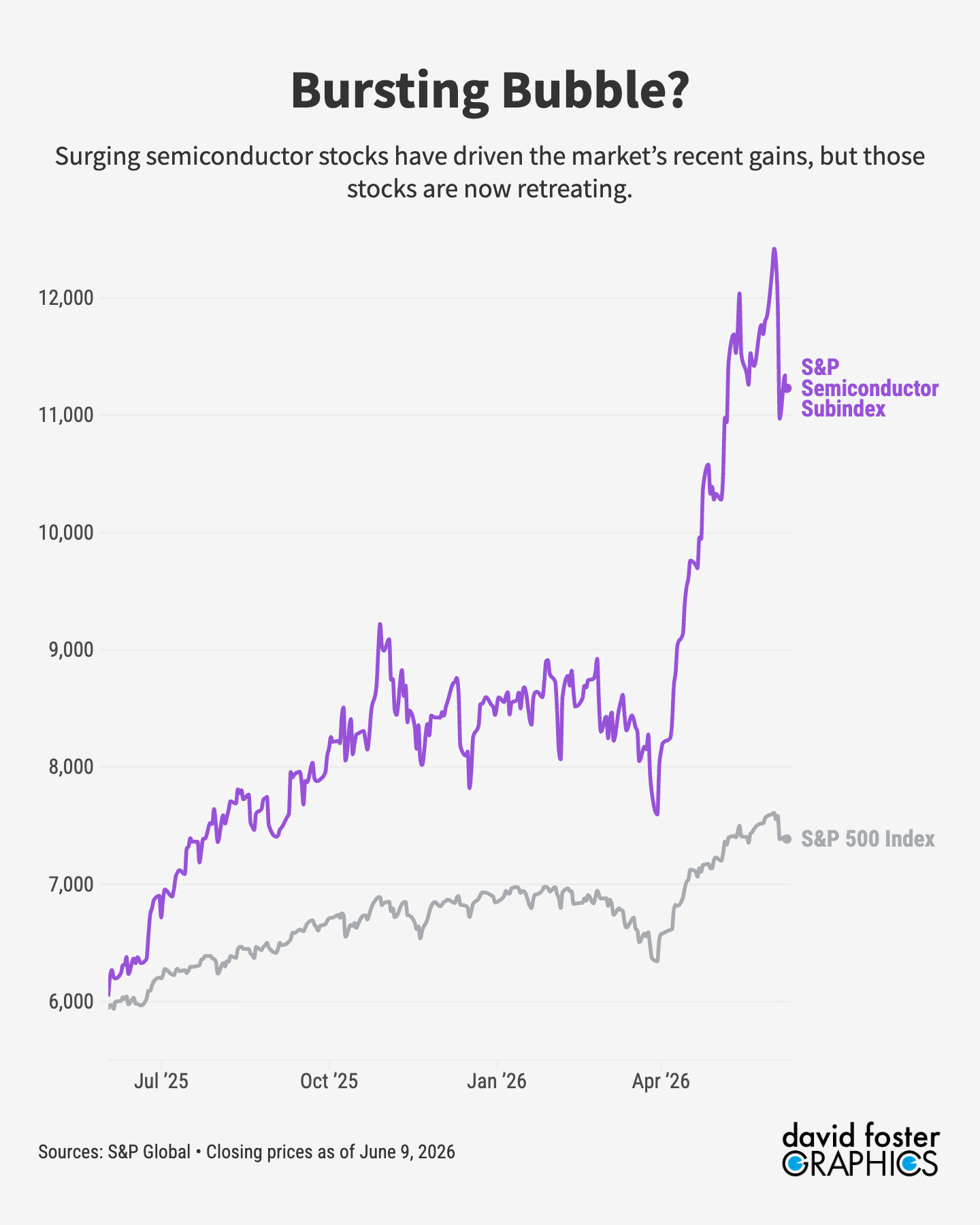
A pullback from those stratospheric levels would be totally normal, and arguably welcome. The question, of course, is whether it’s just a modest, one-sector correction or the start of something bigger.
[Here’s what you need to know about the SpaceX IPO]
Some analysts worry that the AI stock rally could collapse like the dot-com bubble that burst in 2000. The bubble part of that cycle ran for nearly five years, from 1995, when the Netscape public offering inaugurated the tech rally, to early 2000, when tech stocks peaked.
It got ugly from there. From the peak in March 2000, the NASDAQ tech index fell 79%, bottoming out in 2002. It didn’t regain the 2000 high until 2015.
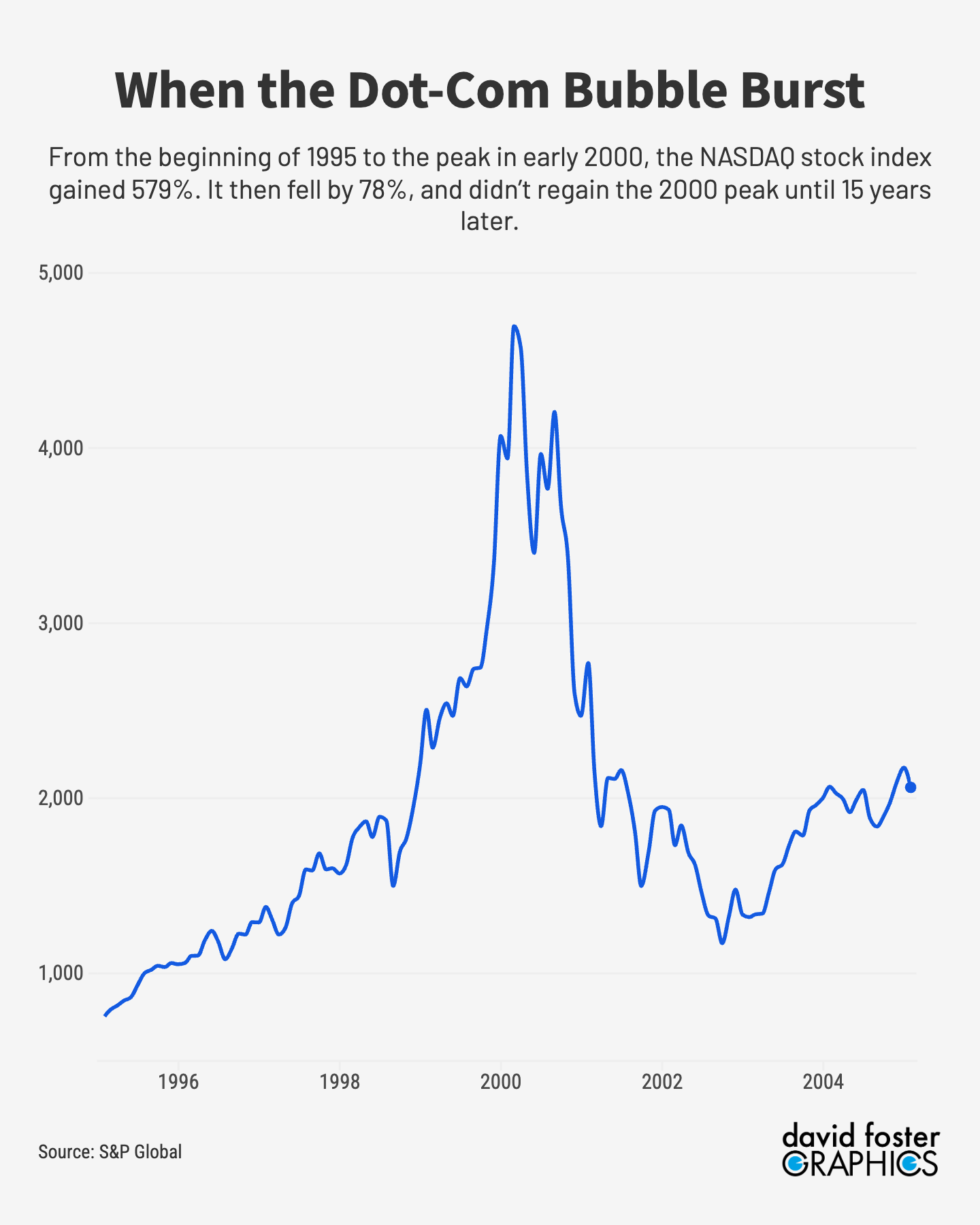
The current downtrend in semiconductor stocks doesn’t look anything like that. Plus, much of the rally has been based on rising real profits, not the phantom future profits that characterized the dot-com bubble.
But the majority of the year’s gains might be in. Three huge upcoming public offerings—SpaceX, Anthropic and OpenAI—will flood the market with new shares, and many buyers hoping to get in on the action will have to sell something else to generate cash. Cashing in on the huge gains in semis to rotate into the next hot thing (🤔) might make sense.
[The Weekly WTF: Trump robs small businesses]
The average Wall Street forecast for the S&P 500 index at the end of 2026 is 7,612, according to Yardeni Research. The index is currently at 7,387, just 3% below the year-end target. Forecasts range from a high of 8,250 (Yardeni) to a low of 7,100 at Bank of America.
BofA put out a research note on June 5 advising clients to “take profits” because certain technical signals suggest stocks may be at a near-term peak. Other analysts still think it’s wise to buy any sizable dip in stocks.
[Trump has a Joe Biden problem on jobs]
Ordinary investors shouldn’t buy or sell based on day-to-day market trends. But the stock-market rally has been one of the few things going right in a turbulent economy beset by war-based inflation, President Trump’s trade wars and a long-term slowdown in hiring. Confidence surveys show rising stock wealth is one of the few things making Americans feel better these days, at least for those lucky enough to own stocks. A bursting stock bubble is something nobody needs.
Enjoy a cartoon.
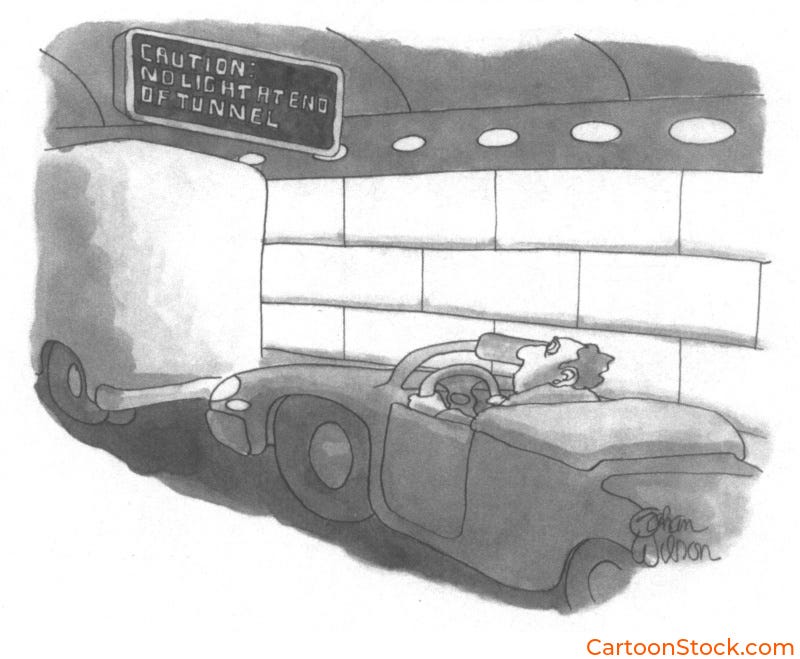
You can order this cartoon ☝️ or others like it, plus merch featuring cartoons, at CartoonStock.com.
Particularly loved this time's cartoon!!
Insightful and useful.