


(Cartoon at the bottom!)
President Trump mocks green energy as a scam and rails against fuel-economy standards as “hidden taxes.” Presidents George W. Bush and Ronald Reagan rolled back conservation efforts put in place by their predecessors. Even President Jimmy Carter, a devoted environmentalist, provoked mockery back in 1977 when he beseeched Americans to turn down their thermostats, in his infamous “sweater speech.”
For all the fits and starts, however, American efforts to boost energy-efficiency since the oil crises of the 1970s are paying a huge dividend now. Americans are feeling some pain from the war with Iran that Trump kicked off on February 28. Iran’s closure of the Strait of Hormuz has produced the biggest disruption to global oil supplies in history, according to the International Energy Agency. Oil prices have jumped by more than 50% and now hover above $100 per barrel. Gasoline prices have followed oil prices upward, with pump prices now above $4 per gallon.
Yet the effect on the US economy has been tame compared with the soaring prices, gas lines and recessions that accompanied the oil shocks of the 1970s. Few economists think the Iran war will cause a recession, and investors generally expect a bull market in stocks to resume once the war ends. Unless the war drags on for months, it will be little more than an economic speed bump in 2026.
[See Trump’s 6 craziest Iran war statements]
Energy efficiency is a major reason why. Vehicles, buildings, appliances, factories and many other things use far less energy than they used to, thanks to a combination of regulations, government incentives, and technology breakthroughs. Household spending on energy is just 3.7% of all spending today, the lowest on record except during the anomalous Covid pandemic in 2020. That’s down from a peak of 9.2% in 1982.
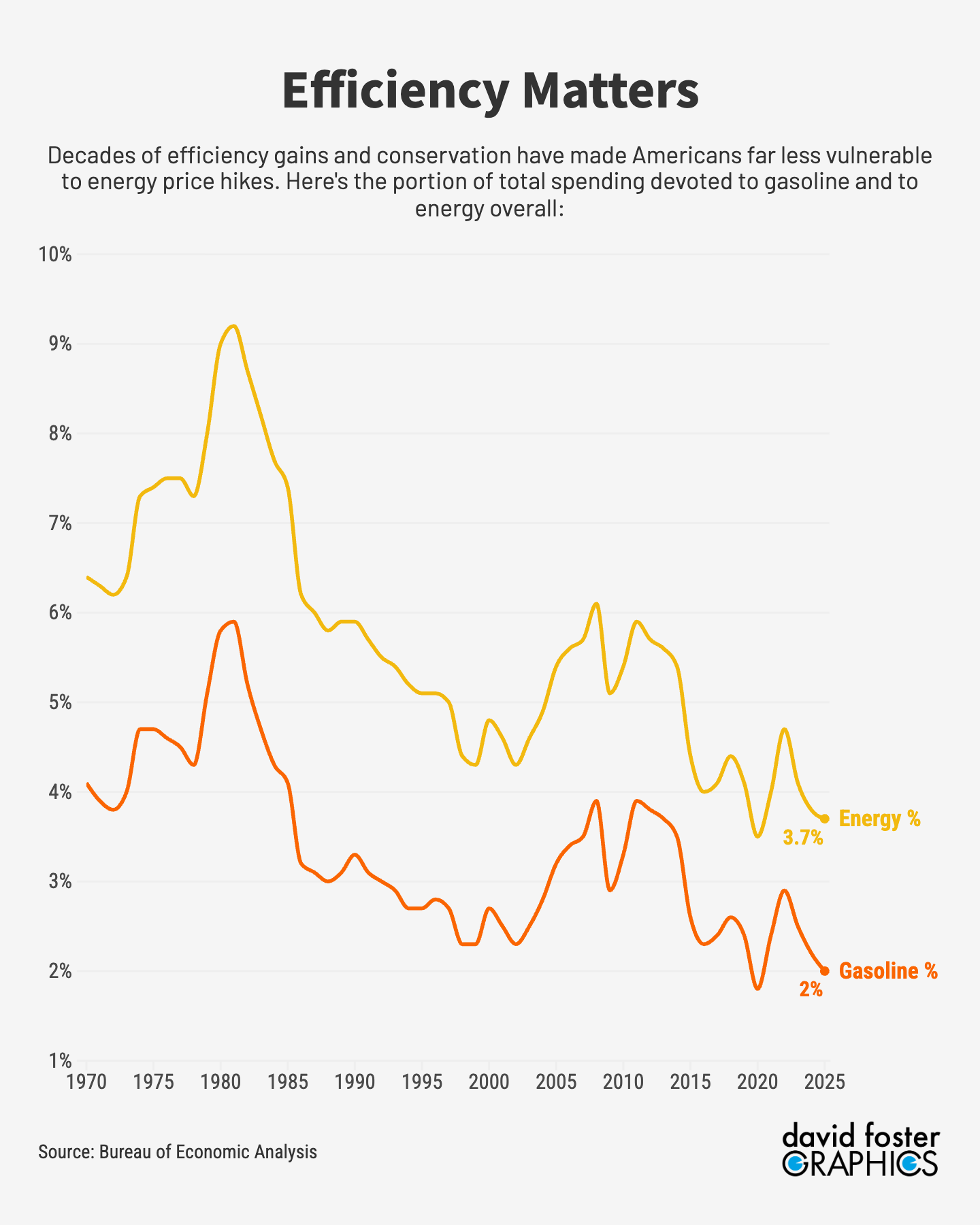
For all the attention gasoline prices get, they account for just 2% of consumer spending today. That’s just one-third of the spending devoted to motor fuel in the early 1980s.
The sharp decline in energy spending is an important economic cushion. “Energy goods and services (including utilities) account for just 3.7% of the consumer wallet,” Bank of America explained in a March 31 research note. “While we remain vigilant to downside risks from the Iran war, it helps that the economy has become much more energy-efficient over time, making it more resilient to energy shocks.”
[$4 gas hurts, but not like it used to]
It also helps that renewable energy is gradually replacing fossil fuels. Since 2000, the portion of American energy coming from renewables has grown from 3.3% to about 12%. Adding nuclear power brings the share of energy from non-carbon sources to about 20%. That’s a crucial hedge during an oil crisis, because renewables and nuclear power are domestic and can’t be disrupted by any other country acting outside US borders.
Green-energy advocates can overstate the benefits of renewables, such as claiming they’re cheaper without accounting for infrastructure costs or government (taxpayer) subsidies. But it’s undeniable that domestically produced wind, solar and hydro power are more secure than oil subject to geopolitical anomalies.
Trump seems to think that the United States should be immune to an oil price spike related to his Iran war, because America produces about as much oil as it consumes. That’s an amateurish misread of how global markets work. Since oil is easily transportable, producers can sell wherever they can get the highest price, which basically sets one global oil price everybody has to pay. Renewables, by contrast, are not very transportable, which means they can help lower costs and boost energy security, but only where they are available.
[See what it will take to reopen the Strait of Hormuz]
Trump has killed many incentives for green energy and electric vehicles established during the Biden administration, while redirecting federal support toward fossil fuels. Yet the business case for renewables remains compelling in many industries and regions. The Iran war probably makes it more so. Trump may not notice, but ongoing efficiency gains and more renewables are the best energy policy the nation can have.
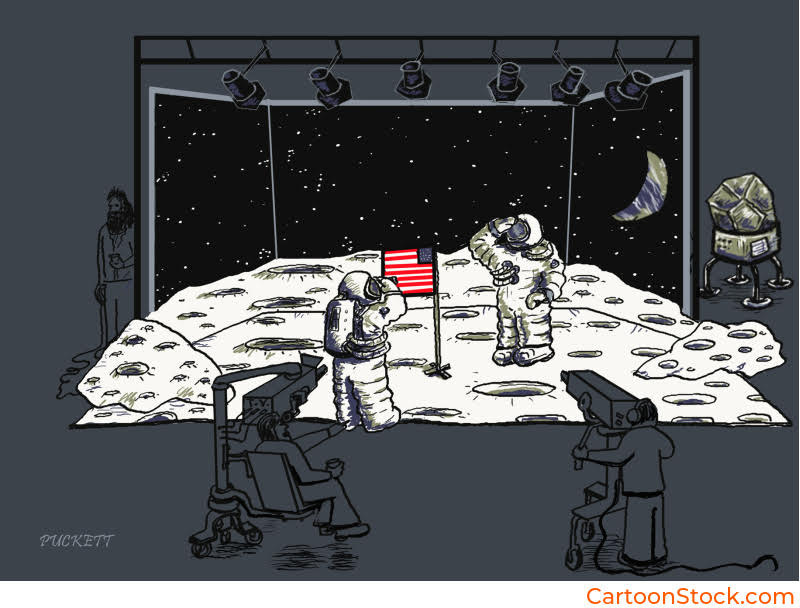
You can order this cartoon ☝️ or others like it, plus merch featuring cartoons, at CartoonStock.com.
A return to conservative oil consumption may be a the only positive global outcome from all of this.
Interesting and informative. So the Windmills are saving Trump while killing the whales.
What will the fertilizer shortages and helium shortages mean for the economy?
Less crops. Fewer and more expensive computers?