


A casual observer of President Trump’s trade wars might think that after eight months, they’ve accomplished precisely nothing.
Trump has routinely threatened ruinous tariffs on imports and then backed down, announcing trade “deals” that sound like he’s just going back to the pre-tariff status quo. China is Exhibit A. In the recent “truce” Trump announced with Chinese President Xi Jinping, Trump cut one of his tariffs in half and both sides agreed to resume purchasing products from each other that they traded routinely before the trade war. A rational person might ask, what’s the point?
The pattern is similar elsewhere. Trump has imposed, then reduced, tariffs on dozens of countries, testing how much protectionism markets can handle and dialing it back when investors revolt. As a result of Trump’s backpedaling, tariffs have caused far less damage than many economists predicted. The Supreme Court might strike down most of the Trump tariffs anyway, rendering much of the trade war moot.
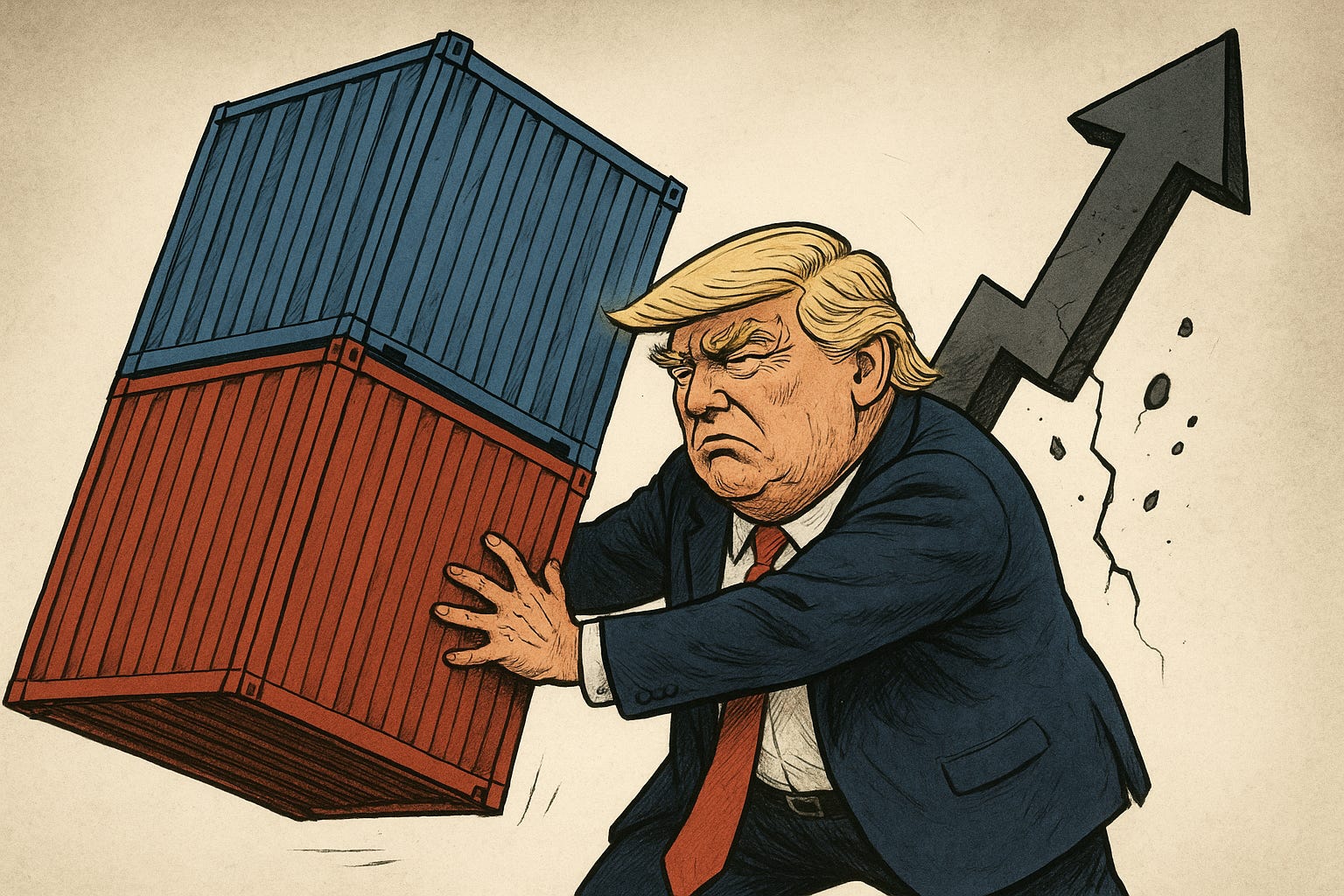
Yet much has changed. While progress—or regress—in the whole ordeal is difficult to track, zooming out and evaluating the entirety of Trump’s trade wars reveals four important developments:
Trump wants to be the middleman on trade. This gives him extraordinary control over key elements of the global economy and lets him personally choose winners and losers. Trump has gained outsized personal control over which American firms need to pay tariffs, and how much. Whether American soybean farmers and chipmakers can sell their products in China depends on Trump making a deal with Xi. Trump trolled tech giant Apple with tariff threats until CEO Tim Cook made a big domestic investment announcement Trump could take credit for. Trump gets a say in where companies investing in the United States site their facilities—bringing home the bacon, at the presidential level. Micromanaging trade makes Trump indispensable in dozens of deals worth billions of dollars and anoints him as crony-in-chief in a new regime of crony capitalism.
Trump wants to contain China. Trump positions himself to benefit personally from his trade wars, but there’s a geopolitical strategy, too. “Trump’s now starting to talk publicly about what underpins his entire geopolitical and economic strategy: China as the root cause of geopolitical instability and risk,” Terry Haines, founder of Pangaea Policy, wrote in a recent analysis. This extends to the western hemisphere, where Trump wants to dislodge China from ports surrounding the Panama Canal and undermine its status as South America’s largest trading partner. Other presidents have focused on China, too, such as Joe Biden’s focus on “outcompeting China” as an economic and national security priority. The difference with Trump is that tariffs and trade wars are his preferred weapons, whereas Biden sought to subsidize key domestic industries and engage more with Asian allies.
China knows Trump’s pain points. One reason for the latest “truce” in the trade war is Trump needed it. China’s refusal to buy American soybeans and other agricultural products torpedoed farmers, forcing Trump to contemplate a bailout. China’s cutoff of rare-earth minerals left many American companies—including defense contractors—in a jam. It seems premature to say China is winning the trade war Trump started, as some Trump critics argue. But China certainly isn’t losing. That’s why Trump announced a recent “deal” with few specifics and no major concessions from China.
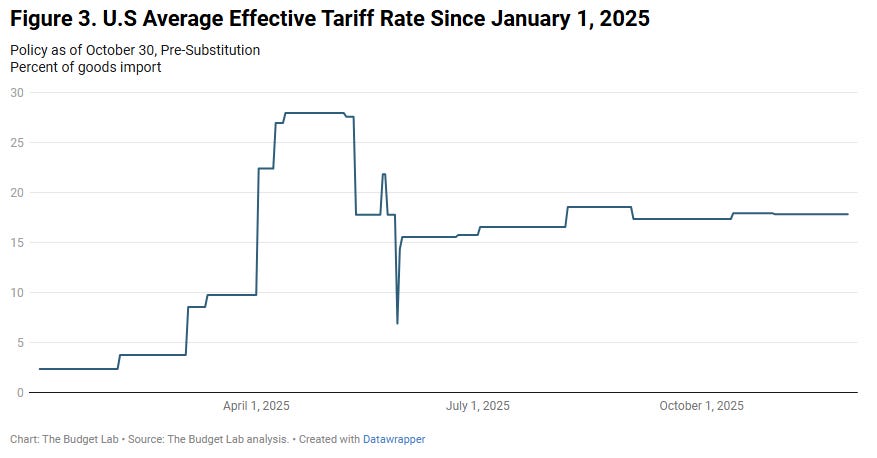
Trump wants the tariff revenue. Trump has repealed some of the steepest tariffs, but taxes on imports are still up by a lot since he took office in January. The overall tax on imports has risen from 2.5% to 17.2%, according to the Yale Budget Lab, as the chart above shows. The average tax on imports from China has jumped from 21% to about 47%, even in the aftermath of the trade truce. That level of import taxes will raise about $300 billion per year in new federal revenue. Trump wants to tap that kitty for a variety of pet causes, such as aiding farmers, supplementing food assistance or paying troops left dry by the government shutdown. He probably needs Congress to authorize such spending, but Republicans who control Congress might do that, since their own constituents would benefit from getting a cut of the tariff jackpot.
For Trump, there are lessons from eight months of trade warfare, just as there are for ordinary Americans. If Trump were pragmatic, he’d focus on optimizing the personal power he seeks without upsetting markets or pushing China to the the point that it puts him in a position of harming his own constituents. Come to think of it, maybe that’s what the latest truce is all about.