


THE TOP 5:
The government shutdown ended … for a while. Eight Democrat-leaning senators finally agreed to sign the spending bills necessary to open the government, ending a 43-day shutdown that became the longest on record. Flights returned to normal, food aid resumed and federal paychecks started going out again.
But the underlying disputes remain, which could lead to another shutdown at the end of January. The main demand from Democrats was an extension of healthcare subsidies that expire at the end of this year. They didn’t get it. Republicans would only agree to consider that in separate legislation, and Raymond James analysts think there’s only a 33% chance Congress will extend those subsidies. The new spending bills only funds the government through January 30, and Democrats have suggested they’ll shut down the government again if those subsidies expire.

Once the shutdown ended, everybody in Washington debated whether the Democrats or Republicans “won” the battle. Nobody asked whether taxpayers won, which of course they didn’t. Taxpayers finance government services that went offline for more than a month. Amazon or Netflix would offer a refund. Politicians in Washington just acted like we should be grateful their petty spat didn’t last longer.
[More: The shutdown showed why everybody hates Congress (and the media)]
The Trump-Epstein scandal is as undead as ever. A new batch of emails once sent by the deceased financier-pedophile Jeffrey Epstein suggested President Trump knew all about Epstein’s abuse of teenage girls. Epstein referred to Trump repeatedly in the emails, as if the two knew each other well. Trump has issued a series of comical denials regarding Epstein over the years, like the captain of a sinking ship insisting everything is smooth sailing. The scandal won’t die because Trump keeps fanning it.
For all the ink and airtime devoted to the Trump-Epstein saga, the media has done a poor job outlining what most likely happened. Here’s what the facts seem to show: It’s obvious Trump knew Epstein, was friendly with him for a while, and knew he was a creep and maybe a criminal. The unresolved question is whether Trump himself abused any of the underage teenage girls Epstein kept as if they were kinky pets.
There’s no evidence Trump did, but one Epstein email says Trump “spent hours” with Epstein victim Virginia Giuffre at Epstein’s Manhattan townhouse. Alone? The email doesn’t say. Did Trump have sex with Giuffre, who would have been a minor at the time? Also doesn’t say.
Giuffre committed suicide in April, at the age of 41. She wrote a memoir, published posthumously, and spoke publicly about Epstein, starting in 2011. The most salacious thing she ever said about Trump is this: “He didn’t partake in any sex with any of us but he flirted with me.”
If that’s all there is to it, why won’t Trump just admit he knew Epstein? That’s what nobody understands.
[Related: Trump knew all about Epstein (haiku version)]
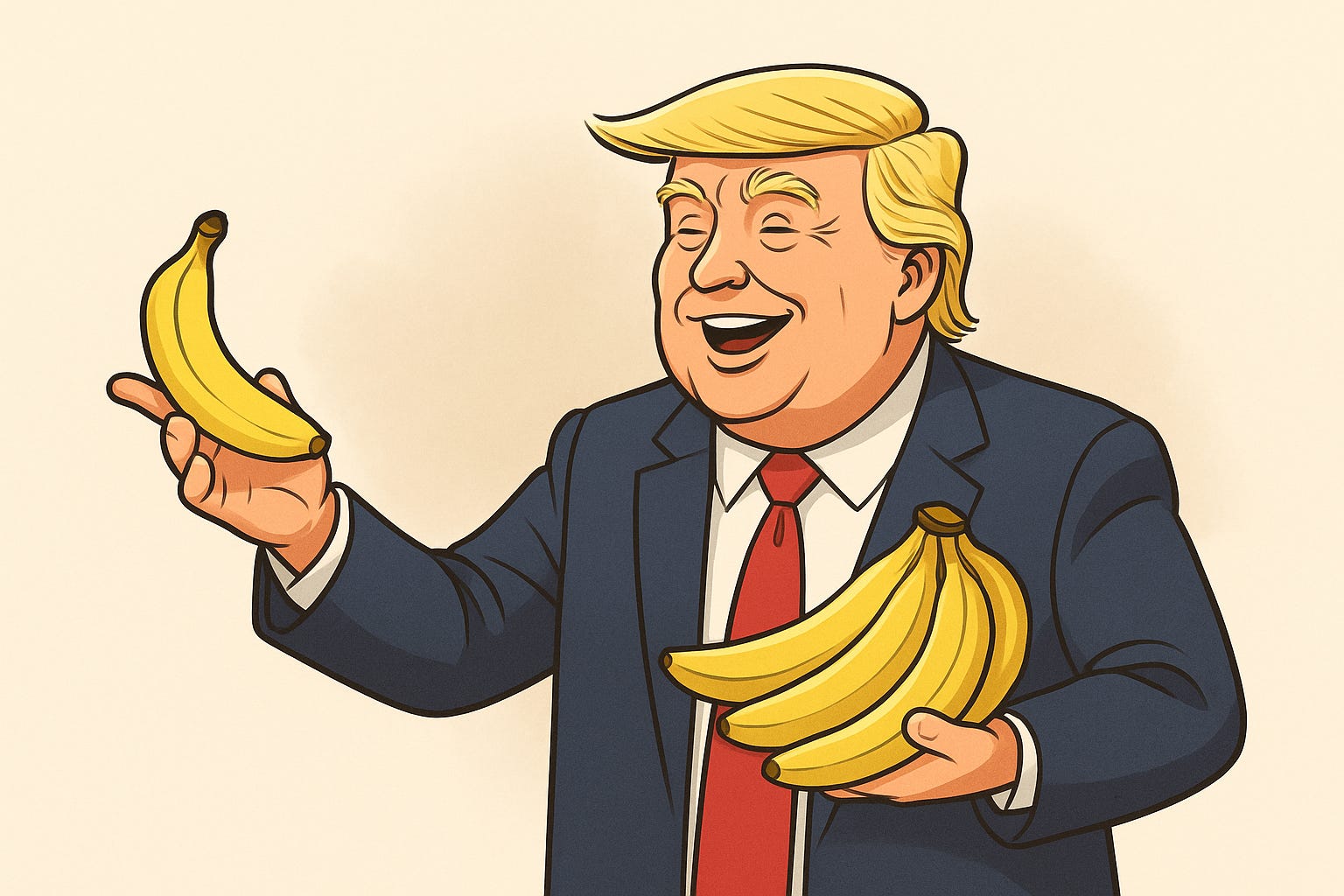
Trump became aware of the affordability crisis. He said he’s rolling back tariffs on more than 200 food products to help lower prices on pantry items such as coffee, beef and bananas. Those are tariffs Trump imposed himself, so if the rollbacks help, all it will do is mitigate some of the damage Trump has already caused.
The affordability crisis is much deeper than Trump seems to grasp, with the cost of housing, healthcare, electricity, and many other things rising by more than incomes, in some cases for years. Trump has floated other ideas on social media, such as sending out new stimulus checks or allowing 50-year mortgages that will lower monthly payments by stretching out the loan out over a longer period of time. These are gimmicky ideas that probably won’t pass Congress and wouldn’t address underlying problems if they did.
Trump did seem to hear the message voters sent in the off-year elections, when they rejected Trumpism and overwhelmingly voted for Democrats hooting about cost-of-living pressures. He suddenly started talking about affordability himself, calling it a “new word,” as if hearing it for the first time. But Trump remains committed to his tariff agenda, which is anti-affordability. It raises costs and pushes inflation higher, which means Trump is paying lip service to affordability while his actual policies make it worse.
[Related: Trump is way behind the affordability crisis.]
Penny for your thoughts … make that a nickel. The government minted its last penny on November 12, 2025. Anybody feeling weepy? Trump scotched the penny in an order issued back in February, on the logic that it’s a waste of money: Minting one penny costs 3.69 cents. There are at least 114 billion pennies in circulation, so it’s not like they’ll become rare. But some merchants may run short, which means they’ll have to round up change for cash-paying customers by as much as 4 cents. Some analysts say that could become a problem. Seems overblown.
[👇I discussed the week in markets with CNN on November 14👇]
Nickels cost 14 cents to make, which means some government efficiency nut might target them for elimination, too. But you can use nickels in parking meters! If a couple nickles can buy you a few minutes on a meter and prevent a $20 ticket, that’s a fantastic return. Dimes and quarters both cost less to make than their face value, so they seem safe.
Bitcoin price target: $1.2 million. Innovation investor Cathie Wood of Ark Invest lowered her 2030 price target for Bitcoin from $1.5 million to $1.2 million. Not that there’s anything wrong with Bitcoin. She just thinks stablecoins, which are cryptocurrencies pegged to traditional assets to make them less volatile, will take more market share in the crypto universe. That would reduce demand for Bitcoin and lower its price.
Bitcoin has tumbled lately, falling from its all-time high above $126,000 on October 6 to around $96,000 on November 15. That’s a 25% drop. If Bitcoin does hit $1.2 million, it would be a 1,163% gain from where it is now. Feeling lucky?
~ ~ ~ ~ ~ ~ ~ ~ ~ ~
WHAT WILL MATTER NEXT WEEK:
Nvidia earnings. The tech titan reports earnings on November 19, essentially closing out the third-quarter earnings season. The question isn’t really whether Nvidia will beat earnings expectations—it’s a rigged game, and most companies do—but what clues the chipmaker will give about the artificial-intelligence boom and the health of the tech industry. Nvidia is as integral to tech as any company these days and can single-handedly move markets. By the way, Nvidia generated headlines when it became the world’s first $5 trillion company on October 29, but its stock price has dipped since then and now it’s *only* worth about $4.6 trillion.
Job numbers. We’ll finally get some. The Labor Dept. says it will release the jobs data for September, delayed because of the government shutdown, on November 20. There’s been other data on the state of the job market, generally showing it to be weak. Some forecasters think the economy barely created any jobs during the last two months. If the official data show rising unemployment, that would make the Federal Reserve more likely to cut interest rates in December, which is now a 50-50 likelihood.
Pasta wars. Trump wants to impose tariffs on pasta from Italy that could go as high as 107%. The proposal dates to September, but it just started getting attention in recent days after the Wall Street Journal reported on it. And since affordability is Trump’s new buzzword, reporters are bound to start quizzing him about Pastageddon. Credulous media predict nightmare scenarios in which stores run out of pasta and Italian restaurants go bust. More likely is that Trump backs down after everybody freaks out. Here’s one clue: There’s no firm data for the onset of these tariffs, which means Trump can milk them for maximum shock effect without actually imposing them.