


President Trump is rolling back fuel-economy standards put in place by his predecessor Joe Biden just 18 months ago. By the 2031 model year, passenger vehicles will have to average 34.5 miles per gallon. The Biden standard was a much higher 50.4 MPG.
Trump is basically undoing the Biden rule. But part of the reason Biden hiked MPG standards was that Trump, in his first presidential term, lowered them. So Biden was undoing the earlier Trump rule. But Trump lowered mileage standards during his first term because his predecessor, Barack Obama, raised them. Trump 1.0 was undoing the Obama change.
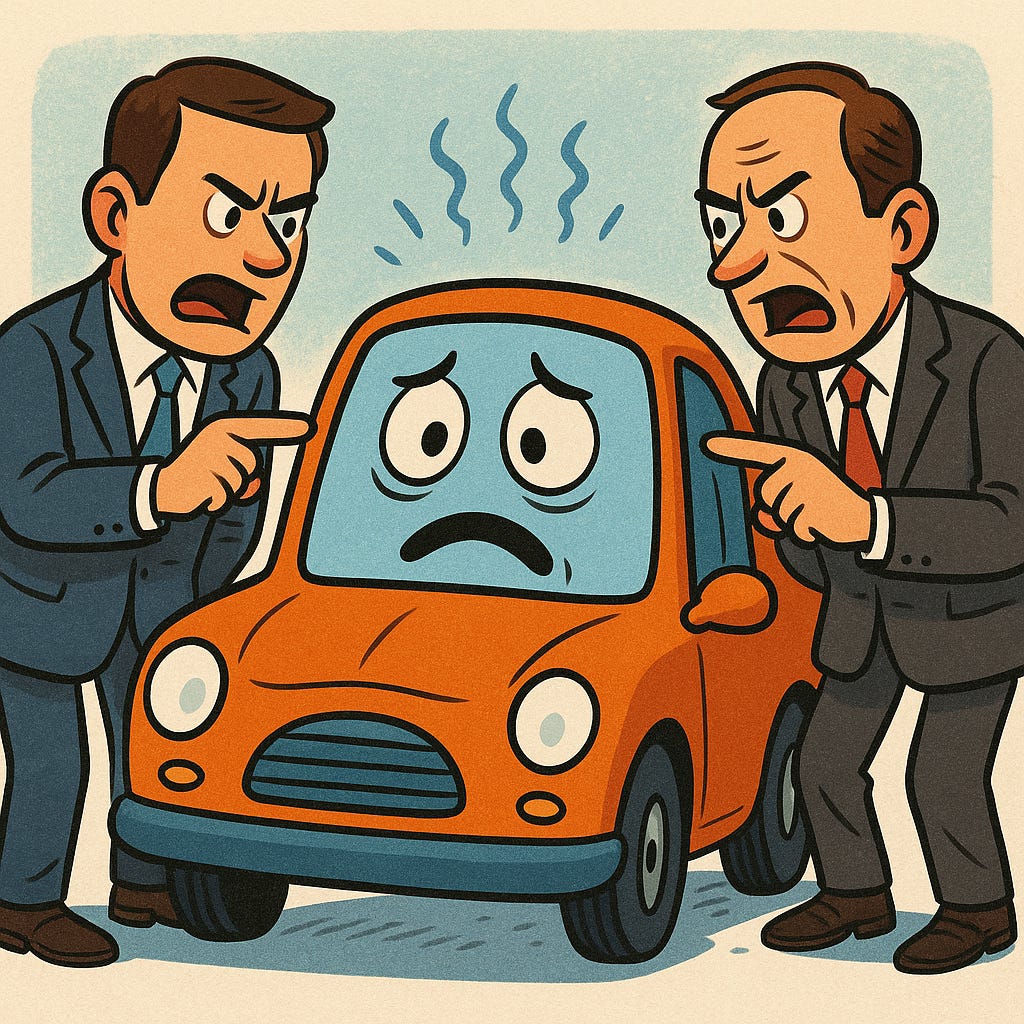
See the problem? During the last 10 years, there have been at least four major changes to fuel economy rules driven by presidents pushing political agendas. Obama and Biden wanted to redress global warming and foster green energy. Trump wants to own the libs and get more mileage out of fossil fuels. Each has claimed his own policy as best for consumers. But they can’t all be right.
Presidential abuse of fuel-economy standards is a classic case of regulatory mission creep. Congress passed the law giving the government the power to regulate fuel economy in the 1970s, when the United States imported the majority of its oil and two oil shocks sent gasoline prices soaring. Average fuel economy was a lousy 13 miles per gallon. It made sense to improve efficiency gradually, to make the country less vulnerable to the whims of Middle East oil sheikhs.
Fuel economy improved in the 1980s, then flatlined for about 20 years. Congress passed a law in 2007 setting new, higher efficiency standards. Model year 2020 vehicles were supposed to average 35 miles per gallon.
Barack Obama decided to go further when he took office in 2009. He raised the standard to 54.5 MPG for 2025 vehicles. Trump undid that during his first term, lowering the target to about 40 MPG. Biden clapped back in 2024 by raising the standard to 50.4 MPG for the 2031 model year. Trump now plans to lower that to 34.5 MPG.
While all this was happening, the fracking revolution made the United States the world’s largest oil producer. That doesn’t make us impervious to energy shocks. Russia’s invasion of Ukraine in 2022 sent oil prices soaring, while gasoline hit $5 per gallon. But the United States isn’t nearly as dependent on Middle East oil as it was in the 1970s.
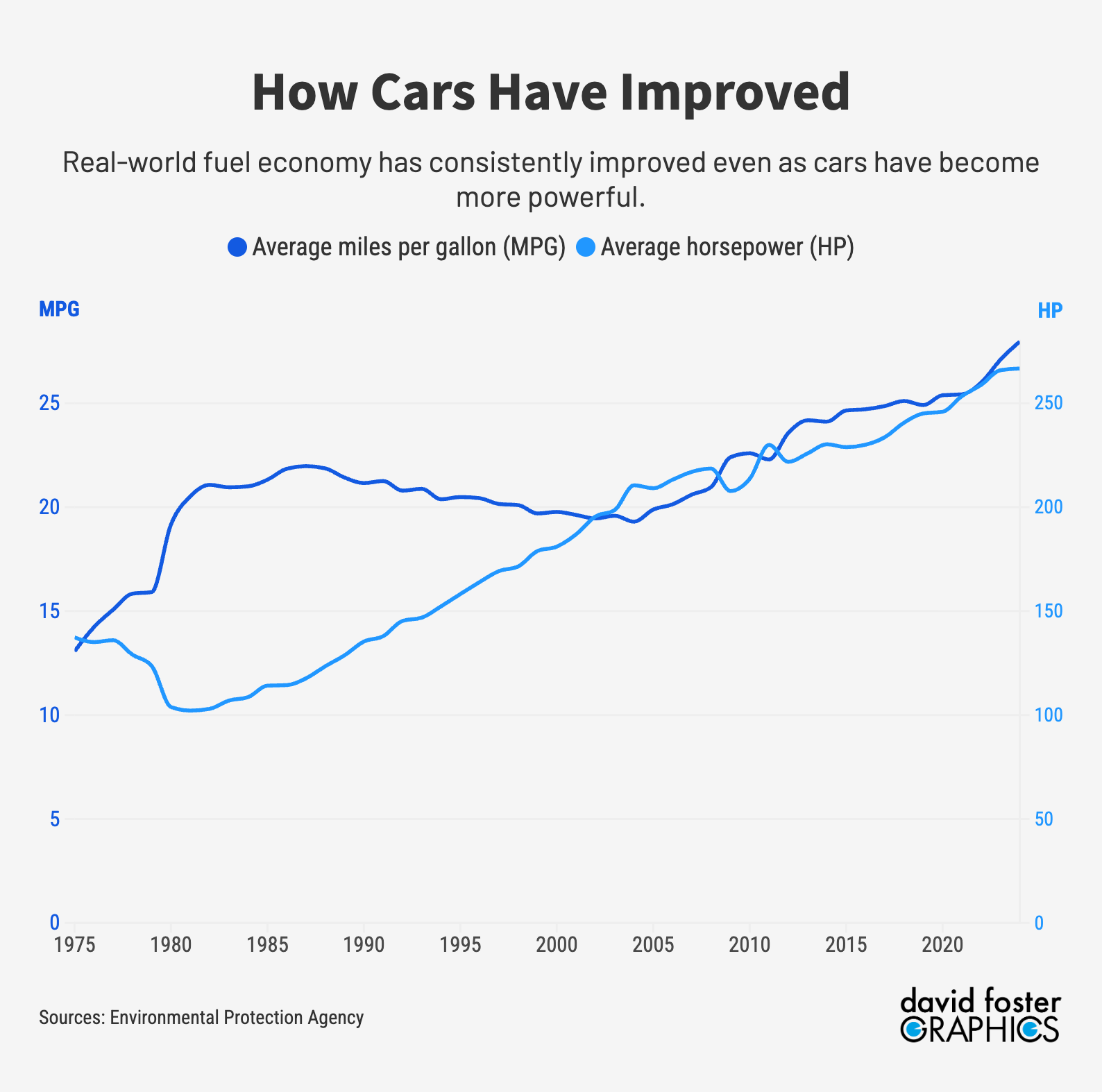
All of this maneuvering has actually led to more efficient vehicles. Real-world mileage (which differs from the government requirements for technical reasons) now averages about 28 MPG, more than double the average of the 1970s. That saves drivers money, since they use less gas. Cars are more powerful, too. Innovation has generated terrific advancements in efficiency, driveability and safety.
Yet the average new car now costs more than $50,000, way beyond the budgets of many families. It takes 36 weeks of income to buy a typical new car today, up from about 25 weeks in 2007, when Congress passed the law pushing mileage standards up. Economy cars costing less than $20,000 have basically disappeared from dealerships.
Stricter fuel-economy rules aren’t the only reason cars have gotten more expensive. Many Americans want expensive cars packed with features, and every manufacturer prioritizes higher-margin products over lower-margin ones.
But the Obama-Biden push for big efficiency gains has still helped push prices to higher levels than either man intended. They both had good intentions, and constituencies demanding action on climate change. But they overlooked real-world affordability when telling voters how much money they’d save on future gas costs.
Trump doesn’t exactly have it figured out, either. His tariffs are hitting automakers especially hard and pushing costs up. And his antipathy toward green energy is senseless. Electric vehicles aren’t a fad. They’re the future of transportation. It’s prudent at a national level to cultivate breakthrough technology and gain a competitive advantage. Biden tried to do that with green energy incentives that Trump has killed. China is the world leader on EVs, meanwhile, and its edge is growing.
A logical approach to fuel efficiency would be a set of stable targets that presidents can’t arbitrarily fiddle with, paired with incentives to develop new energy sources that could make gas mileage obsolete. What we have instead is overkill in both directions. It’s a miracle anybody gets anywhere.
Great article! I worked in Detroit for a great American auto company for 34 years. Other countries help their Auto industries… but not ours. Auto jobs are good jobs and a little help would have provided a big benefit to the country ..too bad.
In case you had not noticed everything we do in America is politicized. If it can not be politicized it will be soon.Politics requires that we have to have something to argue about.We can not agree on the best things for our country so we just argue an get nothing done.In case you have not noticed most"WARS"are started just to get folks at home to think about something else.