


The bond-market selloff that’s been getting everybody’s attention isn’t that dramatic, on the surface. As investors demand higher returns to hold long-term bonds, the interest rate on the 10-year Treasury note has risen from 4.2% at the start of 2026 to about 4.8%. That’s approaching the highest level in 20 years, but it’s hardly unprecedented.
During the 1990s, the 10-year Treasury rate averaged 6.6%. During the 1980s, it averaged 10.6%. Those were both prosperous decades with strong growth and improving living standards.
What’s different now, however, is the US government runs massive annual deficits topping $2 trillion, with a national debt of more than $40 trillion. That means small changes in interest rates can have large effects on the US government’s finances. At some point, it could become difficult to manage, with the government’s interest costs skyrocketing and little money left for anything else.
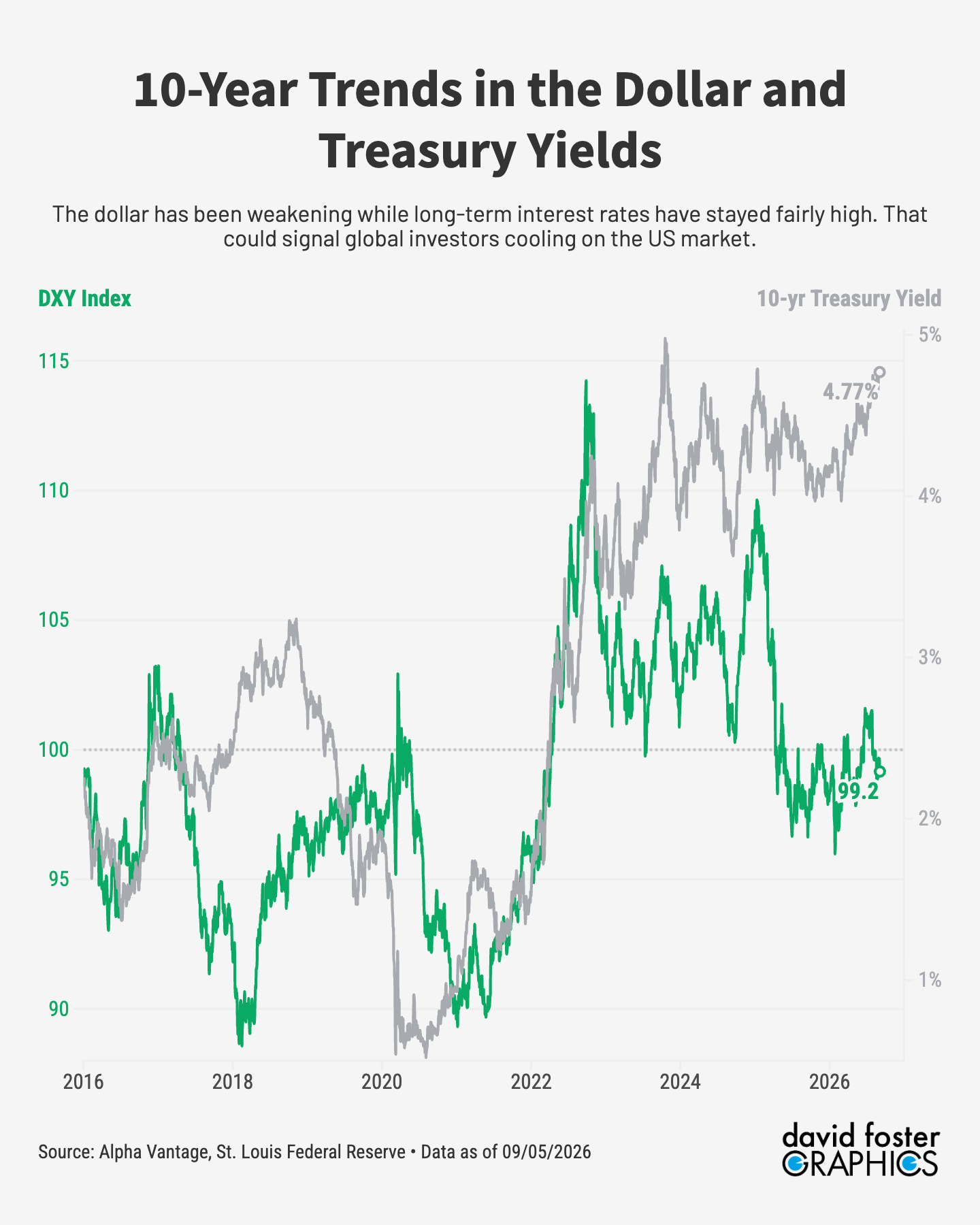
“A renewed focus on deficits is warranted given the rise in rates,” Bank of America economists wrote in a Sept. 4 research note. “The fiscal challenge is increasingly about interest expense, which now exceeds spending on both defense and Medicare and is still rising. The biggest long-run risk is a feedback loop in which higher rates raise deficits, larger deficits increase Treasury supply, and higher term premiums push borrowing costs even higher.”
[The Weekly WTF: Interest rates befuddle business genius]
Two charts convey the problem. The first shows the annual interest payments on outstanding federal debt. The figure crept upward from $331 billion in 2001 to $521 billion in 2020. But then interest payments mushroomed, rising to almost $1.2 trillion in 2025. The Congressional Budget Office estimates interest payments will hit around $1.3 trillion in 2026.