


As my 20-something kids point out, younger Americans don’t know what “jumping the shark” is. Some older ones probably don’t either. So I’m going to do America a service and perform an intergenerational translation.
Jumping the shark means you’ve become ridiculous, even if you don’t know it. It comes from the ABC sitcom Happy Days, which was mostly about kids growing up in Milwaukee in the 1950s. The writers must have run short of material, because in 1977—Season 5—they sent the gang out to Hollywood and devised a goofy stunt in which cool-cat Fonzie jumped over a shark on water skis while wearing his trademark leather jacket. Critics groaned.
At least Happy Days was popular and successful before it jumped the shark, which is more than you can say about President Trump’s trade war. It bombed out of the gate, with the stock market tanking right after Trump announced sweeping import tariffs back in April. Trump had to back off the most draconian of those tariffs, but since then, he has dialed tariffs and other trade threats up and down as he tries to micromanage the economy, reward friends, punish enemies, exact tribute and resurrect those glorious, backbreaking factory jobs of the Smokestack Era. It’s a tiresome act with reviews that have never improved from the no-star levels of April.
History will determine the true moment Trump’s trade war jumped the shark, but it might have been October 23, 2025, which is the day Trump blew a gasket because the province of Ontario, Canada began running ads during the World Series using the words of former President Ronald Reagan to explain everything wrong with tariffs. As Reagan said during a 1987 radio address, “over the long run, such trade barriers hurt every American worker and consumer … markets shrink and collapse, business and industries shut down, and millions of people lose their jobs.”
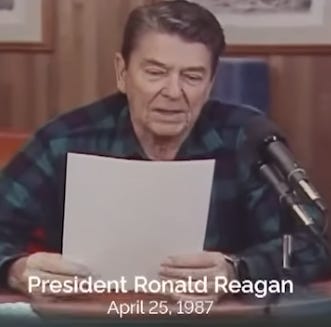
The ad didn’t even mention Trump, but it scored a direct hit, anyway. In a rambling, late-night social media post, Trump called the ad “fraudulent”—which it wasn’t—and announced he would retaliate against the vicious commercial by cancelling trade negotiations underway with Canada.
Then he added 10% to the 35% tariff he has already imposed on many Canadian imports. Trump’s tantrum actually worked: Ontario suspended the offending ad, silencing Reagan’s criticism of Trump.
This came 11 days after Trump said he would raise his new tax on Chinese imports from 30% to 130%, which is such a big tax that it would effectively keep all Chinese products out of the United States. Trump got angry at China because it decided not to sell America rare-earth minerals, which was retaliation for Trump’s own trade restrictions on China from earlier this year. But wait: There was a big breakthrough on October 27, when both sides suggested they were just kidding around and there won’t be a new 100% tariff after all.
Trump wants China to buy more American soybeans, because they stopped when Trump originally raised tariffs on Chinese imports. But if China doesn’t buy more American soybeans, Trump will give soybean farmers billions of US taxpayer dollars, so he can keep his beloved tariffs in place and kill the soybean market at the same time. See how neatly that works out?
Trump also has big plans to fix the beef market, by driving prices up and down at the same time. He put new tariffs on most beef and cattle coming into the United States, with an exception for beef from Argentina, which will get the Special Trump Rate™ and be allowed to import four times as much beef to the United States as before. The end result is that American consumers are paying 15% more for beef than a year ago and American ranchers are irate that Trump is selling them out to competitors in Argentina. Sounds like it’s all going according to plan.
The comical side of this tragicomedy is the earnest reporting at most news organizations that cover every one of Trump’s trade spasms as if it’s a normal policy announcement. “Trump Announces Tariff Increase on Canada Over Reagan Ad Spat,” the New York Times dryly announced in an October 25 headline. A more honest headline might read, “Trump goes more berserk than usual,” or “Crazy president hates on commercial, raises taxes.”
Investors have figured out that Trump’s trade threats are 75% bullshit, and capitalized by buying every dip when stocks drop on some wackadoodle trade threat Trump posts online. Trump doesn’t seem to know it, but investors now realize that Trump is jumping the shark, pretending he’s an astute trade negotiator while undermining his own seriousness with silly stunts and absurd threats he doesn’t have the guts to follow through on. It’s a farce in which the audience increasingly gets it, even if the headliner doesn’t.
Unfortunately, the farce can continue long after the audience catches on. After Fonzie jumped the shark, Happy Days aired for another six seasons. That’s a lot of stock-market dips.
One of these days, you need to really tell us clearly what you think of Trump 2.0's approach to tariffs and trade :-) Agree fully with everything you've said, including how the mainstream media sane-washes his pronouncements and erratic steps.