


Zohran Mamdani won the New York City mayor’s race by hammering affordability concerns. Voters overlooked many vulnerabilities—Mamdani’s socialistic sympathies, his prior calls to defund the police, his lack of experience—because the high cost of rent, food and childcare is issue 1 through 10 for many New Yorkers. Mamdani got it.
Democrats trounced Republicans in important governor’s races in New Jersey and Virginia by, once again, highlighting high living costs and blaming the incumbent president, Donald Trump. Overall, Democrats basically swept the off-season elections, clearly a rebuke of Trump at various levels.
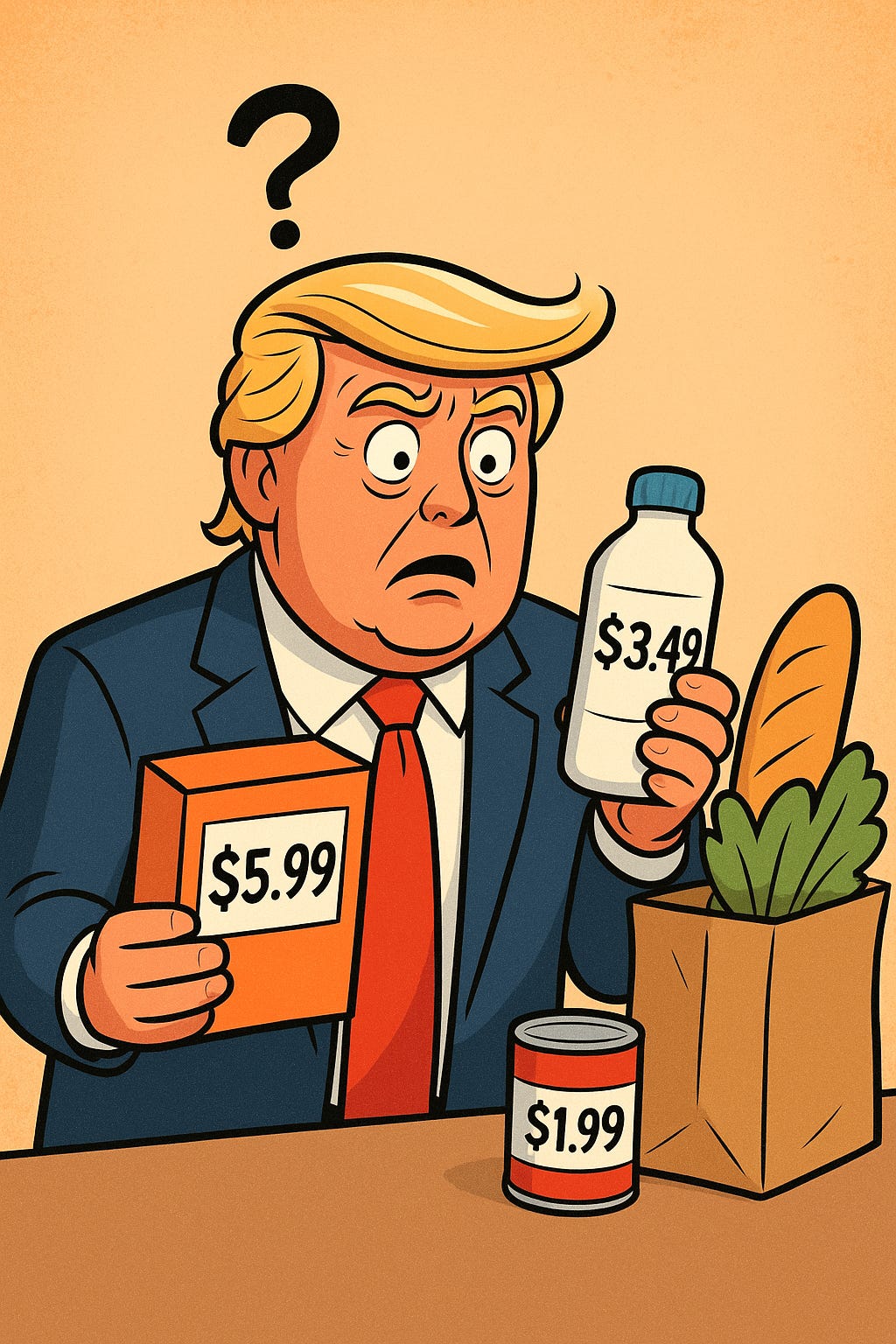
Trump seems surprised. “They have this new word called affordability,” he explained in a November 5 Fox News interview, after the elections. “They [Republicans] don’t talk about it enough. Democrats make it up…”
Trump argued that “energy is way down. That brings everything else down. Groceries are way down. We have prices down.” Then he bragged about the stock market hitting several record highs since he took office.
Before getting into the requisite fact-checking, it’s worth pointing out that Trump is making the same mistake President Joe Biden did: Trying to cherry-pick factoids to convince voters they’re better off than they think they are. It backfired for Biden and it’s backfiring for Trump, now.
Biden repeatedly boasted about record job growth during his presidency (true), to distract people from inflation that hit 9% in 2022, the highest level in 40 years. Biden is no longer president. No Democrat is. Trump won last year because voters lost confidence in Democrats’ ability to control inflation, and they bought Trump’s promise to bring prices down.
[The real lesson of the 2025 elections: No geezers!]
Trump said he would do it. But he hasn’t. If you think gasoline is the only price that matters—as Trump seems to think—then mission accomplished. Pump prices, at around $3.08 a gallon, are down a little from where they were a year ago. And yes, they’re down a lot from the $5 peak they hit under Biden, which is what many people remember.
But gasoline accounts for less than 3% of the typical household budget. Rent, which is one-third, is up 3.9% during the last year. Medical care is up 3.3%, with household energy including electricity up 5.9%.
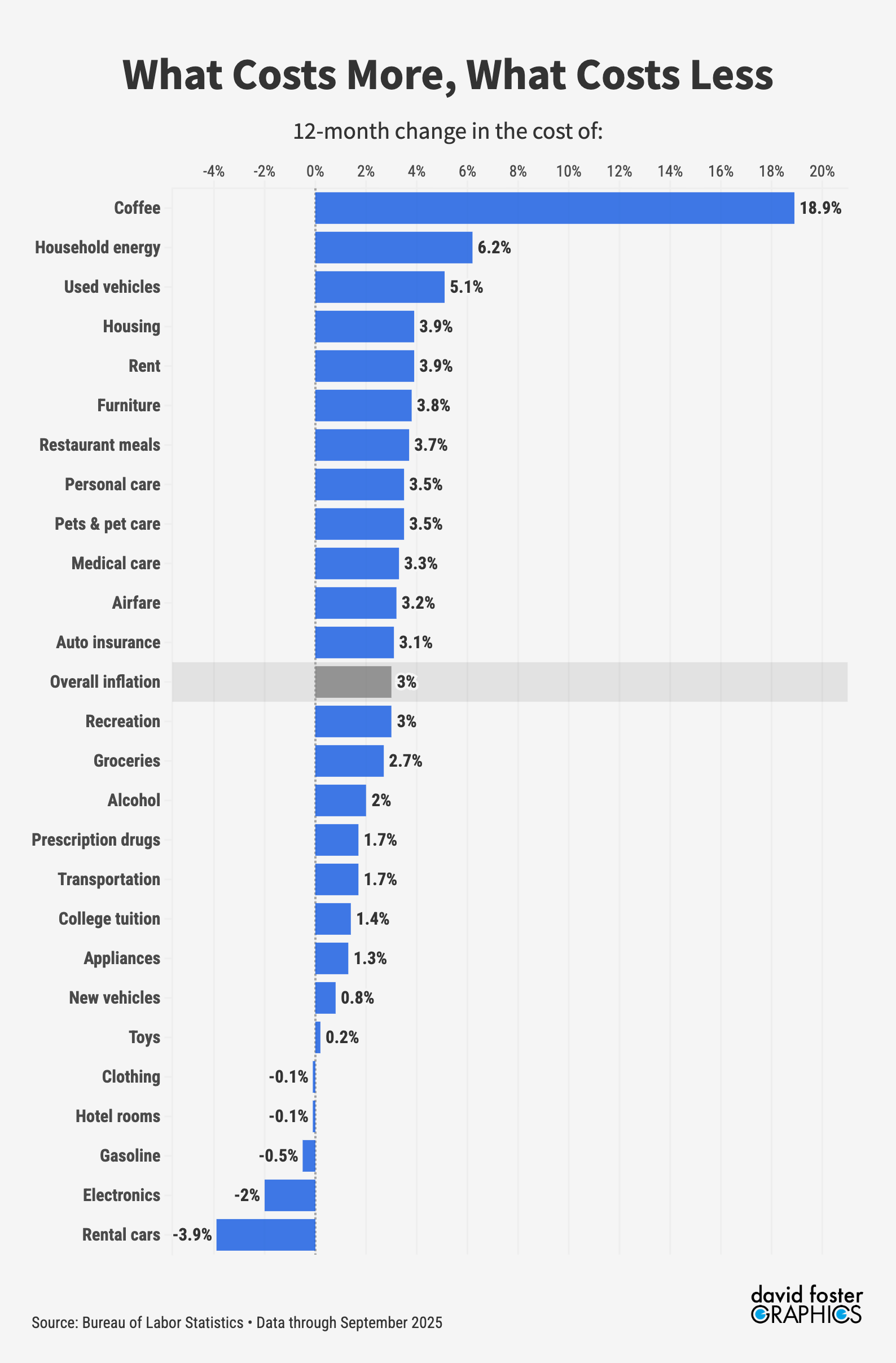
Grocery prices have risen 2.7% during the last year. That’s not a huge jump, but those prices aren’t falling, as Trump claims. And all of these one-year inflation gains follow four years of eye-watering price hikes.
If Trump sounds hammy when talking about “this new word called affordability,” he sounds worse when boasting about his tariffs on imports that are bringing in some $30 billion per month in new federal revenue. Those tariffs are taxes on American businesses and consumers that are pushing prices up, completely undercutting Trump’s campaign promise to bring prices down.
David Kotok, co-founder of Cumberland Advisors, estimates that the Trump tariffs are the equivalent of an additional $2 tax on each gallon of gasoline. So if the entire cost of the Trump tariffs were laden onto gas, it would cost more like $5 per gallon than $3.
Consumers don’t see the cost of the tariffs as clearly as if the price of one benchmark commodity jumped by 40%. But they’ve clearly indicated their concern in multiple surveys about Trump’s tariffs pushing everyday prices up. And they seem to be right: the annual inflation rate has ticked up from 2.3% in April to 3% now. No wonder Trump’s approval rating is down and marks for his handling of the economy are down more.
This new word affordability isn’t going away. The high inflation of the Biden years certainly shone a floodlight on the problem of eroding purchasing power. But that’s been happening for many years—even when inflation was low—because of worsening wealth inequality and a tech economy that requires new skills many Americans lack. Any politician unfamiliar with affordability and its impact on voters ought to take a crash course, and quick.
Idiot! That word Affordability has been around the block thousands of times and this idiot never heard that word before? No, wonder he was such a bad student at the Wharton School of business.