


President Trump seems confused. The stock market is ripping and most measures of the economy look good. Yet Americans are depressed and Democrats are gaining traction with voters stressed about the high cost of housing, food, healthcare and transportation.
Trump is trying to act like he gets it. All of a sudden, he’s proposing new ways to help Americans with their finances. He thinks a 50-year mortgage will lower housing costs by stretching payments out for an additional 20 years. He wants to rebate taxpayers some of the new tariffs he’s forcing upon them with a $2,000 stimulus check. His healthcare plan is to undo the Affordable Care Act and use the money that pays for health insurance to give Americans cash they can use to pay for coverage.
Trump doesn’t get it. These are all haphazard ideas that won’t pan out and probably wouldn’t help much even if they did. All of them need Congressional approval. Republicans with tiny minorities in both chambers of Congress won’t have the votes for legislation that would make some Americans worse off and add to the gargantuan national debt, which is already $37 trillion.
What Trump is obviously trying to do is make himself Mr. Affordability, the guy everybody trusts to get costs down and improve their living standards. He held the title last year while campaigning for president. Trump bashed incumbent Democrats for high inflation and convinced voters he’d do a better job getting costs under control.
[More: Why Trump really needs a hot stock market]
As president, Trump has lost the Affordability crown, for two basic reasons. One is that he’s paying lip service to affordability while arguably making the problem worse. The second reason is that Trump has run smack into powerful economic forces that have been years in the making and are broadly degrading living standards for millions of Americans.
Trump’s own priorities reveal that he isn’t serious about affordability. The tariffs that are the centerpiece of his whole agenda directly raise costs for American businesses and consumers. Tariffs are a tax on imports that literally push prices up. Inflation hasn’t soared, but it has gone higher since Trump started imposing tariffs in the spring, and consumers have noticed. If Trump were serious about getting costs down, the very first thing he would do is call off his tariffs.
Even if he did, it wouldn’t solve the second problem, which is a 30-year trend of worsening wealth inequality that is making the rich better off and leaving everybody else behind. Economist Thomas Piketty framed the problem in his surprise 2013 bestseller “Capital in the 21st Century,” which documented the widening gap between the rich and the rest in most of the developed world. Not much has changed since then, except that the gap has continued to grow.
[More: Why Trump is losing the affordability war]
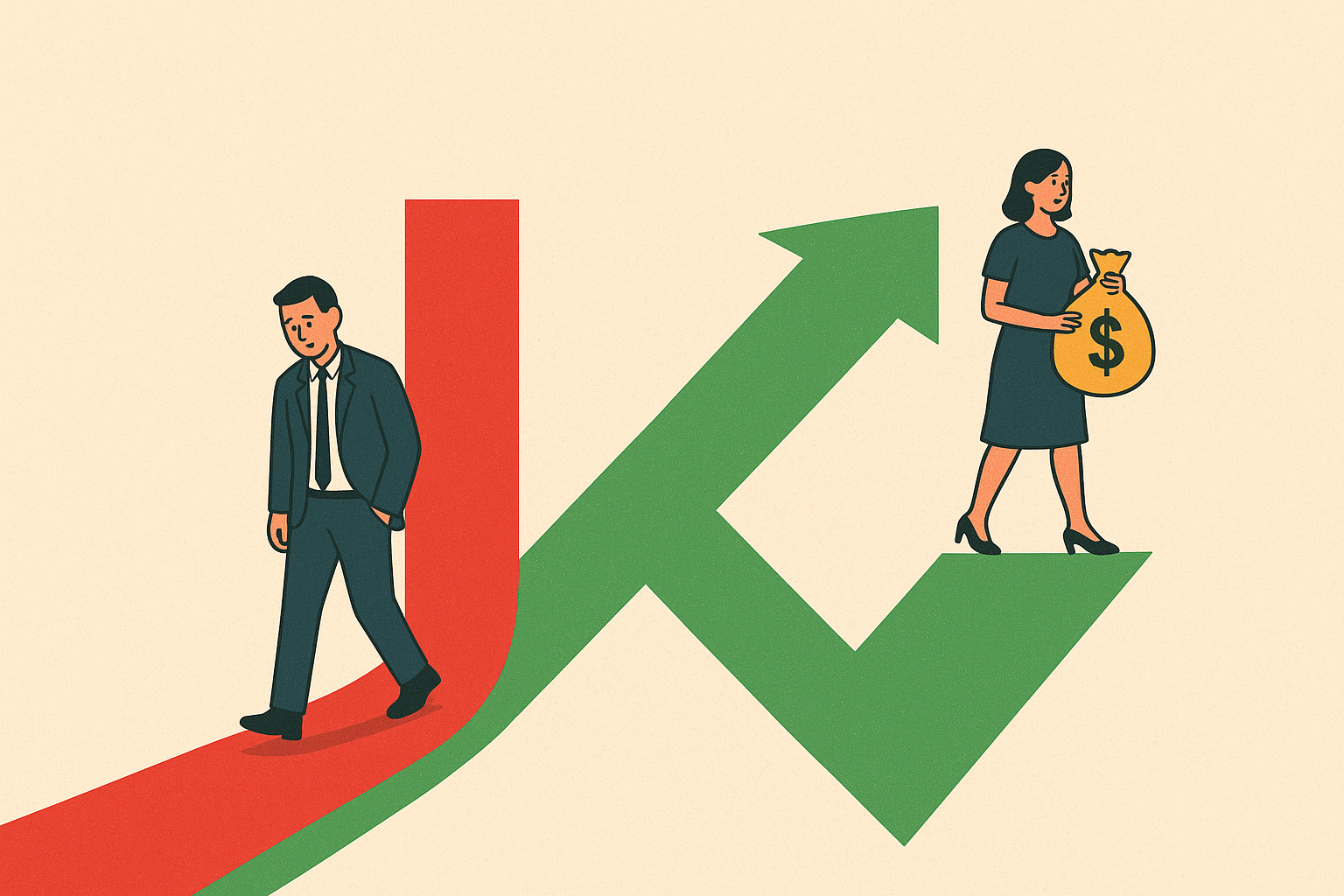
The 2025 appellation for this trend is the “K-shaped economy,” in which one small group rises while a much bigger one sinks. The upward slant includes people lucky enough to own homes and stocks and benefit from the ongoing boom in asset values. The downward slant includes middle- and lower-income working people struggling to build wealth. There’s no rule that bans anybody from moving from downward to upward, but it’s a big leap that’s getting bigger.
The K-shaped economy is deceptive because overall economic data looks pretty good, even if millions of Americans live in recessionary conditions. Asset owners, buoyed by the wealth effect of rising stock and real estate values, are spending so much money that they’re powering nearly all of the growth in the economy. Yet confidence surveys spanning the entire population are near record lows. The wealthy are doing so well that it’s masking how poorly everybody else is faring.
[More: Let Mamdani give free buses and government food stores a try]
To be fair to Trump, nobody has really figured out how to solve the affordability problem and raise living standards for the struggling multitudes by meaningful margins. What’s more common, politically speaking, is that voters lose faith in incumbents and elect outsiders who they hope will do a better job. That’s what just happened with Democrats who won the New York City mayor’s race and the governorships of New Jersey and Virginia. All three candidates focused on cost-of-living issues voters are most concerned with.
In 2024, Trump was the outsider who benefited from voter disgust with the incumbents. Now he’s the incumbent who owns the problem. If all he can offer is goofy ideas that don’t lower anybody’s costs, he’ll be the next insider voters deem a failure.
On the bottom of that K
My son is about to graduate with a nuclear engineering degree
He worries about how he’ll afford a house and really worries about his high school buddies who still barely started the college process
He has a well paying job lined up and is concerned.
On the Top:
There are dozens of houses for sale in my neighborhood. Retired folks cashing in on property…
It will be interesting to see if the homeowners cash in with Blackrock or sell to families looking to start a life
——
My son’s starting salary is projected to be nearly double what I made when I bought this house in 2000
But this house is basically tripled in value. When only three in 10 of his closest buddies have a possible shot to match, exceed their old man… that’s a cratering economy