


President Trump seems eager to wrap up the Iran war he started nearly two months ago. Financial markets are looking past the war, with oil prices down and stocks up sharply during the last three weeks.
But the history of American tangles with Iran suggests we could be in for a long period of near war very similar to the current status quo: on-and-off ceasefires, risky posturing by each side, scary-sounding ultimatums and the continual possibility that shooting could resume. Petroleum shipments through the Strait of Hormuz could be curtailed indefinitely.
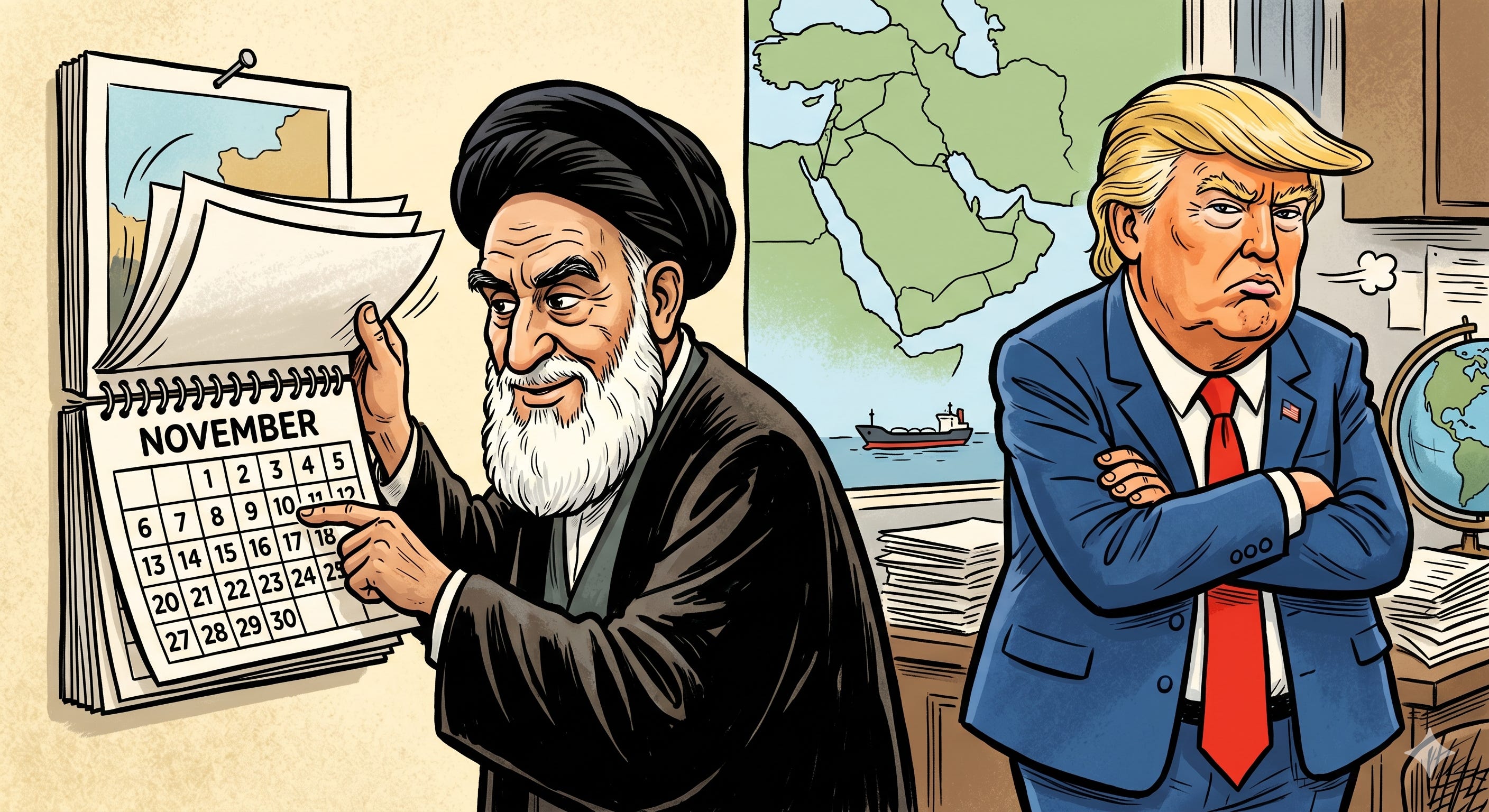
A good template for Trump’s current predicament with Iran is the deal President Obama struck with the Islamic theocracy in 2015, to limit the country’s nuclear-weapons development. Most people don’t realize that the JCPOA, as the Obama deal was known, took 20 months to negotiate. Talks moved in fits and starts, with Iran sometimes shutting them down completely. The final deal involved several other countries and international organizations.
Trump scrapped that deal during his first presidential term in 2018, arguing that it was too permissive. Yet Trump is now trying to achieve some of the same goals as those in the JCPOA, such as new limits on Iran’s ability to build nuclear weapons.
Trump acts as if the ability to resume bombing Iran, and maybe escalate to civilian targets, should force Iran into a deal. Yet Iran has the newfound ability to block energy shipments through the Strait of Hormuz and attack energy infrastructure elsewhere in the Persian Gulf, sending oil prices shooting back up, and stock values back down.
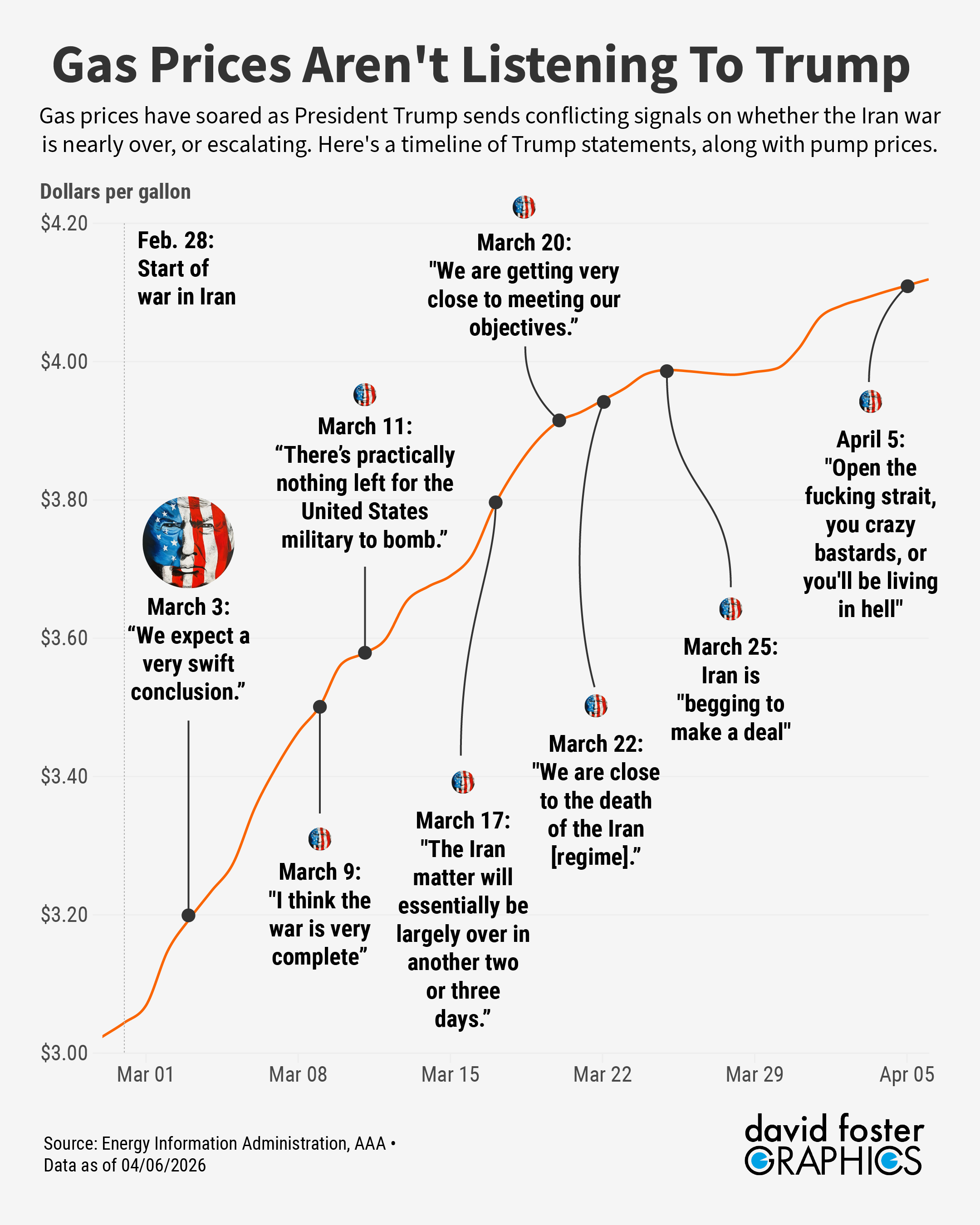
That suggests a new deal to fully end Trump’s war could be months away. “The maximalist positions on both sides—the US and Iran—are still very far apart,” former Middle East diplomat Amos Hochstein said on a recent podcast. “When you’re trying to do a nuclear deal or a regional security pact in three days to fix a market spike, you’re in a very dangerous position.”
[See the economic toll of the Iran war, so far]
It’s possible that both sides might manage the crisis in a way that avoids a resumption of shooting. Trump talks tough about more bombing that might target power plants and economic targets. But that would only trigger more retaliatory attacks by Iran on Gulf energy infrastructure, which would quickly drive oil prices back up. Trump caters to markets, and he definitely doesn’t want that.
Iran, for its part, is probably more interested in dragging out the conflict with aggressions just below the threshold that might trigger more US bombing. Still, the regime has already withstood six weeks of bombing, and probably thinks it can survive more.
[See 4 reasons for investor optimism, despite the war]
Above all, Iran knows Trump’s approval rating is hitting new all-time lows, putting him in a political bind as his party faces growing odds of epic losses in the upcoming midterm elections. Iran might even try to stall until the midterms, on the hope that Trump’s Republicans lose their Congressional majorities, denting Trump’s political leverage at home.
The question for markets, and therefore for Trump, is whether more oil will start flowing through the Strait of Hormuz, even if there’s no peace deal. Iran can still block shipments by threatening to target tankers that don’t have its permission to transit that strait. It backed up those threats recently with attacks on at least two cargo ships, forcing them to turn around. Iran still has thousands of drones, rockets, fast-attack boats and other weapons able to threaten ships, and US forces will never be able to get all of them.
The US Navy is blockading the blockaders by interdicting Iran’s own ships, and seizing at least one. This strategy will take time to play out. The US blockade is meant to stop Iranian oil exports and prevent that cash from propping up the regime. But nobody knows how long it will take for the regime to buckle, or if it even will.
All of this may make an inconclusive outcome more likely than a deal with terms both sides agree to. That doesn’t have to be ruinous for markets. Russia’s invasion of Ukraine in 2022 produced an energy shock of similar severity to the US-Iran war. It took months, but energy markets adapted and prices came back down, even though that war is still raging four years later.
[See all of Trump’s losing causes]
Iran’s Strait of Hormuz closure is already triggering new workarounds, with new pipelines under consideration, along with other efforts to diversify energy flows away from the Persian Gulf. The recurring theme is time. It takes time to make complicated deals, time to adjust to new market impediments and time for combatants in a war to feel exhausted enough to want peace. And time is on the side of whoever uses it best.
Trump does not have much time to monkey around with IRAN. The election's are coming up soon and if the Republican's loose their majority then it will be much harder for Trump to do anything except impeachment.He is crazy but i don't think he would risk that but, you never no with a crazy person.