


We don’t have all the data to prove it yet, but the Trump job market has mostly likely stalled.
The government shutdown that began October 1 has now delayed two official employment reports. But economists are filling in the gaps and ordinary people have their own assessments. The prognosis is weak.
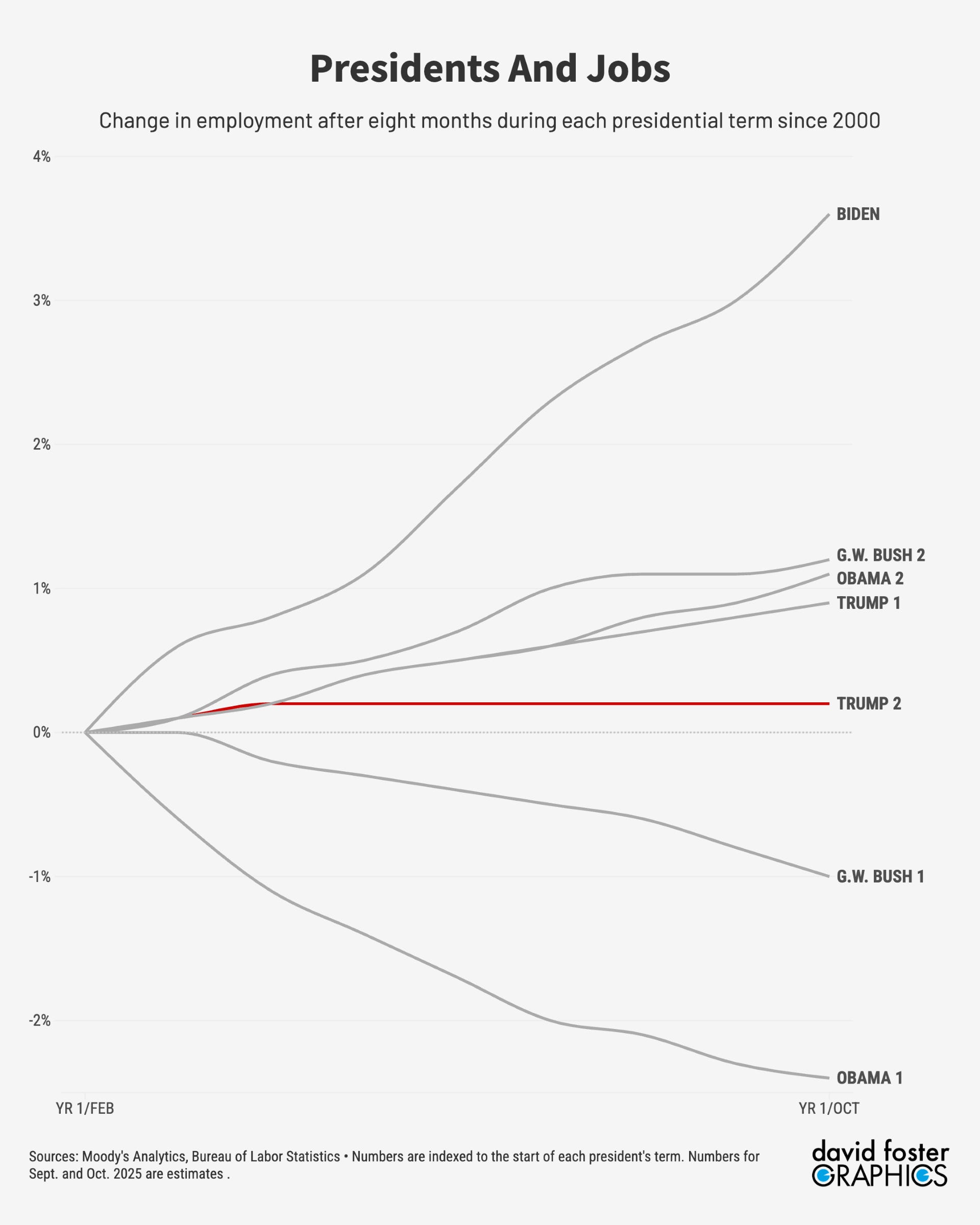
Moody’s Analytics estimates that there has been no job growth at all during the last two months. That’s reflected in the chart below. Flatlining job growth under President Trump this year is the weakest start to a presidential term since Barack Obama became president amid the Great Recession in 2009.
In the University of Michigan’s latest sentiment survey, 71% of respondents said they think unemployment will worsen during the next year. That’s up from just 32% one year ago—and the worst outlook since 1980. The overall sentiment index for October fell to the lowest level since June 2022, when inflation hit a 40-year high of 9%.
The government shutdown is clearly pushing confidence lower. But the job market has been shaky since the summer, and that’s not likely to change once the government reopens.
A Bank of America roundup of “alternate data” on the job market depicts an economy where employers are neither hiring nor firing much. “Bottom line: The job market is still very challenging for job seekers,” B of A concludes.
Layoffs are causing newfound gloom, with the tally for October hitting 153,000 job cuts, three times as many as the month before. Layoffs for the year are at the highest level since 2020, when the Covid pandemic shut down the economy.
The monthly jobs report from ADP, which measures private-sector employment, showed 42,000 new jobs in October after a 29,000 decline in September. So a net of just 13,000 new jobs for the last two months. The average in 2024 was 130,000 new private sector jobs, or 10 times more.
The “DOGE” cuts Trump initiated in the federal workforce earlier this year will probably work out to about 100,000 fewer federal jobs in October, most likely offsetting any gain in private sector hiring. Some cynical people might think those workers are just bureaucrats, so it’s not like they’re real jobs. But bureaucrats spend money like everybody else and fewer federal workers means less economic activity.
These are not recessionary developments. The Atlanta Federal Reserve’s GDP Now tool estimates that the economy is growing at a healthy 4% rate in the current quarter. Wealthy Americans are holding up the economy, keeping spending solid on an aggregate basis, even as a lot of working people turn glum.
The lead story on the economy right now is bifurcation. Wealthier Americans, including well-off retirees, feel prosperous. But the millions who need a paycheck to keep up with the rent or mortgage are growing nervous or even alarmed. Maybe somebody should tell the government.