


Something is fishy in the Caribbean, where the US military has been blowing up boats and menacing Venezuela, the oil-rich failing state ruled since 2013 by kleptocrat dictator Nicolás Maduro.
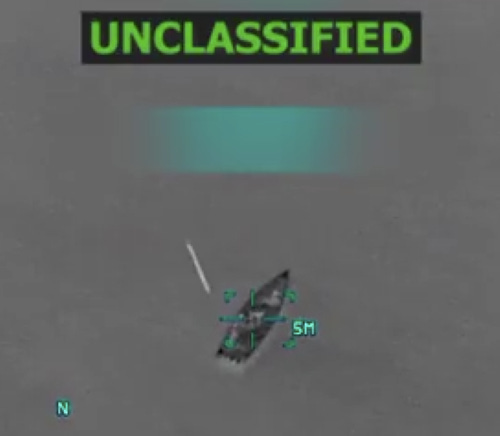
Since September 2, President Trump has ordered at least six military strikes against boats he says are carrying drugs, killing at least 27 people. The boats typically depart from Venezuela, with cocaine and other illicit cargoes supposedly bound for the United States. Trump says the United States is at war with drug cartels, which gives him the authority to use military force in what critics say should be law enforcement activities.
Intrigue is building. Trump says he has authorized the CIA to carry out covert operations in Venezuela, raising the specter of a US-backed coup. The Pentagon has surged ships and warplanes to the Caribbean and reopened the shuttered Roosevelt Roads naval station on Puerto Rico, which is less than 600 flying miles from the Venezuelan coast. The admiral who normally oversees military activity in the region is suddenly retiring, suggesting internal friction over the strikes.
“He doesn’t want to fuck around with the United States,” Trump said of Maduro on October 17.
Those sound like fighting words, right? So WTF is going on? Here’s some handicapping on what this might all be about, and possible scenarios:
A US invasion of Venezuela: Extremely unlikely. The 1989 US invasion of Panama involved about 30,000 ground troops. Invading Venezuela, which is 15 times larger, would require at least 50,000, according to Mark Cancian of the Center for Strategic and International Studies. Despite the miliary hardware in the area, there are only about American 10,000 US troops in the Caribbean right now, and maybe only one-fifth of those are combat troops able to mount an invasion. This isn’t going to happen.
Deposing Maduro: Not the main goal. Some armchair generals are whooping about “regime change” in Venezuela, but nobody knows better than Pentagon brass how difficult it can be to dispatch a foreign leader, even when you have thousands of troops on the ground. Trump is an isolationist who has no interest in quagmires.
But doesn’t this have something to do with Venezuelan opposition leader María Corina Machado winning the Nobel Peace Prize? Eh, not really. Trump launched this campaign in August, before Machado’s recognition by the Nobel committee. Trump is obviously no democracy crusader. And even if Maduro falls, that’s no guarantee a democratic government would emerge, anyway.
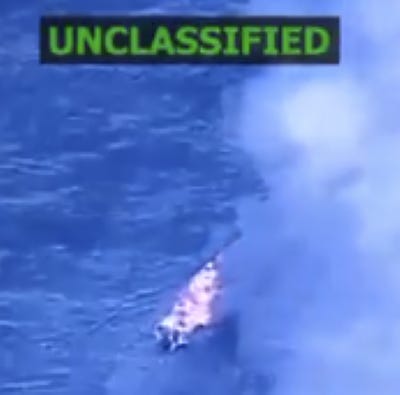
Rattling Maduro: Much more likely. If Trump really wanted to oust Maduro, he wouldn’t telegraph “covert” CIA plans. They’re covert! But if he wanted to make Maduro paranoid and rash, what better way than to hint that the CIA is coming for him? And to have the Defense Dept. publish videos of Venezuelan boats exploding?
Trump espouses a “maximum pressure” campaign against Venezuela, mainly to disrupt its support for drug cartels that transit the country from Colombia and other countries, likely enriching Maduro. As an authoritarian aligned with Russia, China, and Iran, Maduro has plenty of enemies in the region and virtually no leverage with Trump. He’s a relatively soft target.
Trying to intimidate and disrupt the drug cartels: Also likely. “The biggest goal is to signal a shifting paradigm in how we do security in the region,” Ryan Berg of CSIS said in a recent podcast. “They’re saying these are now terrorist organizations, not just criminal organizations. They’re asserting lethality.”
Trump wants to reorient US defense strategy toward the western hemisphere, focusing more on counterdrug operations and illegal migration. This seems to be the first big push in that direction, at least in terms of military posture.
Why Venezuela? Not because it’s the main source of drugs. The biggest source of fentanyl, heroin and methamphetamines entering the United States is Mexico. Cocaine mostly comes from Colombia, Bolivia and Peru. The Venezuelan criminal group Tren de Aragua is one trafficking group, but others are bigger. Trump is probably starting his western hemisphere campaign with Venezuela because Maduro is an easy target with far less legitimacy than other Latin American leaders.
Showboating: Also likely. Trump’s team isn’t doing this quietly. They’re publicizing every attack and declassifying surveillance videos of missiles vaporizing boats in the open water for the whole world to see. Yes, that worsens Maduro’s migraines. It also has a very uncomfortable fist-pumping quality and makes the boat kills seem like an absurd mismatch.
Escalation: Likely. Henry Zimmer of CSIS (yes, check out CSIS if you really want to know what’s going on in Venezuela) said on October 17, “I’m feeling increasingly confident that we’re going to see US strikes within Venezuelan territory before the end of the year.”
If coming attacks target cartel infrastructure, that will tell us Trump’s real focus is on the drug trade. Bet on that. If Trump were going after the Maduro regime, then the military would first attack Venezuelan air defense systems, the usual way the Pentagon clears the skies so it can establish air dominance and set the stage for a ground campaign. That’s the easy part, though. Any use of American troops on the ground in Venezuela would violate Trump’s isolationist leanings and raise the risk of US casualties.
Meaningful progress in the war on drugs: Doubtful. Efforts by Trump or any president to target the supply of drugs coming into the United States completely ignore the demand for drugs here at home. For whatever reason, millions of Americans want drugs, and if Trump blocks some supply routes, they’ll get here through others. Money finds a way, even beneath American missiles.
This is why it ain't gonna happen, as I say....
https://open.substack.com/pub/thiagodearagao/p/five-reasons-a-us-invasion-of-venezuela?r=2di31u&utm_medium=ios