


President Trump has fibbed so many times about an imminent end to the Iran war that markets put little stock in anything he says on the matter these days. Yet the war won’t last forever—and the end may be coming into view.
Persian Gulf oil producers, working with the US military, finally seem to be shipping oil through the Strait of Hormuz on a sustainable basis, while building workarounds that will reduce their long-term reliance on the waterway Iran seeks to dominate. Iran’s leverage over global oil markets is likely declining while its own economy crumples.
Oil shipments through the Strait of Hormuz averaged about 19 million barrels per day before Trump launched the Iran war on February 28. That sank to a daily average of just 6 million barrels in May, causing soaring prices for oil, gasoline, diesel and related products. Those waterborne shipments now seem to have grown to about 10 million barrels per day, and there’s reason to think the region’s exports will continue to rebound.
[It’s time to revise the American Dream]
The same Gulf states are also exporting more oil via pipelines that bypass the strait, and by trucks that drive west to ports on the Mediterranean. “A lot of the countries are now bouncing back from their lows,” Samir Madani, co-founder of Tanker Trackers, said on a Sept. 9 podcast. “There’s a lot more volume going through on the days those convoys pass through.”
The most interesting developments are in the Strait of Hormuz, where Iran essentially blocked all oil shipments except for its own during the first few months of the war. Petrostates such as Saudi Arabia and Kuwait, working with the Pentagon’s Central Command, now seem to have developed new tactics that allow tankers to evade Iranian fire as they move oil through the strait.
Tankers belonging to the petrostates’ national fleets shuttle oil through the strait in convoys at night, when it’s hardest for satellites to track them. They hug the Omani coastline, as far away from Iran as they can get.
US military assets such as helicopters, fighter jets and drones provide air support, in case Iran targets them with drones or missiles. Manned Navy ships probably don’t sail alongside the tankers, but they can fire defensive weapons from farther away in the Persian Gulf or the Gulf of Oman. The Navy may be using unmanned sea drones closer to the tankers, in the strait itself.
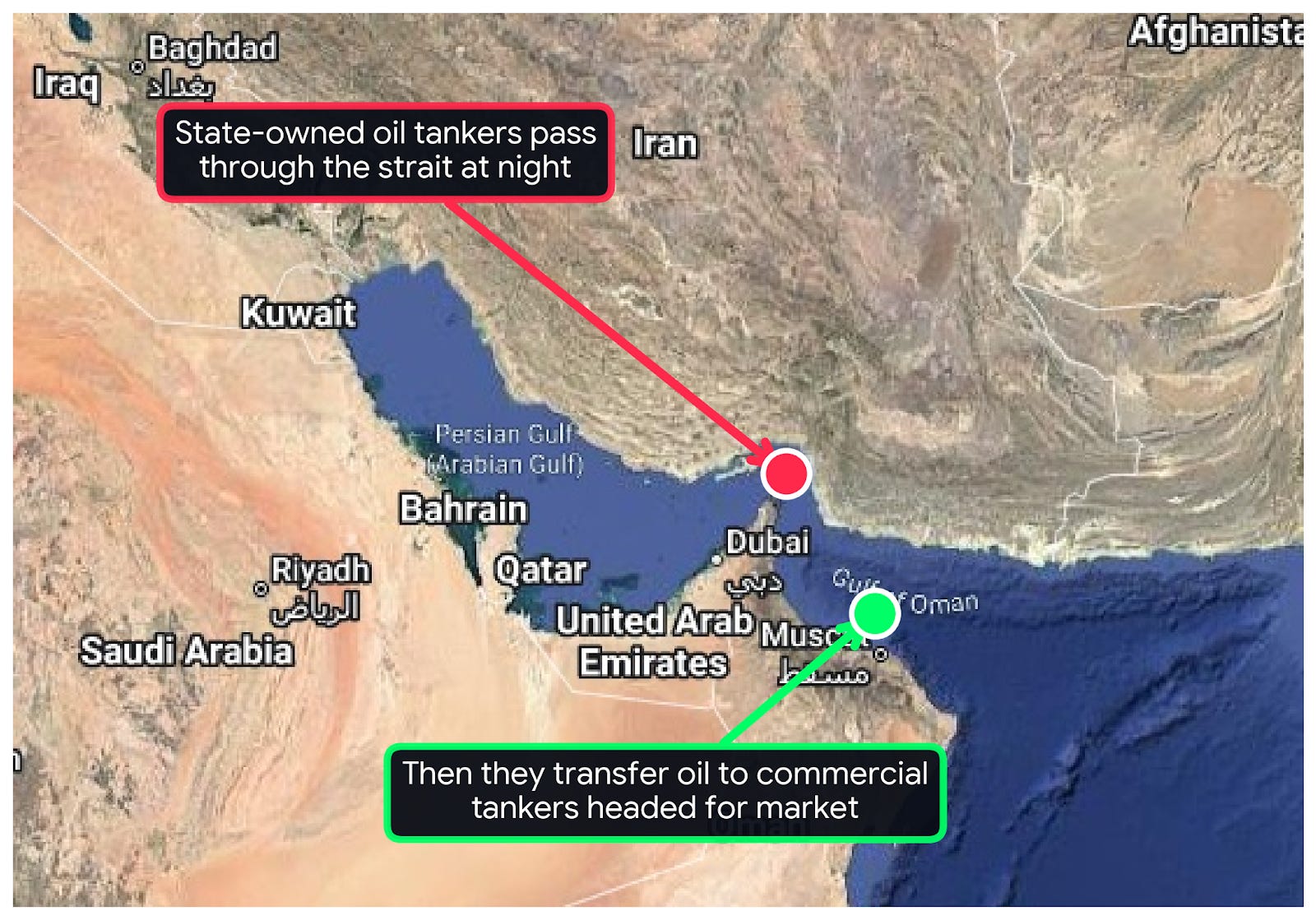
Waiting on the other side of the strait, in the Gulf of Oman, are dozens of commercial tankers that take on the oil from the state-owned ships and move it to their destinations, mostly in Asia. These ship-to-ship transfers are cumbersome and time-consuming, adding several days to a typical oil delivery.