


Key Takeaways:
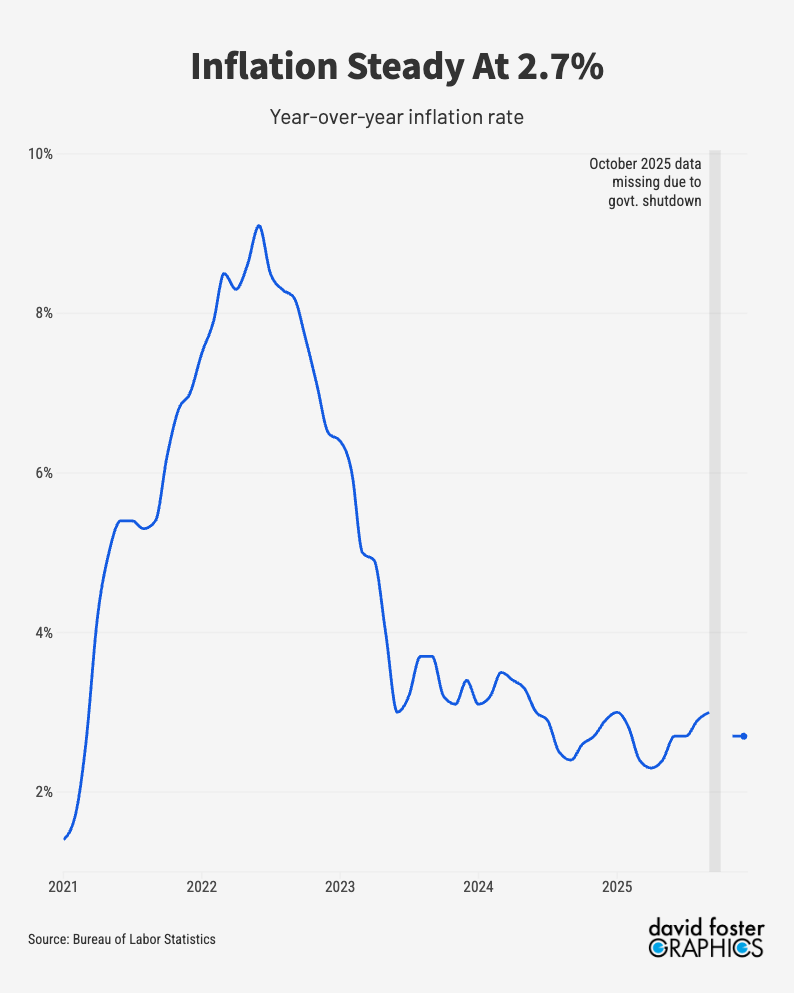
The inflation rate remained unchanged in December at 2.7%.
Inflation is still well above the Federal Reserve’s 2% target
Voters want price cuts, not a steady rate of inflation
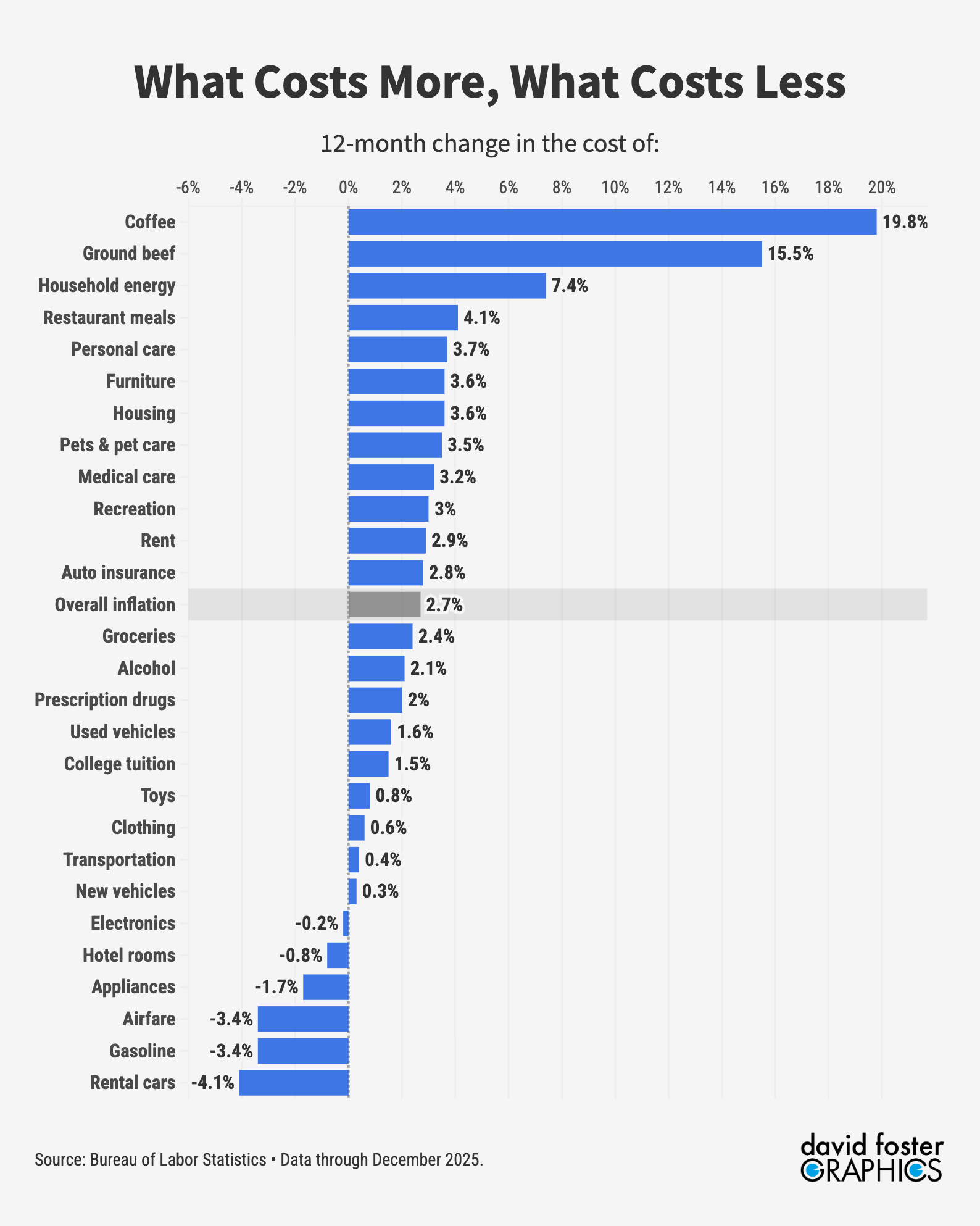
Coffee prices rose 19.8% in 2025. Beef prices rose 15.5%
Since 2021, the average worker has gained no purchasing power at all
Donald Trump ran for president in 2024 promising to get prices down. Yet most prices have continued to rise. The year-over-year inflation rate in December was 2.7%. That’s much better than the punishing 9% inflation of 2022. But it’s still above the 2% target the Federal Reserves considers optimal—and higher than what many Trump voters have been hoping for.
“When I win, I will immediately bring prices down,” Trump said at a campaign event on August 15, 2024, standing next to a table piled with cereal, coffee, cookies, and other food products. Charts on easels listed some of the eye-popping price hikes that occurred during Joe Biden’s presidency.
Yet a candidate running against Trump today could pull the same stunt and post charts showing sharp increases in the cost of coffee, beef and electricity. It might sound like a silly game of gotcha to ding Trump for prices that haven’t changed by quite as much as he promised as a candidate. But voters in 2024 really were hoping the cost of staples and many other things would decline and undo some of the damage inflation caused to family budgets, starting in 2021.
The reality is that most prices rarely decline. There are exceptions, such as energy and other commodities, which rise and fall in line with volatile global prices. But once sellers have pricing power, they rarely give it up. Rising labor costs contribute to inflation, and wages don’t usually decline.
That puts Trump on the defensive as shoppers continue to notice a few standout price hikes—and very few bargains. Coffee prices are up 19.8% during the last year. Beef is up 15.5%. Gasoline prices have fallen slightly, but household energy—heat and electricity—has risen by 7.4%. And the typical family spends more on utilities than on gasoline.
A few things are getting slightly cheaper, including travel, appliances, and electronics. But a low rate of inflation now can mask how expensive some stuff really is, because it measures just a one-year change without capturing the longer trend.
The cost of new cars, for instance, rose just 0.3% during the last year—super-low inflation. Yet the average cost of a new car is more than $50,000, and vehicle affordability is far worse than it was prior to the Covid pandemic in 2020. That’s mainly because new-car prices jumped by 20% from the beginning of 2021 to the end of the 2023. Prices haven’t changed much since then—but big declines don’t seem to be in the cards, either.
That’s the story with overall inflation. From 2021 through 2025, prices in general rose 23.8%. Earnings rose by 23.7%. See the problem? For four years, Americans, on average, have gained precisely zero purchasing power.
Real earnings, adjusted for inflation, fell sharply in 2022, which was a huge hit to purchasing power. They turned positive again in 2023, but it’s been a slow recovery. And real earnings now seem to be slowing. That’s why voters are angry about affordability. Improvements under Trump have been so modest that they might be imperceptible.
Trump is rolling out a slew of “affordability” measures, given that cost pressures remain a top voter concern and it might cost Trump and his fellow Republicans in this year’s midterm elections.
But he’s not doing a couple of things that might help the most. He’s not repealing most of his tariffs, which are import taxes that directly raise costs. He’s also not slowing his quest to deport undocumented workers, which raises labor costs, and therefore prices, in sectors such as agriculture and food processing.
If Trump points to the inflation rate alone and boasts that 2.7% is a lot better than the 9% people had to deal with under Biden, he’ll be technically correct—and also sound very out of touch. Voters want their paychecks to stretch further, regardless of what the official numbers are.