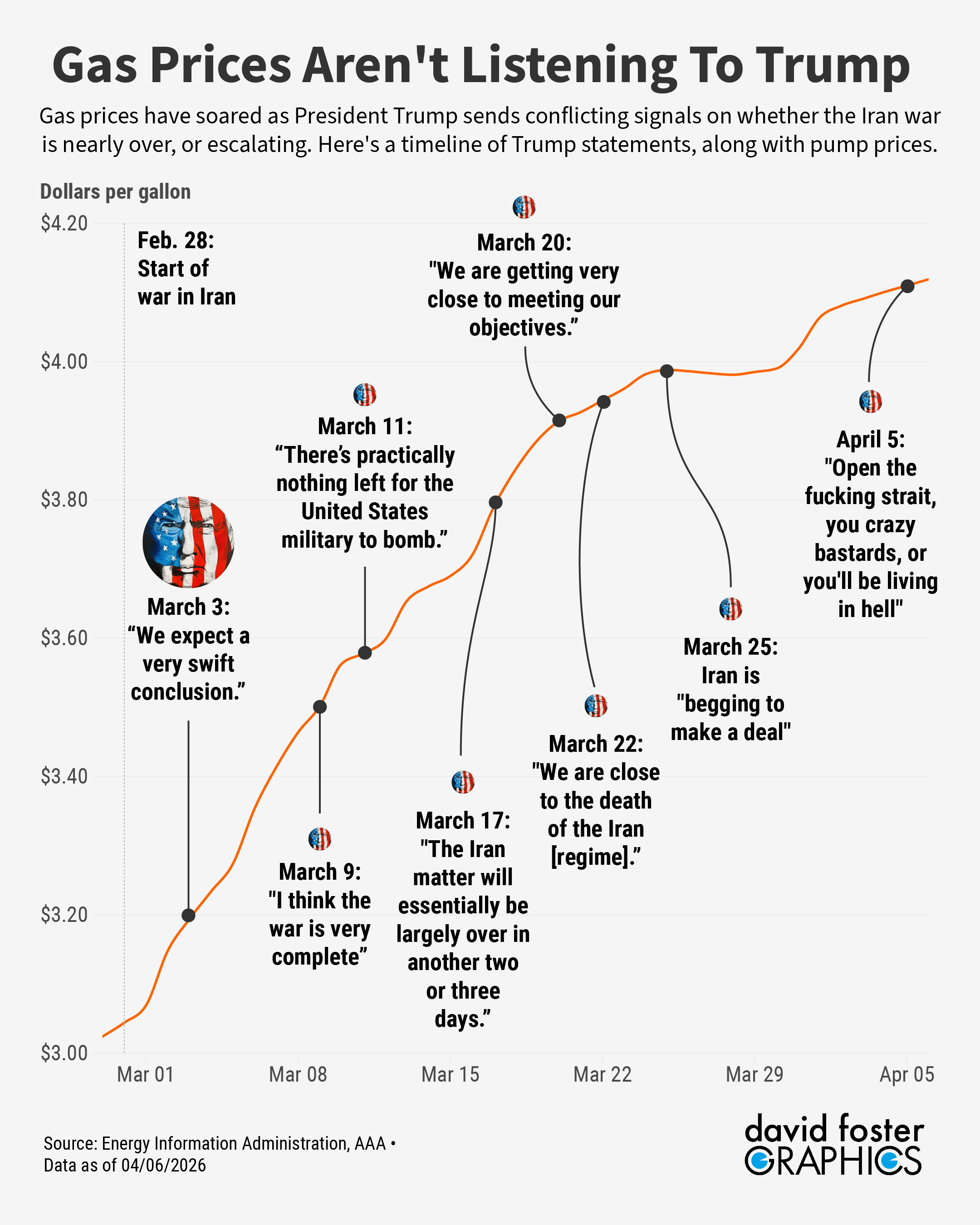
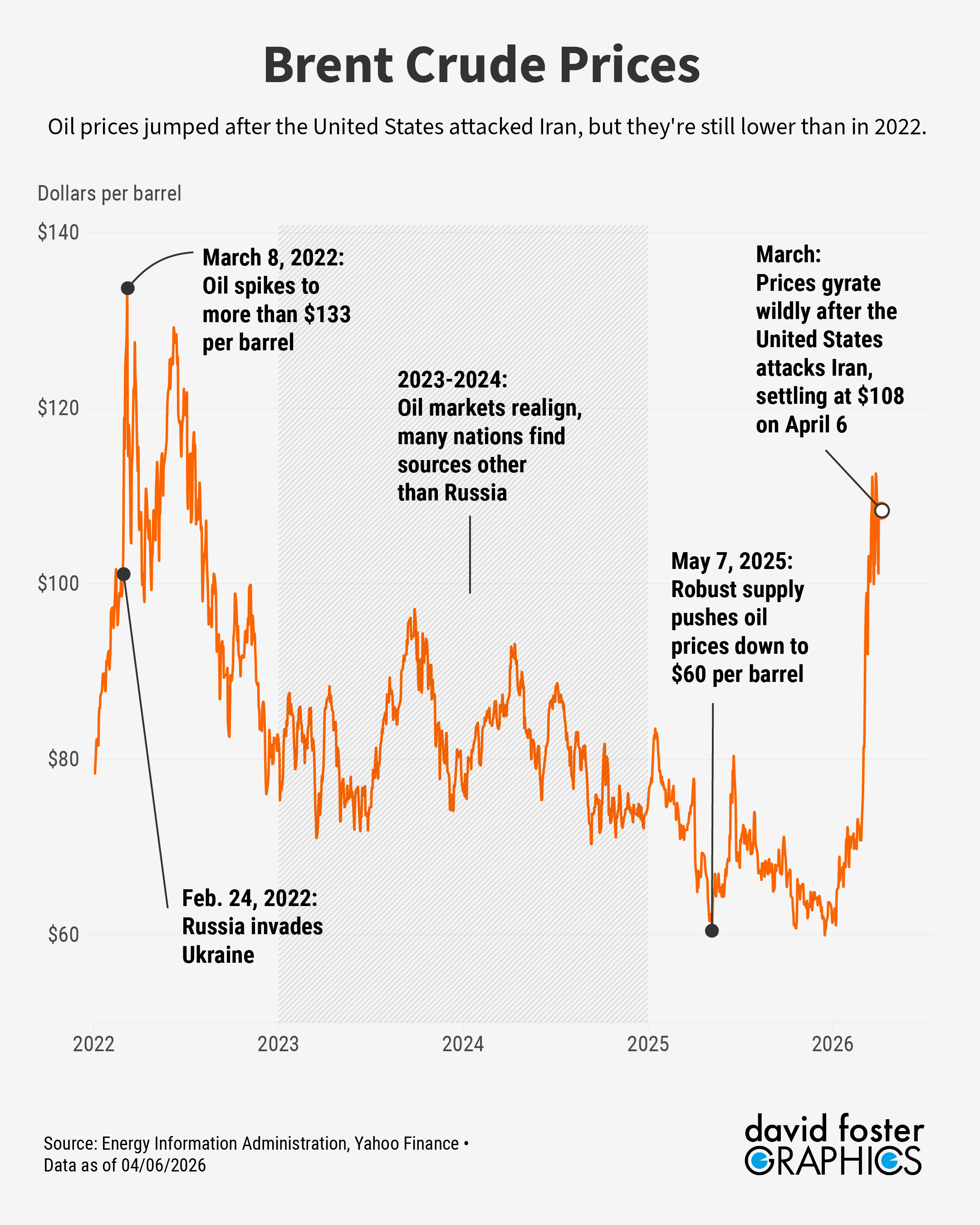
As everybody knows, the war President Trump launched against Iran on February 28 has caused a global energy crunch. Iran now controls which cargo ships transit the Strait of Hormuz at the mouth of the Persian Gulf. It’s letting a few ships through, but most Persian Gulf oil is stuck in place. The price of Brent crude has jumped from about $68 per barrel before the war to nearly $110 per barrel.
Gasoline prices have followed oil prices higher, as they always do. US pump prices have risen by more than $1.10 per gallon since the war began.
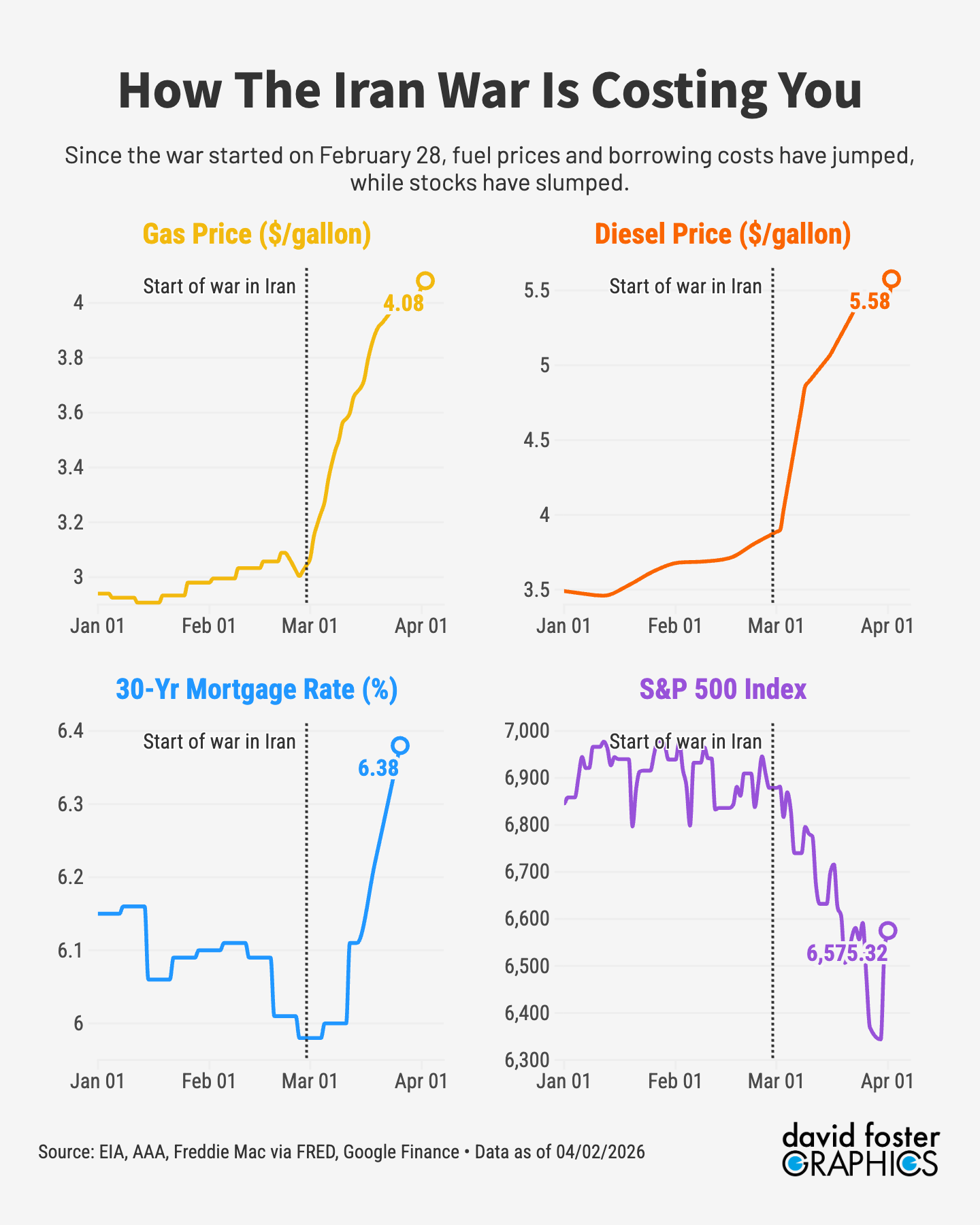
Diesel prices, as you can see in the chart above, have jumped by more than gasoline prices. That means the cost of producing and transporting goods, including food, is going up. Those higher costs will hit consumers.
Mortgage rates have jumped because investors now expect higher inflation than they did before the war. When bond buyers think inflation is going higher, they demand a higher return to buy bonds, to compensate for the eroding value of money. A half-point increase in mortgage rates raises the monthly payment on a typical home by about $110 per month.
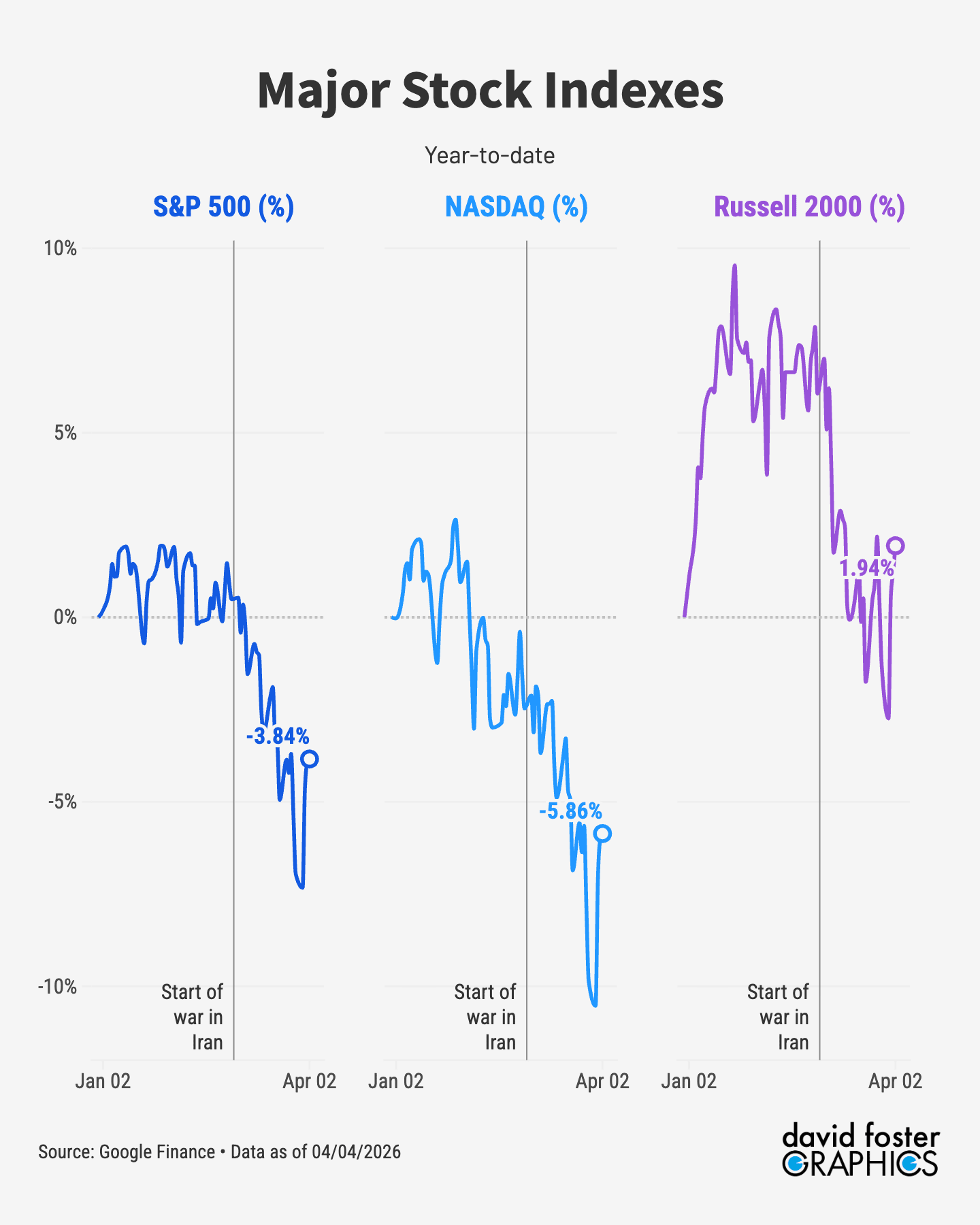
Stock values have declined since the war started, as investors struggle to price in how long the war will last, how high energy prices will go, and how much that will affect corporate profits. Some analysts think it’s surprising stocks haven’t fallen further.
The United States isn’t as vulnerable to a foreign energy shock as it was during the energy crises of the 1970s. That’s largely because of huge efficiency gains. The “energy intensity” of the US economy has dropped by 68% since 1970, according to Dept. of Energy data. That means energy costs are a much smaller factor in everything the nation produces. Many factors account for that, including more efficient cars and other types of transportation, better building insulation, and many technological breakthroughs that save energy.
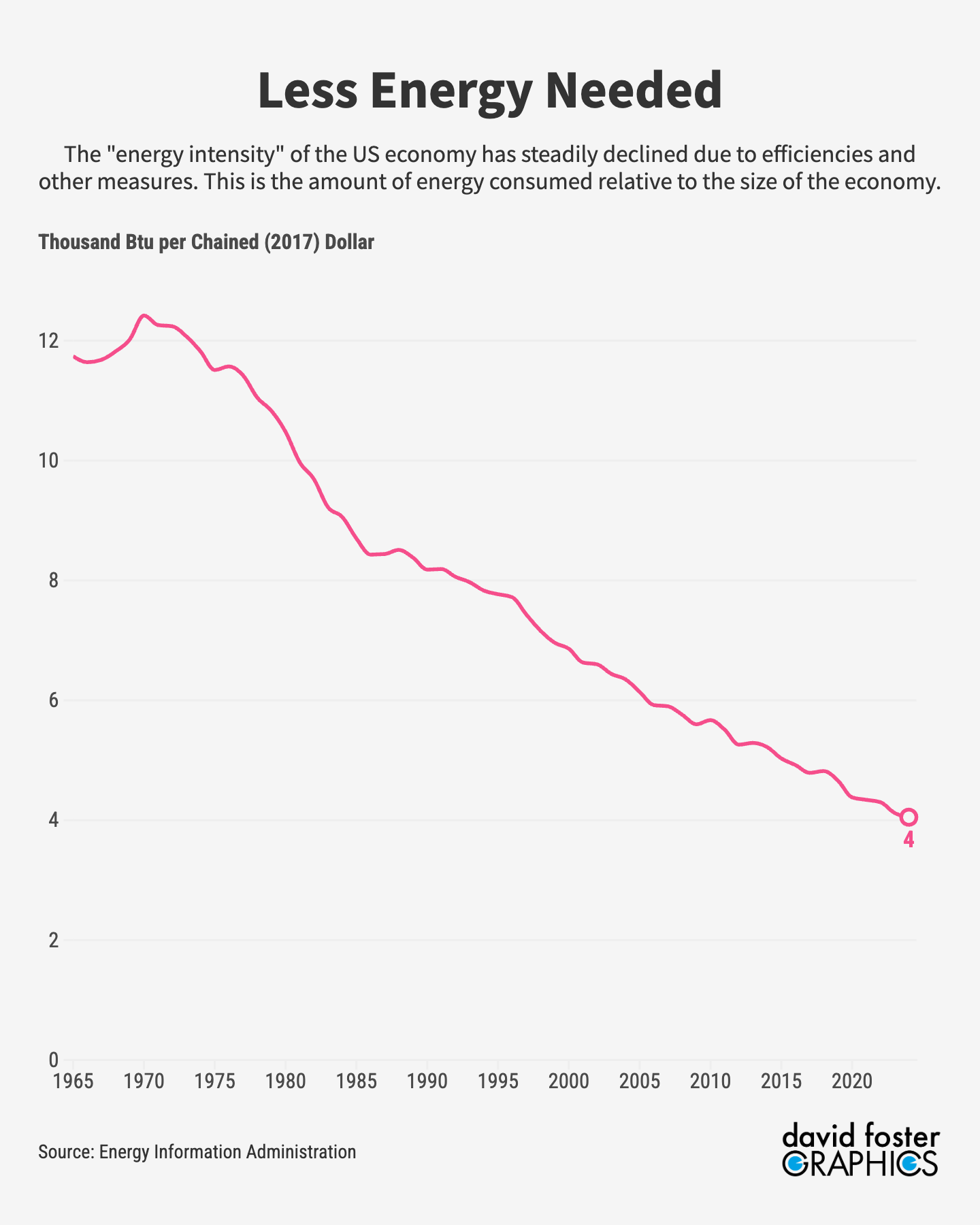
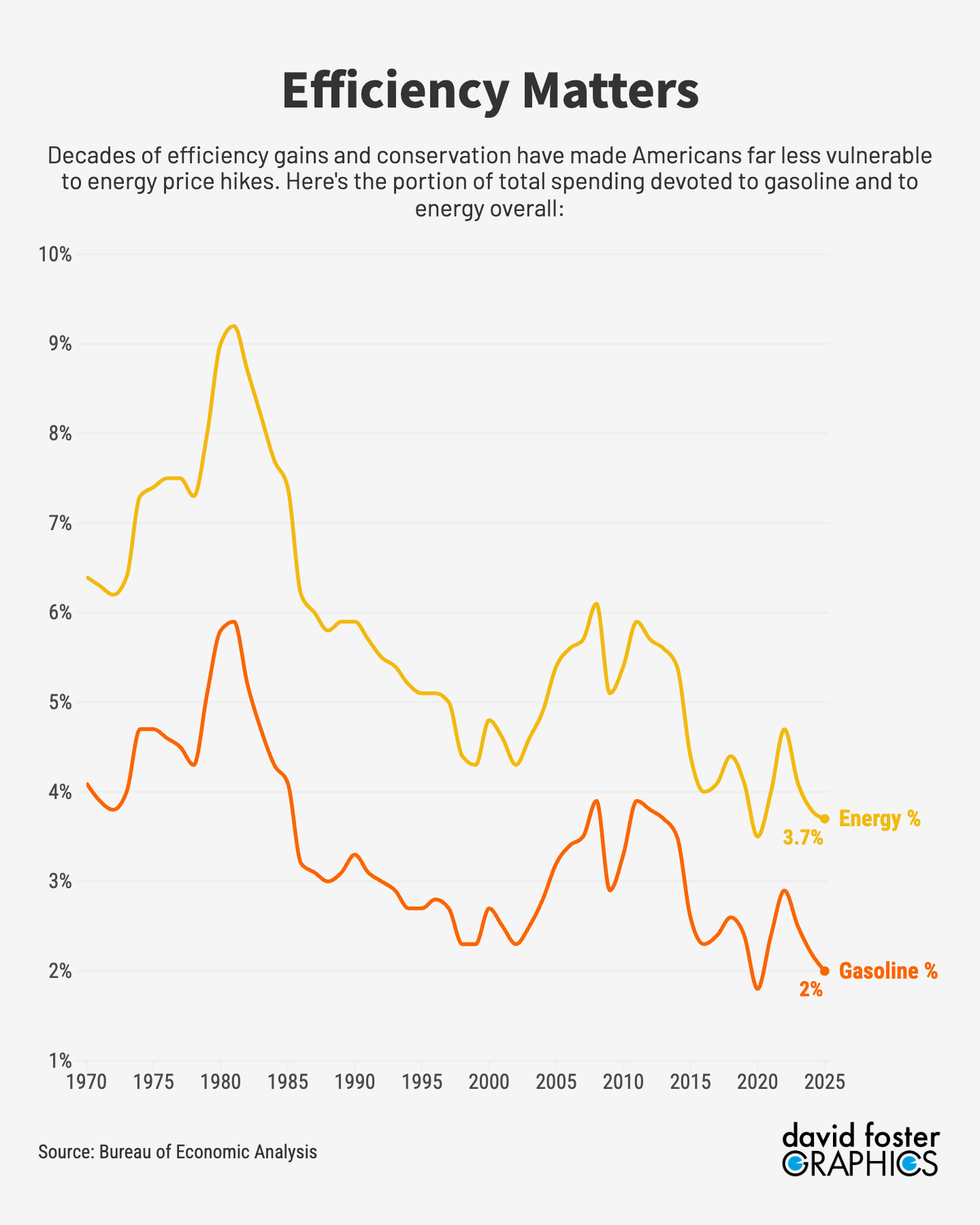
For the same reasons, ordinary Americans spend a lot less on energy than they used to, as a portion of their overall outlays. So higher energy prices don’t hurt as much as they did during the energy crises of the 1970s.
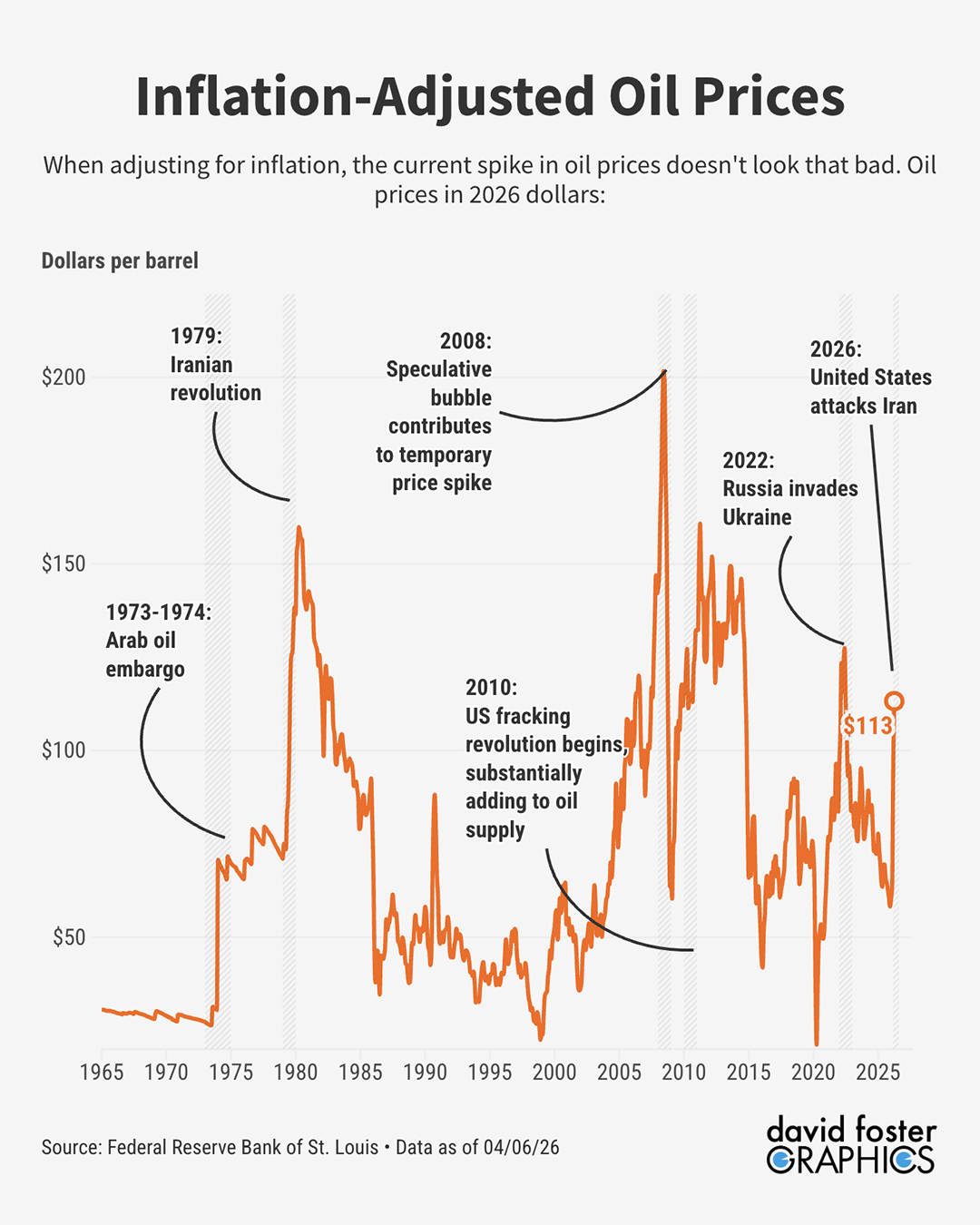
To understand the severity of the current energyshock, it helps to look at oil and gasoline prices adjusted for inflation. In “real,” inflation-adjusted terms, prices are high but not stratospheric.
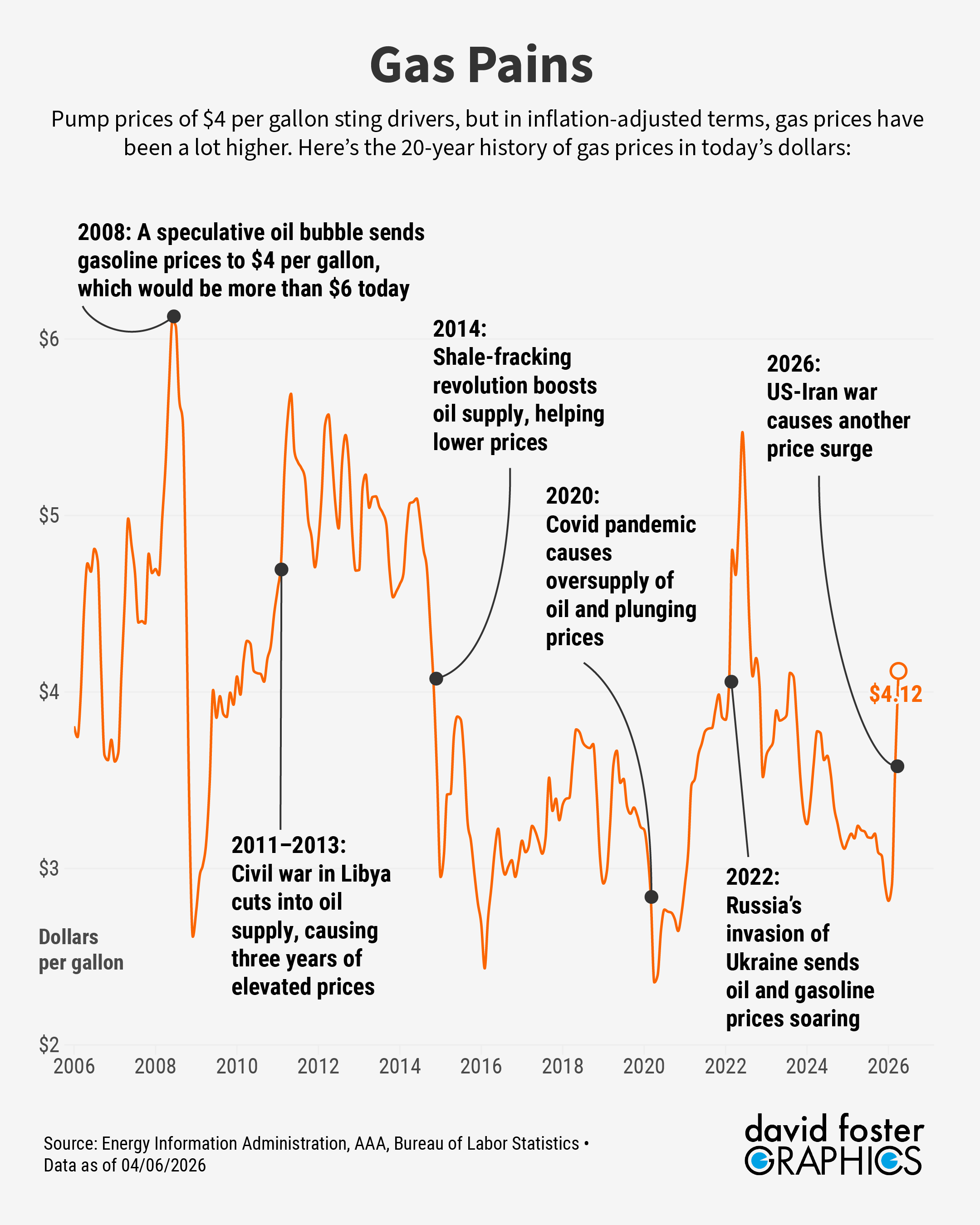
But rising gas prices are still a burden for millions of American drivers. A $1 increase in pump prices costs the average driver about $35 a month in higher costs. Trump has repeatedly insisted the war will end soon, clearly trying to talk energy prices down. Yet the war obviously hasn’t ended—and gas prices continue to rise.