


In 2008, firefighter Patrick Creed and I published Firefight: Inside the Battle to Save the Pentagon on 9-11, the definitive journalistic account of events at the Pentagon during the 9/11 terror attacks. Here’s what happened at America’s military headquarters when the unthinkable occurred:
~ ~ ~ ~ ~ ~ ~ ~ ~ ~
Excerpted from Firefight: Inside the Battle to Save the Pentagon on 9-11
The drone of cable news was usually little more than background noise at the Pentagon, but hundreds of TVs in the building suddenly commanded the full attention of military professionals unaccustomed to standing around and watching. On the screens, New York burned. As smoke spewed from the north tower of the World Trade Center, the news commentators speculated about an accident. The military minds doubted it, suspecting foul play. When another plane hit the south tower minutes later, there was no doubt about it: A devastating terrorist attack was underway. The American war machine lurched into gear.
No orders needed to go out. Duty officers scrambled to their stations, and command centers filled with supercharged action-takers. Deep inside the Pentagon, Joint Staff officers raced to the National Military Command Center, the military’s highly secure “nerve center.” Above it, a suite of rooms known as the Executive Support Center—the ESC—began to fill with the Pentagon’s brain trust. For the moment, Stephen Cambone, Defense Secretary Donald Rumsfeld’s right-hand man, was the ranking civilian. Others rushed in. Everybody knew that before long, bombs would be flying, but right now, there were more immediate concerns. Should the Pentagon send a hospital ship to New York? An Aegis cruiser? An aircraft carrier? What would it take to get National Guard troops into Manhattan? What was the status of the nation’s air defense network?
They also had to activate “Site R,” the secret backup facility in the woods of southern Pennsylvania that would be the military’s primary command center if something managed to take down the Pentagon. A skeleton crew usually manned Site R, but bringing it fully online was more complicated than just flipping a switch. It would take a couple of hours, at least, to get a complete staff in place and test all the communications links to the Pentagon, the White House, and the rest of government. Either the defense secretary or his deputy would have to travel there, since only they, in coordination with the president, could legally order military action. Cambone guessed that Rumsfeld wasn’t about to leave the Pentagon, which meant they’d have to shuttle his No. 2, Paul Wolfowitz, out there. Until Wolfowitz arrived at Site R, and all the communications links were live, the NMCC represented a single point of failure in the nation’s chain of command.
The Pentagon was notoriously huge, with three times the office space of the Empire State Building and nearly 25,000 workers on a typical day. It was just after 9:00 a.m.—several hours into the workday for many of the early-risers who worked at the Pentagon—and the building was humming. But most of the workers there had jobs more mundane than planning wars or directing troops, jobs like preparing budgets or procuring weapons or coordinating with other agencies. And for the time being, none of that work was getting done, as people gathered in knots, watched the carnage in New York, and wondered what they ought to be doing to help or protect themselves.
At the Pentagon helipad, a small facility on the Pentagon’s western lawn where VIPs came and went, a three-man fire crew prepared their truck, Foam 161, for a normal day’s work. Two of the firefighters, Alan Skipper and Mark Wallace, stood outside near the truck and discussed the big fire up in New York. In the nearby control tower, Army air traffic controllers Sean Boger and Jackie Kidd talked about the risks of a jet striking the Pentagon, something Boger had always wondered about. Reagan National Airport was just across the highway, and planes coming in to land sometimes flew so low you could read the ID numbers on the bottom of the fuselages.
Kidd excused herself to go to the latrine. Boger was wondering if the events in New York might generate more action at the helipad, when he saw something shocking: a plane approaching at eye level, headed right for his window. He froze.
At the adjacent fire station, Wallace was talking with Skipper when he noticed some movement out of the corner of his eye. Both men jerked their heads around, in sudden disbelief. They couldn’t yet hear the plane, but it was only 150 yards away, and a few feet off the ground—and about to fly right through them.
“Run!” Wallace screamed. He bolted to the right, sure that the plane was about to take his head off. Skipper took off in another direction.
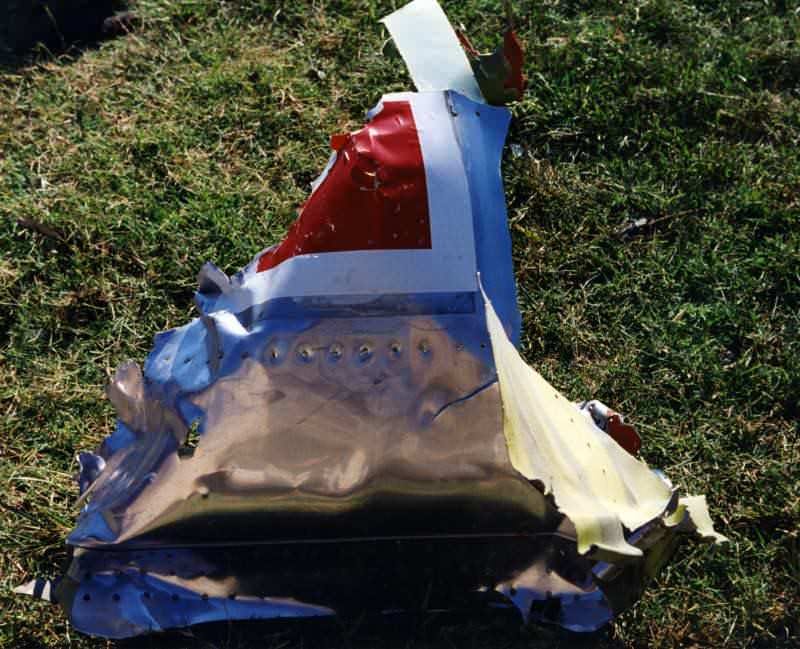
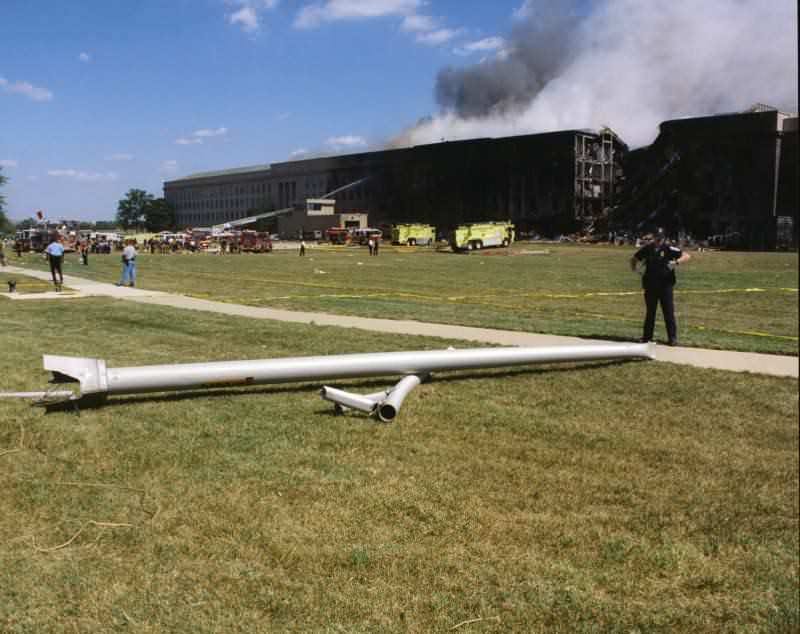
In its last moment of flight, American Airlines Flight 77 knocked over several light poles lining Washington Blvd., the highway just west of the Pentagon, as it accelerated to 530 miles per hour and descended to nearly ground level. The plane’s right engine ripped a hole in a construction fence just outside the Pentagon, while the left engine grazed the grass and struck a steam vault protruding from the ground. Both wings began to break apart, hurling metal fragments into the air.
The instant its nose struck the outer wall of the Pentagon, Flight 77 ceased to be an airplane. A deafening boom shook the morning. The impact reduced Flight 77 to a million superheated fragments. People on the plane became projectiles. Bone separated from flesh. Body parts flew as if fired from a cannon. The fuselage crumpled immediately, its soft aluminum disintegrating as it encountered layers of limestone, brick, concrete, a blast-resistant geotextile lining, and the steel-reinforced concrete columns that held up the Pentagon.
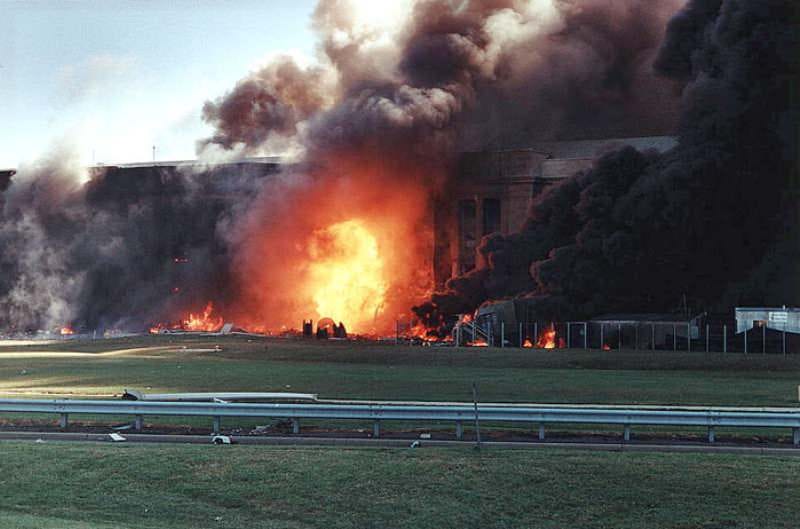
At the moment of impact, about 720 gallons of Flight 77’s fuel ignited outside the building, sending a massive fireball up through the roof and out in every direction. Fire instantly charred grass and trees near the helipad. Foam 161, the helipad firetruck, erupted. Burning wreckage flew across the lawn. Chunks of metal rained down.
The rest of the jet’s fuel—another 4,700 gallons—exploded in a blast far more powerful than the first. This one tore horizontally through the inside of the Pentagon. Shock waves raced down hallways. Fuel spewed into every space that physics would allow, engulfing offices, air vents, stairwells and elevator shafts in flame. Where there wasn’t enough oxygen, the superheated fuel sat in wait for a burst of air that would set it ablaze.
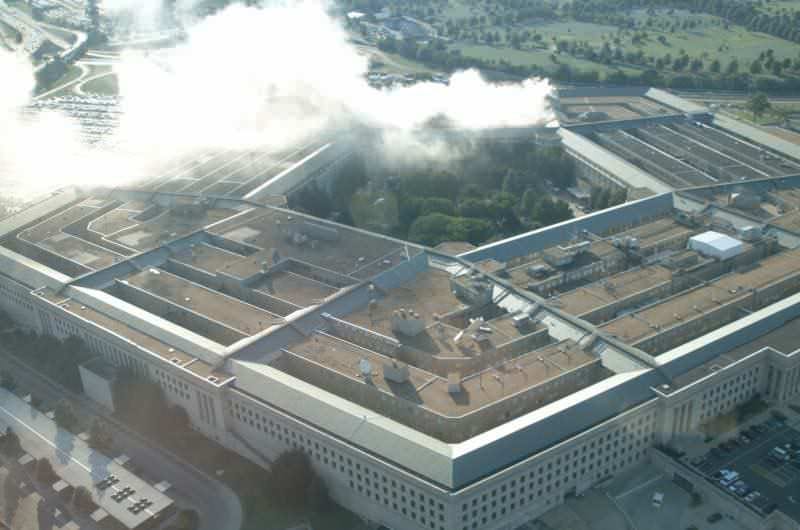
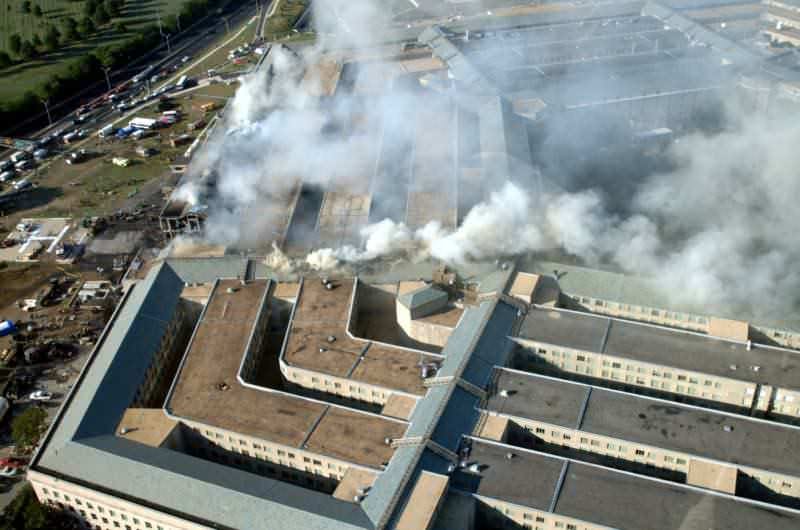
The remnants of the airplane, now an enormous, fluid mass of energy and matter, careened through a forest of support columns like a horizontal volcanic eruption. The mass tore through a bank of Army offices in the E Ring, the outermost hallway that ran all the way around the five-sided building. Then it obliterated the Navy Command Center, which extended from the D Ring, further in, to the C Ring, along with a Defense Intelligence Agency office. The maelstrom swept people, walls, ceilings, and furniture along with it, until the Pentagon finally halted the mass of debris that had once been Flight 77. It had traveled about 310 feet from the impact point, a distance twice the length of the 757. The Pentagon still stood, but 800,000 square feet of office space—a fifth of the building—had just been obliterated or set ablaze.
Rescuers Jump Into Action
On the other side of the building, at the DiLorenzo medical clinic, nobody had felt a thing. The sprawling Pentagon covered 29 acres—the equivalent of two city blocks in Manhattan or Chicago—and the DiLorenzo clinic was more than 1,000 feet from the spot where Flight 77 had smashed through the Pentagon. Staffers were watching the scene in New York on TV when a man ran through the clinic screaming, “Get out! Everybody get out!”
Capt. Jennifer Glidewell, an Army nurse, thought it was a fire drill, so she and her assistant joined a flow of people walking toward the nearest exit. Then somebody said there were patients in the center courtyard, the grassy respite at the bull’s-eye of the Pentagon, so they turned around and headed there, pushing against a throng of people trying to get out. When they got to the courtyard, they saw smoke billowing up from the other side of the building, and ran toward it. A man stumbled past, screaming, his arms up in the air and his burnt clothes shredded. When Glidewell saw his face, she thought it was moulage—the makeup used during medical exercises, to simulate injuries. But it wasn’t. The man’s skin was literally hanging off, his face charred black.
Glidewell grabbed her radio and hollered to colleagues, “This is not a drill!” More burned patients spilled out of the building. Glidewell was a junior officer at a place teeming with generals and admirals, but she looked around and realized she was the ranking medical officer in a capital emergency. This is big, she thought to herself. I shouldn’t be doing this.
Patients surrounded her. She sent the walking wounded off to find other help and began treating more serious patients on the grass. She needed rapid-sequence drugs to sedate victims in pain, and a breathing tube to help one woman struggling to breathe. There was plenty of that back at the clinic, but she couldn’t go back now—and all she had in her pockets was a scissors. Finally, doctors and other medical caregivers started running up. Many outranked Glidewell, but she had become the de facto medical commander. “I’m a doc,” one said. “Where do you need me?” She looked around, and directed him to the serious patients on the grass.
Others ran into the burning building, to search for victims who needed to be rescued. When the plane struck, Commander Craig Powell, a Navy SEAL who had just been transferred to Washington from a posting in Jamaica, quickly reverted to commando training. His fifth-floor office was above the impact zone, and it quaked from the explosions. But while others had hit the floor, Powell remained standing. Drop in an ambush, Powell knew, and you get killed—going to ground only meant you’d have to get up again to move.
As the ceiling in his office buckled, Powell—a six-foot-five, Paul Bunyanesque figure—quickly scanned the room, making sure no classified material had been left out. Then he darted out into the hallway. To his left there was a wall of fire. He went the other way, pushing open a pneumatic door that had just closed. Hundreds of other Pentagon workers—unaware of the inferno just a few feet away—were shuffling calmly toward the center courtyard. Powell thought about it. Obviously a sophisticated terrorist attack was underway. The last place he wanted to be was in the courtyard, out in the open, in a big crowd. Plus—there were obviously people trapped in the fire, desperate for help. Navy people.
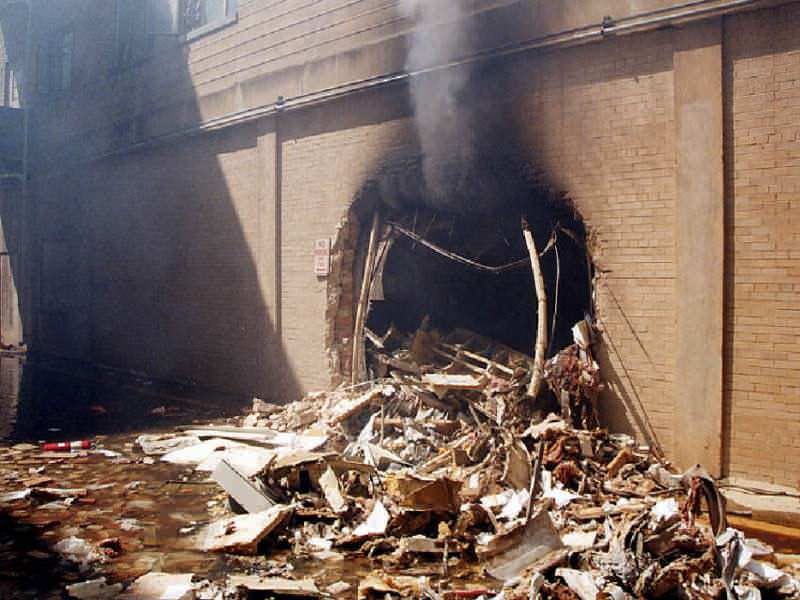
On the first floor, Powell ran into a young female Navy officer, staggering down one of the hallways—the wrong way, toward the fire. “They’re still in there,” she muttered, pointing toward the fire. “They’re still in there….” Powell hustled her toward the exit, then tried to figure out a back way into the suite of offices she had been aiming for. He ended up in A&E Drive, an open-air service road halfway through the C and B rings. It was apocalyptic. Burning wreckage was plowed up against the brick wall on one side, including one piece that looked like the hub of a wheel. Powell didn’t know what had caused the explosion, but the wheel looked like a piece of an airplane’s landing gear. That might explain it. The wheel had a pink hue. Was the sun glinting off of it? Or was it blood? He couldn’t tell.
On another side of the service road, explosions had blown three big smoking holes in the wall, each as big as the mouth of a cave. The trapped people might be inside those, Powell figured. Then some commotion drew his eyes upward. He saw two faces sticking through a gap where a window had been pried loose from the frame. A pair of lips puckered, trying to coax in desperately needed air.
Around him, half-a-dozen people were struggling to build a scaffold that could reach up to the window. “Look,” the SEAL intervened. “By the time you build a scaffold, these guys are gonna be toast. Form a net,” he instructed them. “Like you see rescuers do.” Five or six others gathered around and extended their arms. Above, a couple of people finally banged the window out of its frame, so people could jump out and escape the fire at their backs.
“Jump!” Powell shouted up at them. “We’ll catch you as you come out!”
A petite woman appeared at the window and came down like a prim teenager going off the diving board, arms and legs together. The moment she jumped, however, the human net disintegrated. The other people jumped back—human instinct, Powell knew. Unless you’re trained for it, it’s extremely difficult to stand in the path of a heavy object descending upon you. But the woman came straight down at Powell, and he caught her by the hips, bringing her down roughly but safely.
A second woman appeared in the window. “Come on!” Powell shouted, even though he was now a one-man net. As she climbed out, Powell could see that she was severely overweight. “Oh, man,” he prepared himself. “This is gonna suck.”
It did. This woman leapt with arms and legs flailing and came down on Powell like a sack of cement. He didn’t catch the woman, exactly; he just broke her fall with his body. Both of them tumbled into a heap, shouting in pain.
Another woman jumped before Powell could get up. His legs and back were badly hurt, and suddenly locked up, so he rolled into the path of the jumper, just in time to knock her sideways; instead of plopping straight into the pavement, she skidded into the ground horizontally. A few others ran over to help the two women who were now writhing on the ground.
A man appeared in the window. Unlike the other two, he jumped away from everybody on the ground and landed in a crouched stance, as if he were a paratrooper trained for hard landings. He fell over but was able to get up when people came to help.
A couple of others prepared to jump, but the group in the service road finally pushed a trash bin underneath the window. It still didn’t reach all the way, so Powell pulled himself up and climbed onto the bin, and somebody put a ladder on his shoulders, doing their best to hold it steady. It reached almost to the base of the window, high enough for the last two people in the smoky office to clamber down.
Navy People Trapped
There were still Navy people trapped on the ground floor, though, so Powell teamed up with a few others who quickly organized a rotational rescue squad to duck inside one of the flaming holes and look for victims. A general appeared and ordered Powell to take command outside the hole, while others crawled inside. The rescuers passed out one man they had dug out, then another, while calling for wet T-shirts dipped in the fetid water that was pooling at their feet, to cover their mouths and help survive the smoke.
Peering into the smoking hole, Powell decided to crawl inside and lend a hand. The whole area was encased in a strange wire cage—which indicated it was a SCIF, a sensitive compartmented information facility, one of the super-secure rooms inside the Pentagon, constructed to prevent electronic eavesdropping. Powell’s height made it hard to duck beneath the smoke, especially since his legs and back were pounding with pain. Yet Powell could see enough to tell that the burning ceiling was beginning to fall down.
He pressed upward on the wire cage with his arms, hoping that the metal framing would keep the ceiling intact for a few moments longer. Around him, all the walls were burning. He felt like he was in The Towering Inferno. The metal cage was getting soft and starting to wilt. Live wires kept bumping the cage, sending shocks through his fingers.
Powell could tell the whole thing was about to collapse. “Get out!” he roared. GET OUT!” The rescuers deeper in the hole heard him, and started crawling backward, toward the only daylight they could see. Powell pushed against the cage as hard as he could, his strength finally about to give. Flames were licking at his face. He couldn’t breathe. His legs felt like they were about to collapse. The cage was starting to droop and crumble. At about the same time the other rescuers tumbled out of the hole, Powell dove for safety, expecting the building to come crashing down behind him.
But when he looked back, the flaming room was still intact. I didn’t have to let go, he thought. We could have gotten a few more guys out. Then there was a terrific roar. Everything inside the hole flared up, and the room completely collapsed.
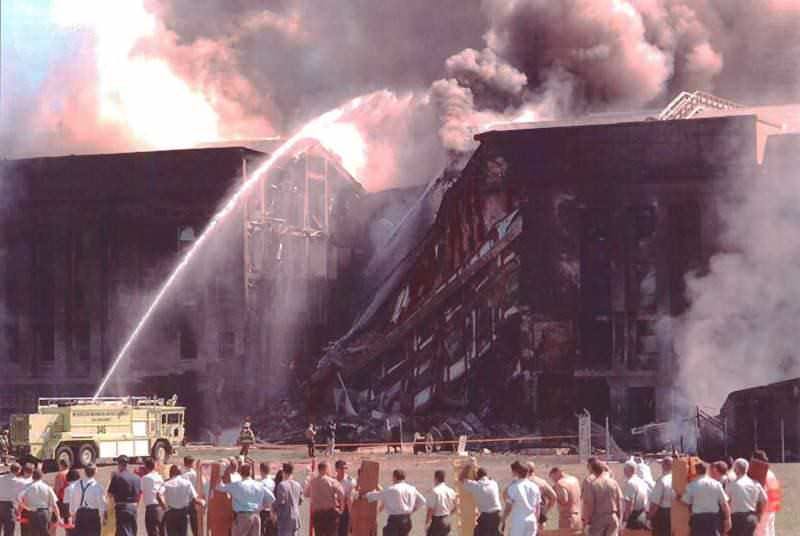
The fire department had arrived by then, but they had barely begun to get a handle on the massive fire they faced. A couple of fire crews had found their way deep into the Pentagon, where Powell and the others were pulling victims out of the flames. But they had no fire hoses: The explosions had shattered hundreds of water pipes, and the standpipes meant for emergencies barely produced a trickle. If there were victims, they’d need to be rescued in minutes, and it would take valuable time to unroll and stretch fire hose deep into the building. So the first firefighters left it to follow-on crews to run hose in from outside hydrants.
Without hoses to beat back the flames, firefighters had little hope of breaking through to victims trapped by the fire. Not far from Powell, another Navy officer had directed one fire crew to an office where up to a dozen people were trapped. The firefighters had nearly reached the office when fire started rolling overhead. Then the ceiling collapsed in a hail of sparks and flame. They tried inching through the dangling light fixtures, jagged debris and thickening smoke, but it was too hot. The fire officers ordered a retreat before they became trapped themselves.
Firefighters Arrive
Despite popular perception, the Pentagon wasn’t in Washington DC but in Arlington, Va., just across the Potomac River. That put the Arlington County Fire Dept. in charge of the fire. As they arrived, fire chiefs could see a huge smoking hole in the Pentagon, but they still weren’t sure what had caused it—there had been a few reports of a plane going down, but nothing confirmed. They had no idea how far the fire extended, or how many floors it consumed. Among other things, they had to figure out how to deploy their firefighters: Should they attack the fire mainly from the outside in? Or could they also get behind the fire, by sending crews into the center courtyard, and close in on it from two sides? If they did that, it would be critical to make sure crews didn’t end up with opposing hose lines: The force of the water from a fire hose could easily push fire right on top of somebody on the opposite end of the stream.
Fire crews stationed nearby, meanwhile, had already raced toward the fire, following the smoke that led them to the helipad, where hundreds of people were now streaming out of the Pentagon, many burned, dazed, and limping. Firefighters Alan Wallace and Mark Skipper, who had been manning the helipad when Flight 77 almost flew through them, both had burns on their necks and arms, but they were able to get their gear on and help with the rescue effort. The two air traffic controllers, Sean Boger and Jackie Kidd, had staggered out of the control tower onto the lawn, shaken but okay. Next to the control tower, the cars they had each driven to work that morning were aflame.
Arlington fire crews ran calls to the Pentagon about once a day—some false alarms, some medical calls, and occasionally a small fire. Even with an escort to help find their way, they found it a forbidding, confusing place. The building’s rational structure—five concentric hallways ringing the building, linked by 10 corridors that fanned out from the center, like spokes—was broken in dozens of places by secure, walled-off areas that gobbled up hallways, and ever-present construction that created endless detours. Even with building maps posted in many of the hallways, newcomers routinely got lost. Arlington paramedics sometimes joked that the Pentagon was the worst place in the world to have a heart attack—you’d be dead by the time the medics finally got to you.
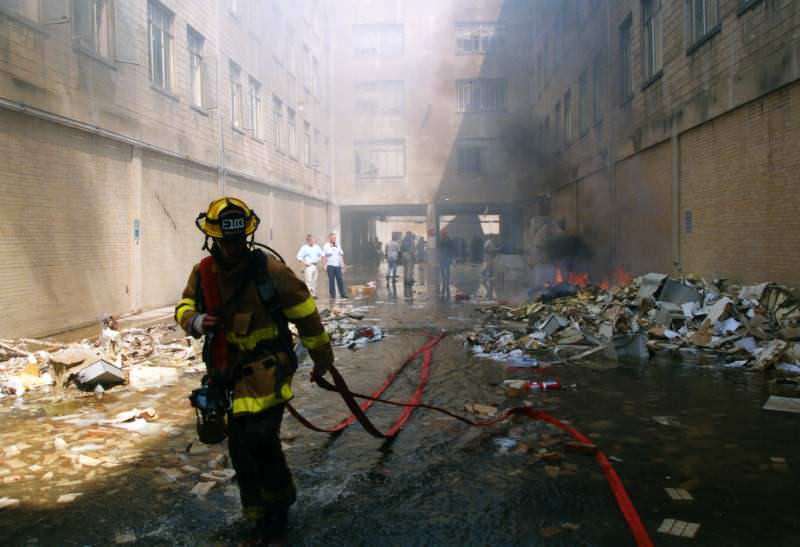
There were no escorts waiting when the first fire crews roared onto the helipad lawn—just a scrum of people running in every direction. So fire crews raced into whatever entrance seemed closest to the fire. Standard procedure was to conduct rescues first, then marshal hoses and start fighting fire. So several crews began looking for victims, working their way down corridors so dark with smoke it was like navigating the bottom of the ocean. A couple crews had thermal imagers that helped guide them through the murk, but others felt their way through fun-house hallways that were bowed or caved in from the explosions. They climbed over eye-high piles of furniture and other smoking debris as they felt for doorways, pushed them open, and called for anybody needing help.
It was puzzling—most of the offices were demolished, but there didn’t seem to be any people. Could they all have gotten out so fast? Firefighter Derek Spector, leading one of the crews, was more familiar with the Pentagon than others, since his station was nearby and the crews stationed there handled many of the calls at the Pentagon. But Spector didn’t know that he was in part of the building that had been undergoing renovation, and wasn’t yet repopulated. So he led his crew deeper into the fire, until he started to hear occasional thumps, like snowballs splattering on asphalt. He pointed a thermal imager upward—and saw that globs of melting concrete were falling down around them. Then, up ahead, close to the huge hole in the building, he made out a heap of debris so hot that it glowed in the imager. With nobody to rescue, and the building crumbling, he decided to turn around, lead his men out to safety, and regroup.
By the time they got back outside, firefighters were starting to flood the Pentagon. Ordinarily, firefighters would check in at the command post and hand over their “passports’’—velcro-backed nametags—so the chiefs would know who was inside if there was a problem. But firefighters from Arlington and several other jurisdictions were going straight into the fire, without checking in or even calling in on the radio. Beyond their own crews, the Arlington chiefs had no idea which firefighters were inside the building.
And suddenly, they needed everybody out: Several people had noticed that the upper floors of the Pentagon, next to the smoking hole, were starting to sag. A seam was forming between two segments of the building and a collapse seemed imminent. An evacuation order went out over the radios, and all the firetrucks on the scene began blasting their air horns. Some firefighters inside the building got the message, but the radios didn’t work well inside the Pentagon’s thick walls, and crews from other departments used different radios anyway.
Nobody knew who was left in the building when the structure around the smoking hole finally gave way. Roof panels snapped. Window frames crumpled. Beams and girders buckled, as five floors of the Pentagon thundered to the ground. A cloud of smoke and ash mushroomed outward from the bottom of the pile, temporarily obscuring a gash in the Pentagon that was now 70 feet wide.
Another Attack
Jim Schwartz, Arlington’s assistant chief for operations, was running the main command post. He still didn’t know the extent of the fire, and now he had to deal with a collapsing building—and fire crews that had been inside, and not heard from. It was time to do a proper accounting of all his people—but urgent problems kept mounting. An FBI agent who was in the command post, and talking with headquarters on the radio, found Schwartz. “Jimmy,” he said, “there’s another airplane that’s 20 minutes out.” It took a moment to register. “Did you hear me?” the agent asked, leaning in. “There’s another hijacked airplane, 20 minutes out!”
Schwartz got it—a follow-on attack was coming, just like in New York. He gave an order to relocate the command post—which was on the grass, out in the open—beneath a highway overpass, which would offer more shelter. The evacuation alerts went out again, in case any firefighters were still inside. And this time, the order was for everybody to clear the building by 500 yards.
Paramedics had been running an orderly triage operation along Washington Blvd., the highway overlooking the giant gash in the Pentagon. Victims staggering out of the Pentagon were escorted—or carried—to ambulances waiting on the road, where paramedics treated them and decided which nearby hospital to take them to, based on their injuries. But with the threat of a second airplane, the EMS commander ordered a “load-and-go:” Medics would grab everyone who looked injured, cram them into any ambulance available, and haul ass to the nearest hospital.
One patient was a large woman whose body was burned from the top of her head to her heels; the back of her dress had completely burned off. Two paramedics were gingerly lifting her into an ambulance when somebody tapped one of them on the shoulder. It was a flight medic, pointing to a helicopter that had touched down on the highway. “We’re here to take the worst,” the pilot said. They wheeled the woman over and hauled her inside. A second team of medics were loading another patient, a man who had been burned on his belly, chest and arms. But most striking were the man’s eyes—the whites had been burned, and turned a sallow green and yellow color that even the hardened paramedics found haunting.
Another ambulance had five patients in the back, even though the normal load was just one or two. The best hospital for burn victims and other trauma cases was over in the District, but if another plane was coming, and it was headed for D.C., then those hospitals might end up swamped. The two paramedics running the ambulance decided to head to a smaller hospital in Arlington instead.
Frustrated firefighters began to mass along Washington Blvd.—everybody looking at the sky—but there were many others who hadn’t gotten the message about the incoming plane. An Arlington battalion chief was setting up firefighting operations in the center courtyard, and even though commanders were practically screaming at him to evacuate, he didn’t seem to hear. Air-traffic controllers had been tracking the unidentified plane, heading straight for Washington from the west, until it was over southwestern Pennsylvania; then they lost it. They assumed hijackers had turned off the plane’s transponder and were flying the plane low, to avoid radar detection. So they estimated that the plane would strike an unknown target in the D.C. area based on its last known heading and airspeed.
An imprecise countdown went out to fire commanders, FBI agents, and Pentagon officials who had working radios, and they passed on the urgent information to those who didn’t. There were still several fire crews in the building, along with dozens of Pentagon workers still trying to rescue victims or administer aid. Some of them didn’t learn about the impending attack until the plane was just two minutes out—and at that point, where were they supposed to run? Most realized there was nothing to do except stay where they were and hope for the best. One firefighter knelt next to an oak tree in the courtyard, and prayed. A Pentagon building manager who had quit smoking a year earlier decided it was time for a smoke. He borrowed a cigarette, lit it with a trembling hand, sat on a curb in the courtyard, and waited.
T-minus-zero came and went. A warm September day was rising, and most of the firefighters stared idly, and angrily, at a deepening azure sky. But at the command post, Chief Schwartz didn’t have time to wait and see what was about to happen. He was finally starting to get first-hand reports on the scale of the fire from his officers, flushed from the building during the evacuation. Nobody had been able to locate Pentagon maps yet, so a battalion chief drew the rings and corridors on a whiteboard with a marker, then outlined the area he believed to be burning. Slowly, the scale of the fire was coming into focus—but not fast enough.
Finally, Arlington County Fire Chief Ed Plaugher—who had decided to leave tactical control of the firefight to Schwartz, his operations chief, while he dealt with big-picture stuff—decided he needed to commandeer a helicopter and get an aerial view of the scene. He found a Park Police chopper waiting for medical patients. Since they had all been whisked away, Plaugher identified himself, pointed his thumb into the air, and climbed aboard for a reconnaissance tour.
Deep inside the Pentagon, at the Executive Support Center atop the National Military Command center, the NMCC, the nation’s best intelligence wasn’t producing much clarity, either. Defense Secretary Rumsfeld—his suit jacket stained with blood from a victim he had helped carry after darting out to the helipad lawn to see what was happening—headlined a group of generals, admirals, and other military leaders confounded by the sketchy information they were getting. In addition to the second plane barreling toward Washington, there were reports that the State Dept. had been attacked and that something had exploded on the National Mall, in downtown D.C. Out in Colorado, several cargo trucks, possibly packed with explosives, were believed to be speeding toward Cheyenne Mountain, where NORAD, the North American Aerospace Defense Command, was based.
Meanwhile, Deputy Defense Secretary Paul Wolfowitz had grudgingly left the Pentagon on a helicopter, headed for Site R, the secret backup facility in Pennsylvania. But the site wasn’t fully active yet. It was a nerve-wracking “contingency,” as the generals liked to say: Bombs seemed to be going off all over America, more were on the way, the Pentagon was burning, and a backup facility wasn’t yet up and running.
Then there was a report that the plane thought to be flying toward the Pentagon had instead crashed into Camp David, the Presidential retreat in Maryland, not far from Site R. Or maybe it hadn’t—other reports suggested it had crashed somewhere short of the D.C. area, or been shot down by a fighter jet. While action officers hollered for information, Rumsfeld and his aides learned more about what was going on in the country from a bank of TVs than from official channels. The networks were starting to talk about a plane crash in Pennsylvania—maybe that’s what had happened to the second incoming plane.
At the firefighters’ command post outside, the Camp David rumor represented a peculiar kind of good news: It meant the second plane was no longer a threat and the firefighters could get back to work. As the all-clear went out over the radio, Schwartz and his officers vowed to get control of the fire crews this time, and implement an orderly firefighting plan. Crews would be sent into the building in organized groups—and nobody would get inside unless they checked in with the command post.
But fire commanders had less control over military officials who kept running back into the building to search for colleagues or grab stuff from their offices. Their bravery was admirable, but they didn’t have the gear or training that firefighters had, and volunteer rescuers often became victims themselves, adding to the firefighters’ job. Chief Schwartz got a radio call from one of his battalion chiefs, who was watching a column of soldiers forming up like they were going to assault the building. “You’ve got to do something about these guys,” he told Schwartz. “We can’t control them.”
Troops Out
Schwartz hurried over and found the group of military people arguing with firefighters trying to keep them out of the building. Schwartz was usually personable and cerebral, but firefighters knew he could be a hammerhead when necessary. He found a one-star general in the group. “What are you doing?” he asked.
“We’re going in there,” the general said. “We’ve got people in there.”
“Oh no, you’re not,” Schwartz fired back, explaining that the fire department was in charge of rescues—not the military. The general backed down.
To make sure the military people stayed out, fire commanders stationed Keith Young—an imposing, barrel-chested firefighter—at the entrance closest to the fire, with orders to let nobody in unless they were cleared by the command post. Young was promptly tested. Shortly after Schwartz shooed away the column of soldiers, another formation of Army officials marched up—led by a burly four-star general with a chestful of medals.
“I need to get into this building to save my men,” the general announced to Young, expecting the lowly firefighter to step aside.
“Look here, general,” Young answered, “you might outrank me every way possible in the military, but you’re not going into this building. It’s not safe.”
After staring at Young for a disbelieving second, the general tried to sidestep him. Young stepped in the way, looking up at the man’s chin. “I’m sorry, sir,” he said. “I’m just following orders to keep people out.” Young hated doing it. He could see that the general was desperate to help his people—like a good leader in combat, the firefighter imagined. But Young had his orders. Nobody was getting by.
The general tried to outflank Young again, and Young blocked him one more time. A pushing match developed. The military man was taller, but Young was thick and agile, and to the amazement of the soldiers and firefighters watching, the general ended up on the ground. He quickly picked himself up, and after a moment approached Young once more. The firefighter remained stone-faced—but prayed he wouldn’t have to wrestle the general anymore. “I’m sorry,” the general finally said, backing down. “You’re right.” Then he led the column of soldiers back down the steps, onto the lawn.
Everybody in Washington knew the Pentagon was burning by now, and it was starting to seem like every overstaffed agency with inspectors or investigators was sending them: The Drug Enforcement Administration, NASA, the Occupational Safety and Health Administration, even the Dept. of the Interior. The open-air command post had been moved inside a specially rigged police bus, and Plaugher, the fire chief, started telling the cops to remove people not directly involved in the firefight.
The FBI Steps In
There was another unusual problem: Too many firefighters. Arlington County dispatchers had asked neighboring departments to send crews to a nearby staging area, to be called to the Pentagon as needed. Most complied, but dozens of crews from D.C. and other jurisdictions went straight to the Pentagon and started firefighting operations on their own. It was a major breach of protocol to fight a fire on somebody else’s turf, without being asked—and risky, too, since competing chains of command were likely to cause confusion. At one point, Plaugher saw a group of D.C. chiefs setting up their own command post, barely 50 feet away from the Arlington operation. His first instinct was to kick the whole D.C. contingent out of the fire ground. Then he looked at the smoke streaming out of the Pentagon, and thought to himself, I can see the headline tomorrow: ‘Pentagon on fire, chief orders firefighters home.’ He swallowed hard and told Schwartz to do his best working with the D.C. crews.
While it was the site of a huge fire, the Pentagon was also a crime scene, which meant it was the FBI’s job to gather and document every fragment of evidence they could find. The FBI operation had begun to form within minutes of the attack, and agents were now combing the lawn, and getting their first glimpses of the interior destruction, where it was safe. The FBI conducted regular exercises with D.C.-area fire and police departments, yet there was a natural tension between firefighters and FBI agents. The FBI was used to being in charge, and agents had been telling firefighters not to move bodies or evidence. Yet firefighting was fast, rough work, and fire crews had been driving over debris in their trucks, plowing hazards out of the way, and spraying water everywhere. One FBI agent ran up to a group of firefighters about to enter the building and yelled, “This is a crime scene! Don’t touch anything!”
“He’s out of his mind,” one firefighter thought; the firefighters would have to tiptoe around like ballerinas to avoid disturbing all the wreckage. Another FBI agent scouring the helipad asked a battalion chief if he could move a command vehicle that was parked there, to get to something beneath it that looked like evidence. “No,” the chief said bluntly. “You’re going to have to reach under.”
The raging fire inside the Pentagon had essentially burned unmolested for 90 minutes, since there was no water pressure in the building for the earliest fire crews, and two evacuations had forced everybody out. Fire crews finally started dragging hose into the Pentagon from outside—but even then, the jet fuel-fed fire seemed impervious to water. The flame, heat and smoke were so intense that officers leading the firefight were setting up rotational systems from corridor to corridor: One group of firefighters would plunge into the fire for 15 or 20 minutes, extinguish what they could, then rotate out to be replaced by another crew. As one set of firefighters from D.C. and Maryland was waiting for their turn to pass through a set of double doors, to the fire on the other side, a few of the firefighters started talking about the terrorist attacks. There were rumors that fighter jets had been shooting down airplanes, that the 82nd Airborne was already on its way somewhere, that American planes and missiles were attacking Afghanistan, where the Pentagon had been monitoring the al Qaeda terrorist network for several years. “Whoever did this,” one firefighter said, “man, I hope we bomb these bastards back to the stone age.”
A battalion chief overheard the banter, and promptly intervened. “You all need to stop worrying about what’s going on around the country, or who did this,” he ordered them. “You need to concentrate on what you’re gonna do on the other side of those doors.” He jabbed a finger towards the fire that awaited them. The group fell silent.
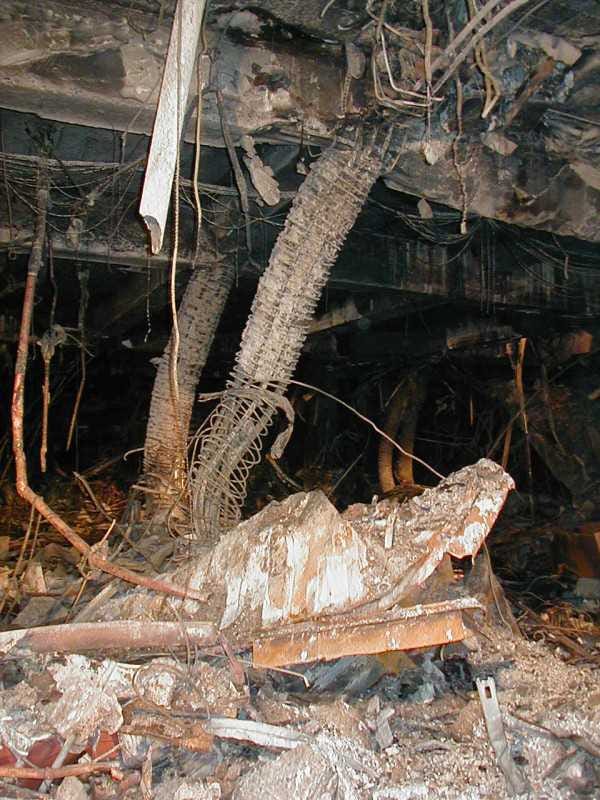
Behind the doors, fire was everywhere. It burned between walls and ran along the ceiling. On the floor, an inch of standing water steamed like broth in a cauldron, heated by fire underneath. Floor tiles, buckling from the heat, popped up out of the water like fish trying to escape a kettle before it comes to a boil. Smoke poured from desk drawers and filing cabinets, and when firefighters pulled them open, they’d sometimes ignite fresh fires, as air hit smoldering embers, before dousing the flames with their hoses.
Fire crews smashed windows to vent the heat and smoke, and as the air cleared, they began to notice victims strewn around the offices. Several looked mummified in place, as if they had died immediately when the initial blast sucked all the air out of the room and replaced it with toxic, superheated gas. A few victims were still seated at their desks. Other bodies lay closer to doors, or in hallways, where people might have fallen as they were trying to flee.
By early afternoon of September 11, the methodical work of the fire crews, setting up hoses and water cannons throughout the building and keeping a relentless flow of water on the flames, had begun to check the spread of the fire. Chief Plaugher’s aerial inspection and detailed reports from people inside the building had finally helped the fire commanders gauge the full extent of the fire, and develop a coherent plan for attacking it from two directions. But at its expansive core, the fire was so hot—over 1,000 degrees Fahrenheit, nearly twice the temperature the best fire gear was designed to withstand—that it was unlikely to die down until the fuel simply burned itself out.
“Everybody Out of the Pool”
Then there was another setback. Just as crews were starting to make some headway on the outer edges of the fire, the command post got another urgent message from the Arlington dispatcher: The tower at Reagan National Airport was reporting that yet another “inbound unidentified aircraft” was heading up the Potomac River, from the south, at a high rate of speed. There was no choice but to order another evacuation—and by the time the order went out, air-traffic controllers were reporting that the plane was only two minutes’ flying time away. Inside the building, firefighters who were close to exits dropped their hoses and tools and ran outside. Others, deeper in, huddled in place, anger and frustration rising. A four-man crew led by Arlington fire captain Denis Griffin saw a group of military personnel milling around, looking for ways to help, and they all joined up and waited together, feeling suddenly lonely in the huge structure.
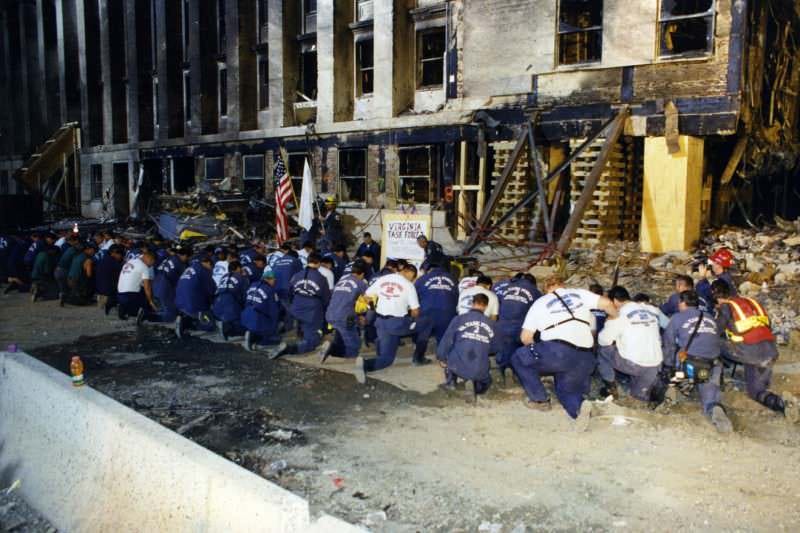
Once again, firefighters had been ordered 500 feet from the building, but this time, instead of sprinting across the lawn toward the presumed safety of Washington Blvd., they straggled, tired and fed up with evacuations. “If a plane is coming,” grumbled Arlington firefighter Mike Smith, who had already been on several sorties into the fire, “it’s just gonna have to get me.” Then, before many of the firefighters even got to the highway, commanders rescinded the evacuation. The plane, it turned out, had been a U.S. government jet carrying Attorney General John Ashcroft back to Washington from an out-of-town trip; with chaos still in the skies, the pilots had failed to communicate properly with controllers.
Dozens of firefighters ambled back toward the Pentagon. “Everybody out of the pool, everybody back into the pool,” one commander quipped. Like the earlier evacuations, the break had given fire commanders a chance to refine their rotational scheme and call in fresh crews. But they had also given the fire another 30 minutes to retrench, and once again, firefighters were charging into a war of attrition to reclaim territory they had previously won.
Crucial Rumsfeld Decision
Through the evacuations, the senior staff and the people running the NMCC had stayed put—and it was becoming clear that Rumsfeld wasn’t planning on leaving, no matter what. The NMCC complex was on the other side of the Pentagon, away from the fire, but smoke was permeating the whole building, and a haze was building inside the command center. Eyes were watering, and noses running. At one point, a technician with an air-monitoring device was in the same room as Rumsfeld. “We’ll have to find you an office for tomorrow,” he said.
Rumsfeld’s head snapped around. “We need to show America we’re functioning, and up and running,” he declared. “We’re staying here.”
The flustered technician explained that the air might be filled with toxic chemicals. After a moment’s hesitation, Rumsfeld, squinting through his wire-rimmed glasses, announced to the room, “Well, I’m going to be here, and I don’t care if it’s with a lot fewer people than we have right now. But we need to show the terrorists that they didn’t win.” Nobody argued. But they’d still have to do something about the smoke that was filling the room—and make sure the fire didn’t reach the NMCC.
In mid-afternoon, an Air Force colonel in an olive flight suit—wearing a handgun in a shoulder holster—arrived at the fire chiefs’ command post to plead the case for the NMCC to remain in operation. The fire commanders were flabbergasted to learn that anybody other than firefighters was still in the building. Even more unbelievable, the colonel explained that Rumsfeld planned to open the building for business the following day—even though the Pentagon’s own building managers, along with the head of the Pentagon police, had been urging Rumsfeld and the brass to clear out. Plaugher and Schwartz wondered why there didn’t seem to be a backup plan, someplace close by where the military leaders could go.
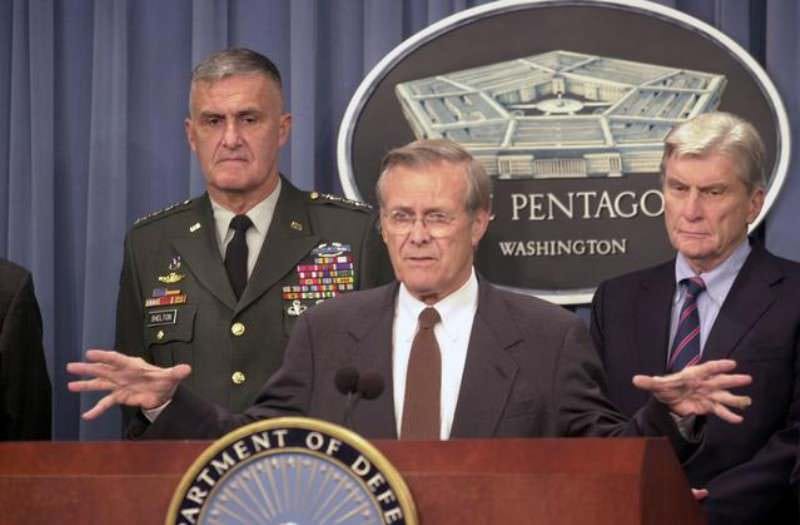
Then Plaugher explained the risks to the colonel. “Do you really want your people in there making decisions, possibly illegitimate decisions, under the influence of carbon monoxide?” he asked.
The colonel gave him a puzzled look. Plaugher continued. “Carbon monoxide is odorless and colorless,” he explained. “And in a hot, smoky fire, there’s usually tons of carbon monoxide. One of the first side effects is, it makes you do wacky things. In house fires, people who have lived there for 50 years will try to get out by walking into a closet. Do you really want people in that situation making command and control decisions?”
The colonel paused, pondering the risks. Then he asked, “If we monitor for it, does that change the picture?”
“How many people do you have?” Plaugher asked.
The NMCC normally had a staff of over a hundred, but the colonel said that they were operating on a stripped-down crew of fewer than 50. The two men negotiated. Plaugher began to realize that the colonel had been sent out to plead the case for a decision that Rumsfeld and his staff had already made. He wasn’t going to coax the military commanders out of their bunker, no matter what. Besides, Plaugher realized, as he looked at fighter jets circling overhead, the military guys inside the building had a lot of other important things to worry about.
They worked out a rough compromise. The colonel assured Plaugher they’d get some air-monitoring equipment in place to monitor carbon monoxide levels. Plaugher offered the colonel some air bottles and breathing devices, enough to give the NMCC staff an hour of breathing time, just in case.
A couple of hours later, Rumsfeld held his first press conference since the attacks. A roaring fire still consumed a huge chunk of the Pentagon, with about 40 percent of the building completely out of commission. Smoke wafted everywhere, with building engineers frantically working huge fans and blowers just to keep small portions of the building habitable. Fire crews on the roof were dealing with a fresh problem, as fire spread along a wooden structure beneath a thick concrete roof slab that firefighters could barely break through. But the attack had not shut down the military—and Site R, the backup facility, was finally operational, a huge relief to those in the NMCC who had wondered if they’d be overcome by smoke. “The Pentagon’s functioning,” Rumsfeld declared. “It will be in business tomorrow.”
As darkness fell, the fire chiefs at the Pentagon became acutely aware of the carnage in New York, where hundreds of firefighters and thousands of others had died in the total destruction of the Twin Towers. Plaugher and Schwartz decided to play it safe overnight, and do their best to prevent any fire or rescue deaths at the Pentagon. The building still burned—but the fire had been so hot and smoky that it was hard to imagine any victims could still be alive inside. So they’d switch from offensive to defensive operations, with crews keeping watch but doing no active firefighting. All crews would come down off the roof, so nobody fell off in the darkness. They’d set up a “surround and drown” operation, drenching the building overnight with streams from ladder trucks and water cannons, and plan for an aggressive push to extinguish the blaze at first light.
Problem on the Roof
The last crews ordered down off the roof protested the plan: They felt that all the back-breaking work of bashing through the concrete and chasing the hidden fire would be wasted, and that just a little more effort might extinguish the fire for good. They lost the argument, though. The generals and admirals were even more vocal. War was in the air, and many were concerned about the contents of classified safes, which were built to survive fire but might be sitting wide open, exposing national-security secrets to anybody who happened to walk by. So the fire chiefs developed a liaison system with a general designated as the military’s representative in the command post; he would evaluate requests to get into the building one by one, and arrange firefighter escorts for those that seemed valid.
As fire tacticians, search experts, construction crews and FBI agents made elaborate overnight plans and moved massive resources into place for Day 2, the Pentagon lit up the pre-dawn sky on Sept. 12 like a giant torch. The flames dancing on the roof mocked the water meant to subdue them, and only seemed to grow. As daylight finally broke, Chief Plaugher was on a hillside overlooking the Pentagon—and he was alarmed to see that the roof fire hadn’t stayed in check at all. He could tell by the smoke that it had traveled down two of the corridors a good distance, toward the courtyard, and was threatening to turn the corner and spread to other corridors—and maybe even the other side of the building, where the NMCC was. That certainly wasn’t what he had promised the military leaders when he decided to suspend firefighting operations overnight.
Schwartz and his lieutenants didn’t need to be told about the roof fire; they all saw the same thing, and were on it. The fire chiefs were the overall incident commanders, too, however, and putting out the fire was just one of their problems. They also had to coordinate the activities of numerous competing agencies—which they all knew could become a brawl if not properly supervised.
Around mid-day on the 11th, the first of the specialized search-and-rescue teams from FEMA, the Federal Emergency Management Agency, had arrived, at Plaugher’s request. The FEMA teams were among the best in the world at rescuing people from collapsed buildings, and rapidly stabilizing structures damaged by bombs or natural disasters. They also provoked the natural jealousy of local Arlington teams that did much the same thing, with less fanfare and smaller budgets—and would presumably be working right alongside them. The NTSB was also there, to oversee the search for Flight 77’s two “black boxes,” the on-board data recorders that might yield vital clues to what had happened on the hijacked plane. Hundreds of FBI agents were there by now, collecting evidence and recovering victims, and although the FBI wasn’t technically in charge, it did have the authority to assert jurisdiction in a terrorism incident—along with the bureaucratic muscle to elbow other agencies out of the way. Hovering over the whole operation were anxious leaders from the Defense Dept. and the White House, who called the command post frequently to get updates—and make unsolicited suggestions.
They’d all have to work together somehow, to put out the fire, stabilize the building so there were no further collapses, find the black boxes, recover the victims, and piece together the story of Flight 77. Problems began right at the point of impact, still belching smoke nearly a day after Flight 77 had slammed into the building. The FEMA teams had already started shoring up the Pentagon at its most vulnerable points, and now they ordered some of the Arlington rescue specialists to start pulling debris out from the very bottom of the collapse pile. The Arlington commander, Capt. Bob Gray, refused, insisting it was far too dangerous—to him, it made much more sense to approach the collapse pile gradually, from safer areas to the side. A standoff ensued, with Gray thinking he might end up with a battlefield demotion.
The FEMA commanders, meanwhile, were in a tense negotiation with officials at the White House, who wanted a display of determination and bravado by crews tackling the debris pile head on, straight into the hole, visible to the world via the TV cameras overlooking the Pentagon. But others, acutely aware of the danger, put their weight behind Gray’s idea, and after a half-hour of dickering the word came down: They’d approach the pile gradually, from the safest possible vantage point.
The FBI had already recovered a few bodies from the fringes of the fire zone, and was eager to collect the rest of the 184 victims—59 from the plane, and 125 from the building. But there were literally thousands of body parts, many smaller than a fingernail, that were entangled with piles of airplane wreckage, demolished furniture, and other debris scattered over 800,000 square feet of demolished office space. And the proper procedures for thoroughly documenting and carefully recovering each piece of remains—to assure it wouldn’t be tainted evidence, if ever needed for a trial—conflicted with the way virtually everybody else at the Pentagon needed to work. Firefighting was messy, no matter what. Shoring crews were doing commando construction work to keep the building from falling down, slapping up wooden beams and other supports as quickly as they could. Search crews were still holding out hope there might be live victims, pushing aside anything that might impede their access to a survivor.
The FBI persuaded all of the shoring and recovery crews to place red marker flags wherever they encountered remains, so the FBI could document and collect them. It drove progress nearly to a stop. Soon red flags dotted the debris to the point where firefighters and search teams could barely take a step. Crews ended up waiting around for overtasked FBI teams, or going out for extended breaks, aggravated by the delays.
While firefighters were finally putting out the interior fire, the problem on the roof had become urgent. It turned out there was sensitive military equipment up there that nobody had told the fire chiefs about the night before, when they decided to suspend roof operations for the night. The fire was now creeping close to it, threatening a fresh emergency. Fire commanders began rushing crews to the roof, using the buckets on ladder trucks to ferry axes, power saws, hoses, cases of water and even portable toilets to the top of the Pentagon. Crews were finally starting to make progress against the stubborn flames beneath the thick concrete when, once again, there was alarming news over the radio. “All personnel evacuate the building,” somebody was saying. “We have an unidentified aircraft, inbound to your location, 10 miles out.”
Most of the commanders on the ground were now familiar with the evacuation drill. But the battalion chiefs in charge on the roof had been called in from neighboring jurisdictions, and hadn’t been at the Pentagon on the 11th. In the hasty orientations that morning, nobody had told them about the evacuations. Yet now they had just a couple of minutes to get several dozen firefighters off the roof. One group of firefighters started trudging down on a ladder truck that was positioned nearby, but it was slow going—the ladder could only hold two or three of them at once. On another part of the roof, another group had no way down at all—there weren’t any ladders positioned nearby. The battalion chief in charge decided to disperse his firefighters around the roof, trying to guess where the plane would be least likely to hit if it was indeed coming from the south. Then he noticed that some of the trees in the center courtyard, close to the building, reached as high as the roof. “If necessary,” he instructed, “jump on a tree limb if you have to get off.” It was the craziest order he had ever given, but he couldn’t think of any other options.
Like the other secondary aircraft from the day before, this one was a false alarm—it turned out to be another jet carrying government officials that, once again, failed to communicate properly with air traffic controllers. The firefighters regrouped and started their work again, but a couple had been spooked by the incident, and asked to be sent down. The chiefs agreed.
By mid-afternoon on the 12th, the battalion chiefs on the roof were finally able to report that the fire up there was out for good. Fresh crews would run continuous rotations to watch for hotspots and flare-ups, as they were doing inside the building, but 36 hours after Flight 77 had first struck the building, the fire was under control.
From Combat Zone to Crime Scene
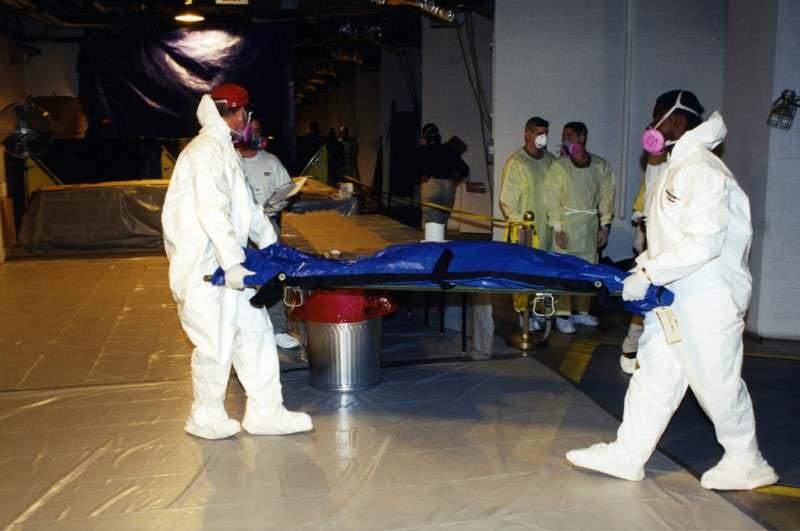
Over the next 24 hours, search and recovery crews moved a few more victims to a temporary morgue that had been set up on a Pentagon loading dock and ordered up the logistical resources for a clearing and shoring operation that was obviously going to take weeks. But tensions over the slow pace of work began to boil over.
Of all the interagency rivalries in the federal government, that between the FBI and the Bureau of Alcohol, Tobacco and Firearms was one of the most bitter. The ATF considered the FBI arrogant and insular. FBI agents felt the ATF suffered from an inferiority complex and was constantly reaching beyond its jurisdiction. And the two groups kept bumping into each other at the Pentagon.
On the evening of Sept. 13, during a briefing for the night shift that was just coming on duty, an ATF supervisor started complaining about how long it was taking the FBI to recover remains, and all the parts of the building where they hadn’t even started working yet. “This is an embarrassment to law enforcement that this is taking so long,” the ATF man ranted. “We need to be in those areas doing recovery right now.”
FBI agent Tom O’Connor was in charge of evidence recovery during the night shift, and he snapped back at his rival, “Well, we’re not doing that yet, and that’s the way it is. But just so you know—suit up.”
The ATF supervisor hadn’t been inside the Pentagon yet, so he and O’Connor pulled on protective gear. Then O’Connor led him in for a look at some of the areas that hadn’t yet been stabilized. There was ankle-deep water on the floors. Wires, cables, and pipes were poking out from everywhere, like dozens of booby traps. Moving through the mess was like climbing a soggy barricade. Through the morass, they could see firefighters battling a fresh outbreak of fire. “So whaddya think?” O’Connor snorted. “Should we go in there and start sloshing around?” The ATF supervisor went silent as they backed out of the Pentagon.
Search crews and the FBI did their best to co-exist, but by the 14th, pressure was mounting on the FBI. By then the command group was having meetings every four hours, and the standing rule was that any problem raised at one meeting had to be resolved by the time of the next one. The whole pace of clearing the Pentagon—essential for the rebuilding that was already being planned—was being hamstrung by the FBI’s meticulous evidence-collection procedures. FEMA officials were complaining, partly because a four-star general hovered at their command post, badgering them to hurry up and finish the job, so the military could reclaim their building. White House officials wanted to know why TV footage of New York showed cranes pulling apart wreckage, and dump trucks carrying it away, while debris removal at the Pentagon seemed to be going at a snail’s pace.
The FBI’s evidence experts finally made some compromises. They talked to the NTSB, and decided that every piece of the airplane didn’t need to be documented. It was obvious by now there had been a plane crash—they wouldn’t have to piece together the plane to prove that. All they really needed were any major airplane parts that were still intact, and the black boxes. As for remains, the FBI arranged for extra recovery crews to be on stand-by, ready to go the moment search crews called for them. And if they weren’t available, they all decided, search crews ought to be able to move remains slightly, if that would allow them to continue working.
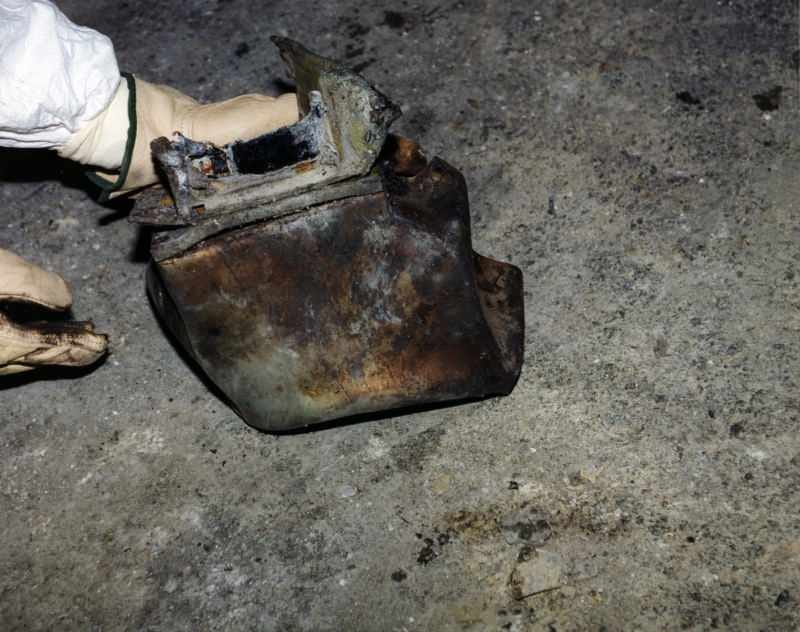
By Friday morning, Sept. 14, there were finally some breakthroughs. FBI agents digging through a mound of debris near the hole that Navy SEAL Craig Powell had plunged into finally found the black boxes. They were so bent and charred that the FBI photographer who pulled out the first one nearly threw it in a trash bin, figuring it was a piece of random wreckage; an agent who happened to have a degree in aerospace engineering stopped her, and guessed correctly that the object in her hand was one of the black boxes. Searchers found the other one moments later, not far from where the first had been buried.
The relaxed evidence rules also allowed a huge crane—dubbed the “T-Rex,” on account of its dinosaur-like jaws—to start dismantling the huge rubble pile near the collapse zone. The Army offered the brawny and tireless troops of its Old Guard ceremonial unit, famous for guarding the Tomb of the Unknowns at Arlington National Cemetery, to help haul lumber, move debris, and do anything else that required muscle and manpower. And the round-the-clock work of search, shoring and recovery crews finally began to reduce a smoking mountain of rubble to something that seemed manageable.
It would still be days before the fire department completed the mission, and formally turned over a cleared and stabilized Pentagon to the FBI. But by the afternoon of the 14th, Jim Schwartz finally figured it was a reasonable time to go home and get some rest. Like a few others who had been at the Pentagon since the beginning, he had scarcely slept in four days, relying on adrenaline and continual movement to keep him awake and alert. That strategy had finally run its course. Schwartz had a crushing headache, the worst he had ever endured. He drove a couple of miles to his home in Alexandria, just a few miles south of the Pentagon. He was returning to an empty house, since the place was being renovated, with contractors adding a third floor. His wife and two daughters were staying with relatives.
Schwartz headed straight for bed, on the second floor. As he collapsed on the mattress, he looked up, and for a brief moment it seemed like he hadn’t come home at all. He was staring at a blue tarp, left by the contractor after they had removed the roof. “I’m back home, but I’m still outside,” he chuckled to himself. He could just as well have been sleeping in one of the tents out on the Pentagon lawn, and for a bleary second he wondered if he was. But then he noticed something: It was quiet. No, it definitely wasn’t the Pentagon.
Excerpted from Firefight: Inside the Battle to Save the Pentagon on 9-11
Other books by Rick Newman:
Bury Us Upside Down: The Misty Pilots and the Secret Battle for the Ho Chi Minh Trail, with Don Shepperd
Rebounders: How Winners Pivot from Setback to Success
Liberty For All: A Manifesto for Reclaiming Financial and Political Freedom
Had no idea how extensive the damage was and what a crazy time! So interesting how everyone reacted…
Never forget.