


I finally got around to Andrew Ross Sorkin’s chronicle of the Great Depression, “1929.” I listened to the audiobook in early August during the 18-hour round-trip drive from my home in New York to Leen’s Lodge in eastern Maine, the site of the annual Camp Kotok retreat. The book put me in a financial state of mind for a long weekend with economists and money managers.
Sorkin frames his book as a warning for those who forget the past, or fail to ever study it. He chides those who believe “this time is different.” His point is that greed is irrepressible, universal, and timeless, and will always find a way to bilk the system and endanger it.

It’s an apt moment to ponder greed, financial manias, and human folly. The stock market has been on a tear for nearly three years, enriching millions lucky enough to own stocks. President Trump wields a deregulatory axe, slashing rules meant to protect consumers and keep businesses honest.
[What the bond market wants you to know]
Trump also sets a personal example of rapacious greed by operating a pay-to-play presidency in which patronizing his businesses helps the rich and powerful get favorable treatment. His family’s crypto firm ran a de-facto pump-and-dump scheme to capitalize on the impression that Trump, as president, would send crypto to the moon. Gullible buyers lost billions. He now plans to open a bank that will allow institutions to pay hefty fees as tribute to the king.
Sorkin wants his readers to feel a sense of alarm at the way modern markets operate. Yet revisiting the stock-market crash of 1929 made me appreciate everything we’ve done to improve the financial system and prevent disaster. In the aftermath of the crash, reforms addressed many abuses that were legal in the 1920s but no longer are. Nearly 100 years later, the record of those reforms is remarkably solid. In a way, it’s amazing what we get away with today, because the system protects us against our own profligacy.
Sorkin’s book is a reminder that the most astonishing thing about the 1920s is what was legal. Shrewd investors routinely formed pools and trusts explicitly to manipulate stock prices. They’d quietly buy certain stocks in coordinated fashion, driving the price up. Then a leak would appear in the press, touting the hot stock, as if it could only go up. Ordinary Joes would start buying, sending the price even higher. Then the smart money would sell, locking in profits, which would tank the stock and leave the little guy with losses. Again: That was legal.
[The Weekly WTF: $40 trillion in the hole]
Insider trading was also legal. Investment banks sold stocks to politicians and favored customers at below-market prices, generating instant profits. Stock speculation was all the rage and banks encouraged their customers to get in on it. Just about anybody could start a local bank, with few regulations meant to assure solvency.
It’s still hard to say definitively what caused the 1929 market crash, or the depression that followed. But financial markets in the 1920s were a carnival of deception and fraud. Some sort of comedown was inevitable. The failure of 9,000 banks during the next five years amplified the pain, and foolish policies such as the Smoot-Hawley Tariff Act of 1930 made a bad situation worse.
What does this tell us about today? It’s self-evident that many reforms of the 1930s reined in fraud and shored up the banking system. Insider trading and stock manipulation are now illegal. Federal agencies now regulate and insure banks, oversee stock trading, and prosecute offenders. Abuses still happen—and will always happen—but there’s a general sense of confidence that rules and laws govern US financial markets and keep the banking system stable.
[A Subaru capitalist takes on the “Subaru Socialists”]
We tested all this during the market crash in 2008, when the failure of Lehman Brothers triggered a run on institutional banks. That was driven by widespread speculation in the housing market, similar to the stock speculation of the 1920s. Fraudsters exploited loopholes and fools took the bait they dangled, on a massive scale. It took aggressive federal intervention, including unprecedented action by the Federal Reserve, to stabilize the system. A nasty recession ensued, but safeguards built during the prior 80 years prevented a depression and saved humanity from its own gaping flaws.
We put new protections in place after the 2008 crash to prevent those particular problems from recurring. So are we perfectly safe now? Of course not. But the next war never looks quite like the last one, and our ability to screw up evolves just as technological progress evolves.
The problem we have today is that we take our safeguards for granted, which you might characterize as excessive moral hazard. There’s so much safety in the system that it enables dumb decisions. It’s one reason the US national debt has ballooned to $40 trillion and is certainly going higher.
The Fed and the Treasury could probably manipulate inflation or interest rates, or both, as a way of reducing the size of the debt relative to the economy. That kind of federal power was unimaginable in 1929. The markets know it, one reason investors have been willing to lend the US government so much money in the first place.
The Fed has kept long-term interest rates artificially low since 2009, a form of monetary stimulus known as part of the “Fed put.” It’s a powerful pushback against market discipline that keeps rates lower, stock prices higher, and the economy rosier than if the Fed stayed on the sidelines. The Fed has tried to unwind this unusual form of stimulus, but at a snail’s pace that has basically left an emergency measure intact nearly 20 years after the emergency.
Maybe we can do this forever, with no downside. But we might just be delaying the point at which we need to address fundamental problems, such as the national debt. And the ability to delay means the problem will be far worse once we address it than if market forces compelled us to deal with it earlier.
Other safeguards make the economy stable enough to withstand Trump’s ridiculous tariffs and his foolish protectionism, which raise costs on everybody and reduce growth. One of the most prominent lessons of the Great Depression was the disastrous effect tariffs can have when overused. Trump is blundering into the same trap, and getting away with it, because of rigorous efforts to stupid-proof the economy under many of his predecessors.
[The myth of the prosperous worker]
Trump is also trying to manipulate the Fed into goosing the economy even more, as if there will never be a price to pay, at least not under his watch. The Treasury Dept. recently got into the act, announcing plans to manipulate the bond market to bring long-term rates down. There’s even a proposal to reduce the reporting requirement for public companies from quarterly to semi-annual. There’s no obvious problem with quarterly reporting, except that it’s more of a bother for companies than doing it less frequently.
Our system is showing it can withstand boneheaded mistakes, one at a time. But there could be a breaking point at which the combined weight of needless, man-made strains causes fractures. We’re stress-testing the safeguards built during the last century.
This time is different, but with the same overconfidence and self-interest that have always tripped us up.
Enjoy a cartoon.
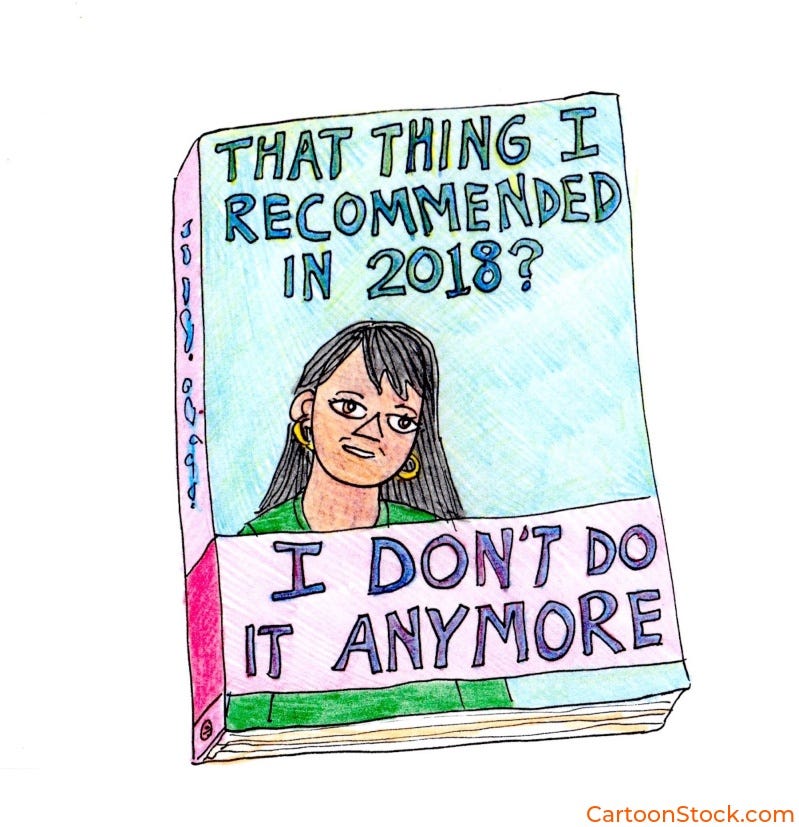
You can order this cartoon👆 and play cartoon-themed puzzles and word games at CartoonStock.com.
When you rob from Peter to pay Paul something bad will happen.The real problem will more than likely end up in someone other than the president who caused it to happen. Just guess who that might be because his first name start's with a T.If i was smart i would buy GOLD but, i am way to old to get involved with that now.
I feel better after reading that. Thanks. But…
Post 2008, housing is nearly unaffordable
Wages are stagnant
AI hardware investment seems insane
… but I will try to be hopeful and, as always, stay diversified