

If the Supreme Court voids President Trump’s emergency tariffs, as seems likely, the government will face an unprecedented task: Refunding billions of dollars in import taxes it has already collected.
Markets probably haven’t priced in this reversal of payments. But they will if the Supremes rule against Trump. And the biggest beneficiaries will be some of corporate America’s marquee names, which could goose stock values.
“If refunds were required, a lot of businesses would be helped by getting the tariff money back,” Patrick O’Hare of Briefing.com explained in a November 12 analysis. “So it could be seen as a boon for earnings prospects.”
At stake are the emergency tariffs Trump has used to justify about 75% of the new import taxes he has imposed this year. Trump claims a 1977 law gives him the power to impose tariffs for any reason he deems an “emergency.” But two federal courts have already said that law doesn’t give the president tariff authority, and a majority of the nine Supreme Court justices seemed to agree on November 5, when they heard the appeal. The ruling could come by the end of 2025 or early 2026.
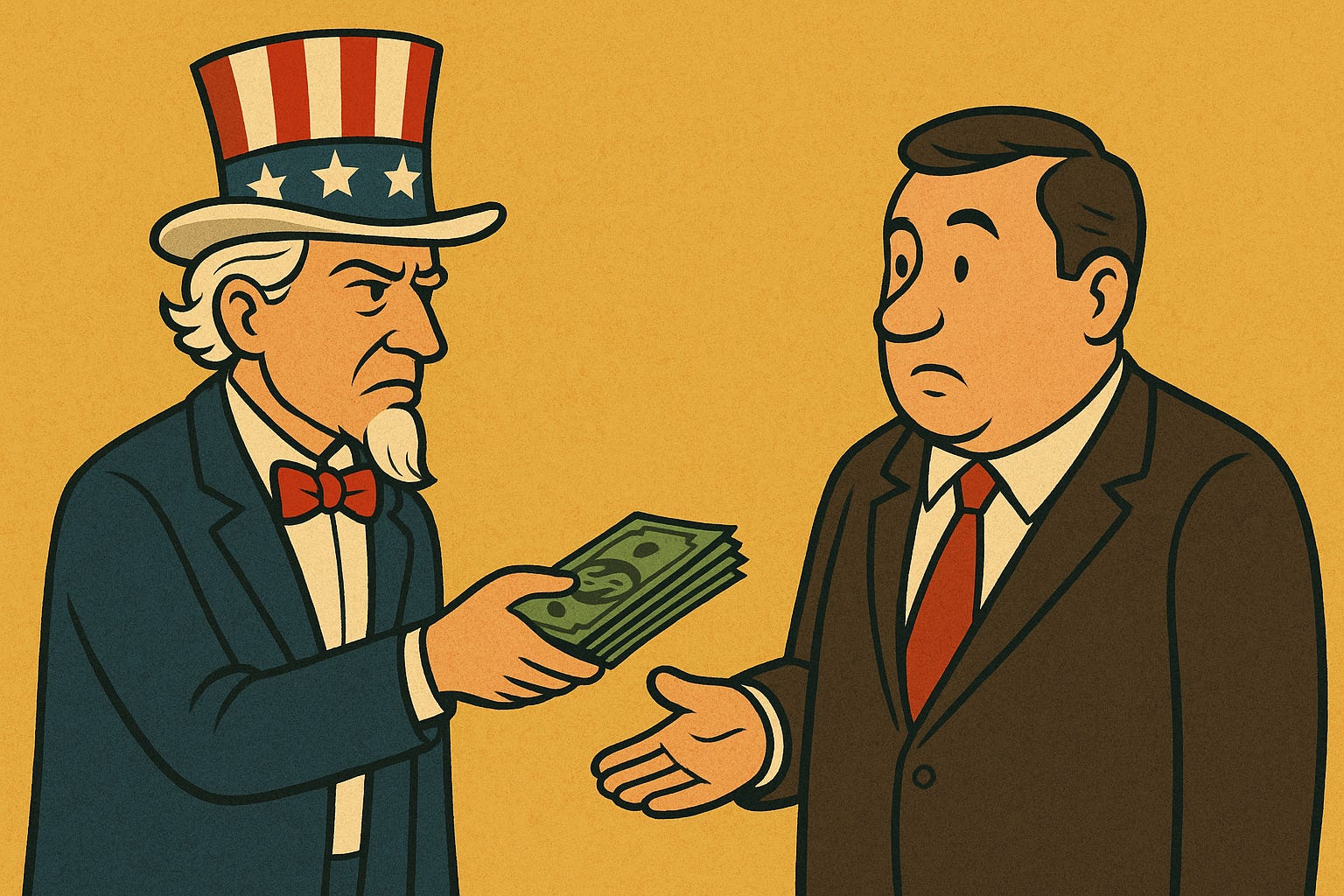
The government collected around $108 billion in emergency tariff revenue through October, according to PwC. Those tariffs are still in effect, and the tally could hit $120 billion by the end of the year. That’s $120 billion that importers have paid to the government as tax revenue, which might be coming right back to them.
Dozens of public companies have said Trump’s tariffs have raised costs and cut into earnings during the last two quarters. Apple says the tariffs have cost it nearly $2 billion so far. Nike expects a tariff bill of $1.5 billion for the year; Procter & Gamble, a $1 billion tariff hit.
Many retailers have said they need to raise prices because of rising tariff costs. Those include Walmart, Target, Macy’s, Best Buy, Home Depot, Columbia Sportwear, Stanley Black & Decker, and many others. All of these companies would qualify for refunds. Whether they would roll back price hikes is a trickier question, since for-profit sellers want to get the highest prices buyers will pay.
The emergency tariffs are the ones Trump refers to as “reciprocal” tariffs, generally imposed on a country-by-country basis. At the start of the year, for instance, the average tariff on imports from China was about 21%. Through a series of moves, Trump has ratcheted that up to nearly 58%. Most of that increase has come from emergency tariffs that will disappear if the Supreme Court rules them illegal.
Trump has levied other types of tariffs not included in the Supreme Court case, such as those on imported autos, auto parts, steel, aluminum, copper and lumber. Automakers have endured some of the biggest cost hikes from the tariffs, since many of the components in cars have gotten more expensive. General Motors says the new taxes will cost it as much as $4.5 billion this year. Ford pegs its annual tariff increase at $1 billion. Those companies won’t get much relief from the Supreme Court case.
An infusion of cash into the corporate sector could definitely boost the stock values of companies suddenly a little bit richer. But there’s another wrinkle. Less government revenue from tariffs means annual budget deficits and the $38 trillion national debt would be a little bit bigger, and that’s something investors worry about, too.
“If the Treasury market thinks the U.S. won’t be able to collect as much tariff revenue and/or has to refund the tariff revenue already collected, that may fuel deficit concerns that drive up interest rates,” O’Hare explains.
There’s been no move in that direction yet. But Trump’s tariffs have kept investors off-balance all year. The gymnastics aren’t over.