


Two pieces of recent analysis capture the decline of the United States in different ways. One is from Torsten Slok, chief economist at private-equity firm Apollo. On August 28, he wrote that the market, not the Federal Reserve, now controls long-term interest rates. That would mark the end of a 30-year reign in which America’s central bank could basically call the shots and manipulate markets to expressly benefit the United States and its citizens. That form of “American exceptionalism” may be over.
The second is a recent Foreign Policy article by Stephen Walt that ponders “why the United States keeps losing wars.” We don’t lose every war. But we seem to be losing President Trump’s war against Iran. The Iraq incursion that began in 2003 certainly wasn’t a win. And the Afghanistan war that began in 2001 ended ignominiously in 2021, with the Taliban regaining control of the country. The connective thread is that these are wars of choice for America, but they are wars of survival for perceived foes we try to impose our will on. They have more at stake than we do and therefore the will to tough it out longer. Meanwhile, we squander blood and treasure.
If America is facing a comeuppance, we probably deserve it. As a nation, we’ve been fiscally irresponsible for 25 years, spending money we didn’t have and racking up $40 trillion in debt. Trump didn’t cause every current problem, but his petulance toward friends and foes alike is fitting. We’re a spoiled rich kid who’s grown up to be entitled and bossy.
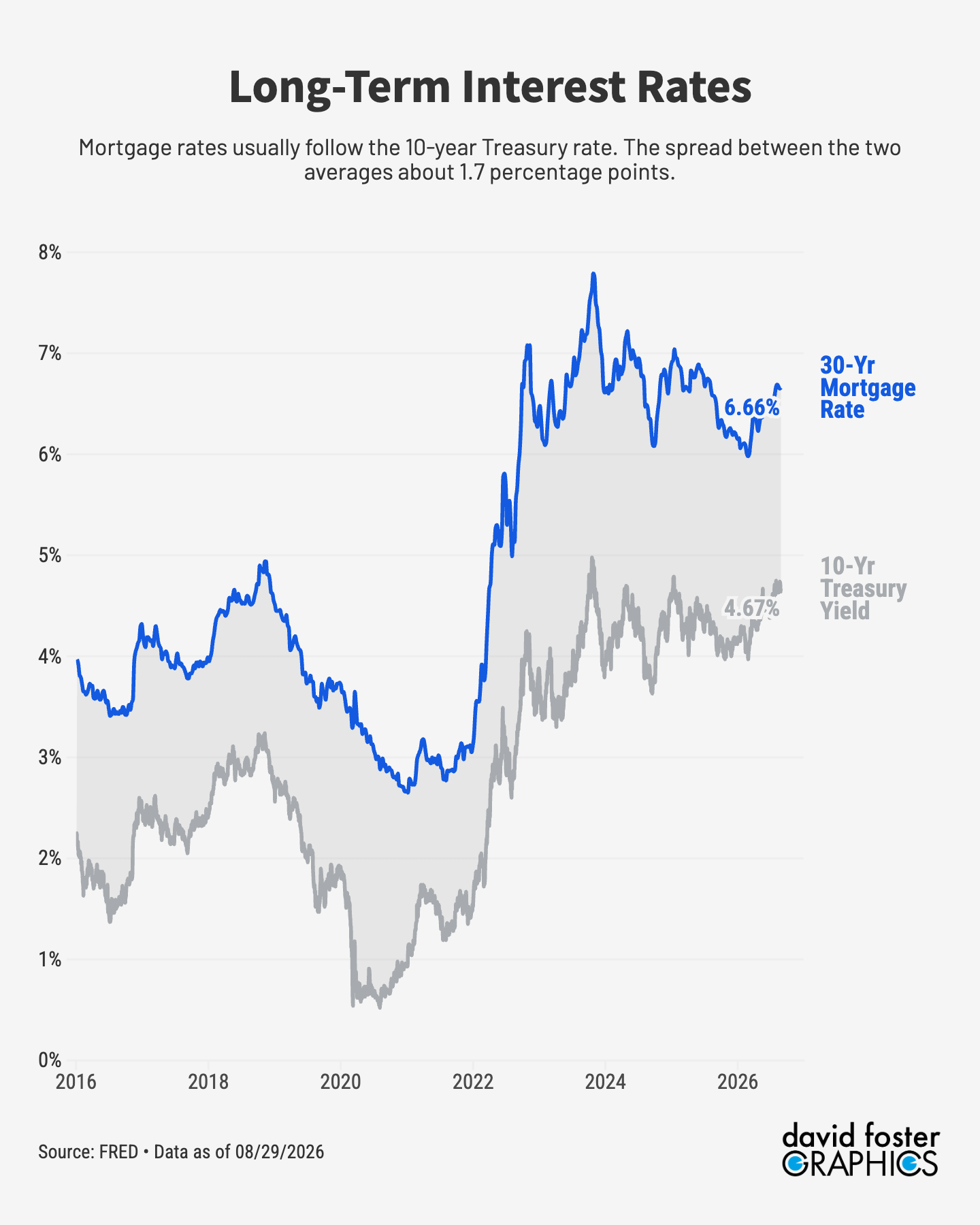
Most of this doesn’t matter to ordinary Americans right now. Investors are fixated on a restless bond market that seems to be signaling that America’s debt binge is entering the danger zone. But if you need a loan for a house or a car, you can easily get it, at interest rates that are still lower than historical averages.
[The Weekly WTF: Operation Economic Nothingburger]
Unemployment is low. Whatever is going on in the bond market, it isn’t causing mass layoffs. And rising interest rates don’t seem to bother the stock market, which is close to record highs. Most Americans don’t live off investment gains, but many have 401(k) retirement plans that have gotten a lot cushier during the last three years.
So the public carps about the elevated cost of gasoline and hamburger. The bond market isn’t their problem. But it might be their problem the next time there’s a recession. And there will be another recession.