


The inflation report for February was pretty obsolete the moment it arrived, given that the data is from mid-February, before the Iran war started. The spike in oil and other energy prices since then is now dominating markets and generating inflation that doesn’t show up in the February numbers.
So this will be a short post showing where inflation was before the war started on February 28, and what has changed since then.
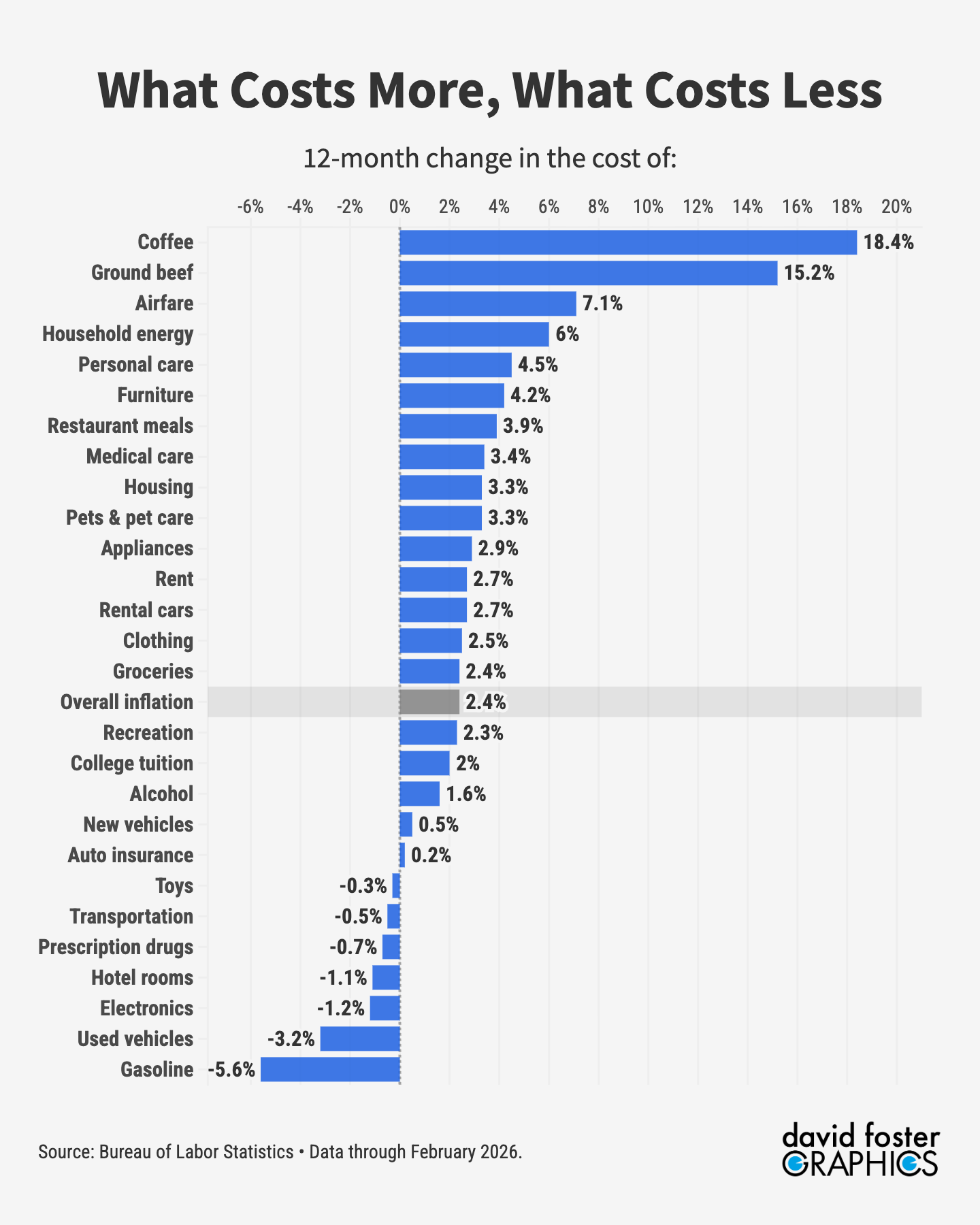
The notable thing about February inflation was that there was little sign of worsening inflation caused by the tariffs President Trump has imposed on some $1 trillion of imports. The overall inflation rate stayed at 2.4%, with no new spikes in any key categories.
That’s good news, and tariff-related inflation could end up less than feared in 2026, given the Supreme Court’s February 20 decision knocking down Trump’s emergency tariffs.
Trump announced a new 10% “global” tariff immediately after that ruling, but the overall outcome will be lower import taxes with the emergency tariffs gone. Trump has even more reason to back down on tariffs this year, to address affordability concerns as the midterm elections approach.
[Trump squandered his favorite affordability brag.]
Only a few spending categories registered notable inflation in February, as the chart above shows. Coffee and beef prices are up sharply because of shortages. Household energy costs rose 6% year-over-year, largely driven by rising demand for electricity, which is pushing costs higher. Prices fell on an annualized basis in seven of the 27 categories we track.
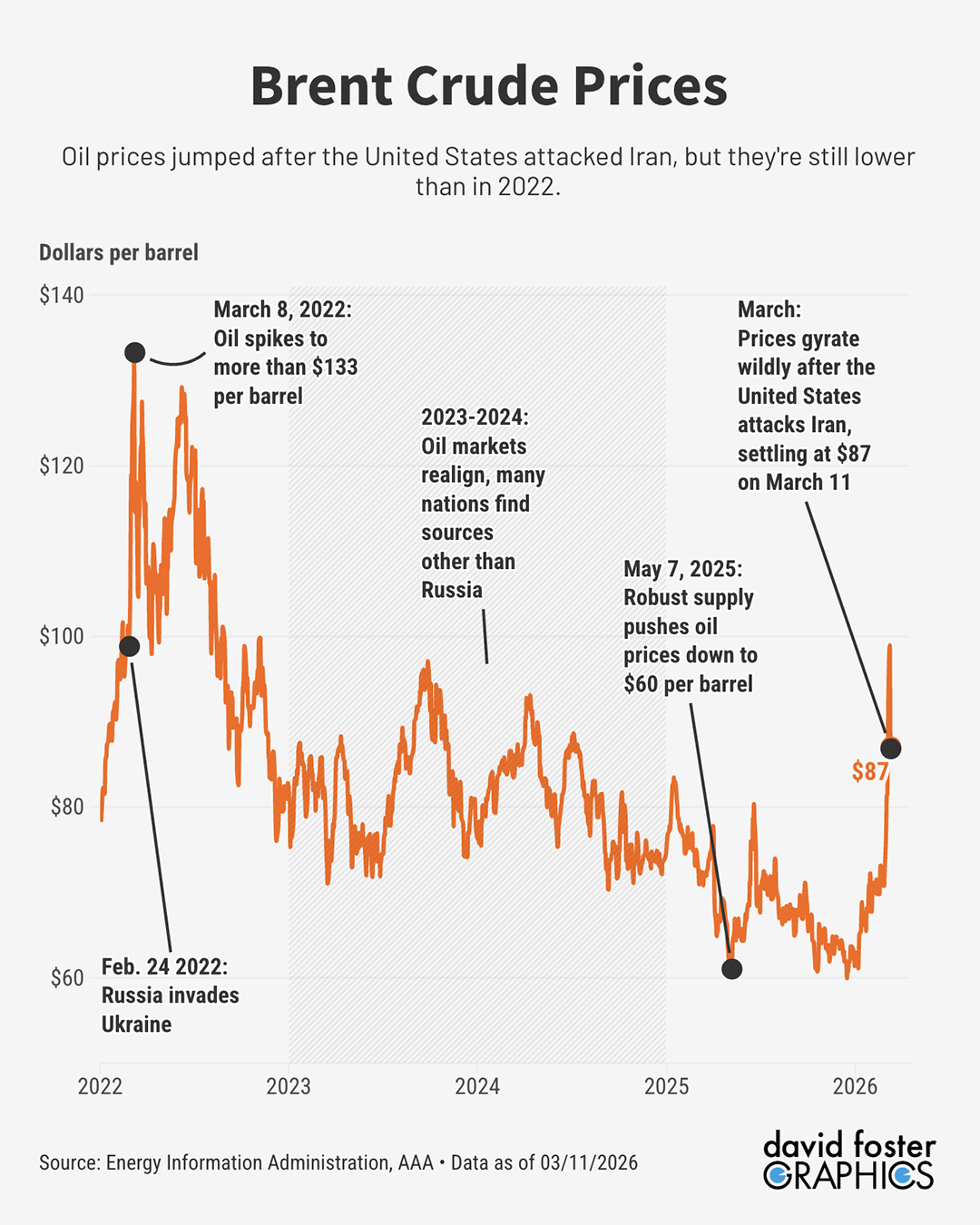
That’s the pre-war story. The post-war story, as everybody knows by now, is the surge in energy prices that will completely change the inflation outlook, at least for a while. Oil prices have jumped by nearly $20 per barrel since the war started, and by nearly $30 since the start of the year.
[3 dramatic scenarios to watch for in Iran]
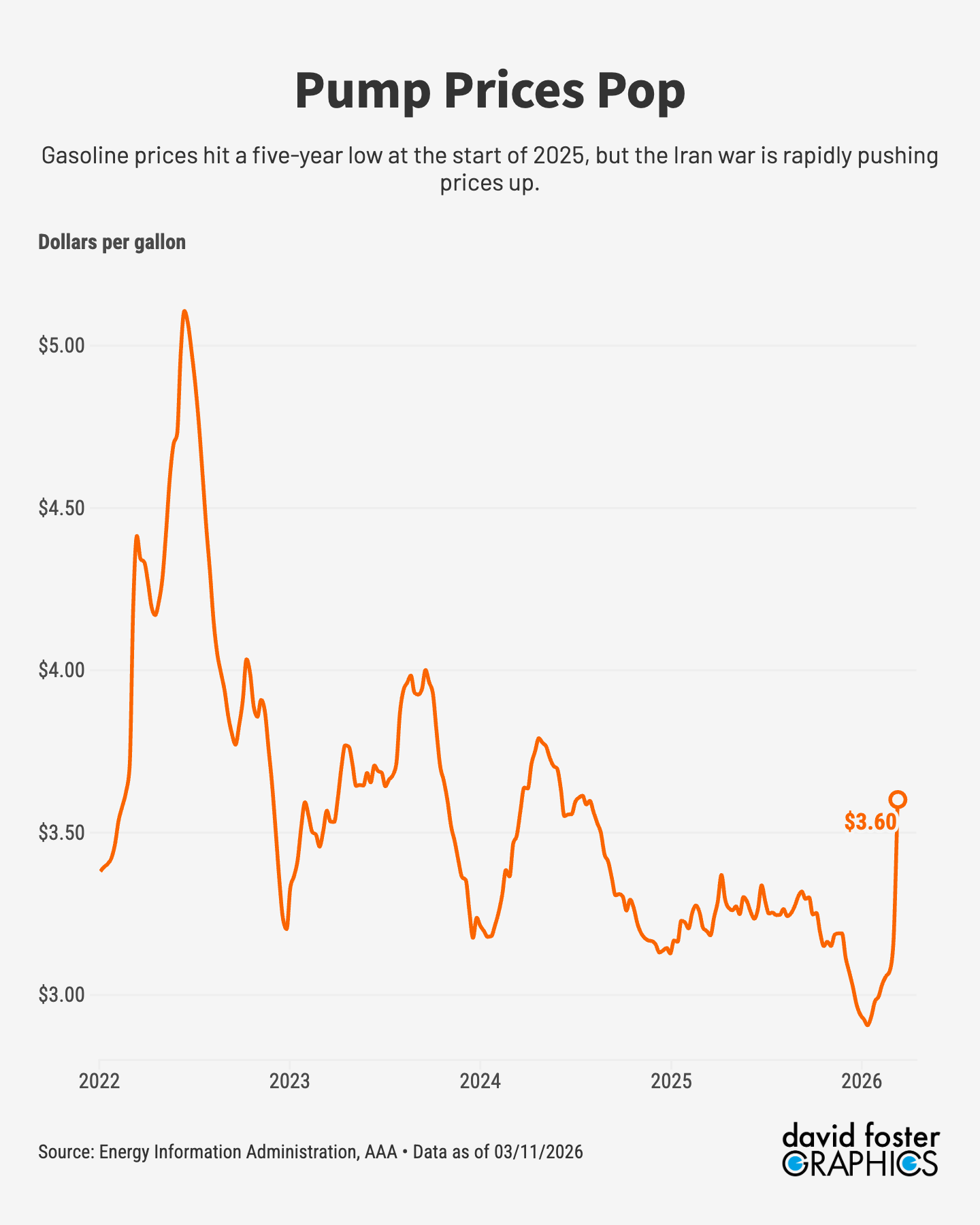
That’s quickly driving up gasoline prices, making the 6% annualized decline in February nothing but a wistful memory. So far, pump prices have jumped from $2.92 per gallon on February 27 to $3.60 on March 11.
Rising energy costs will push prices up in many sectors, since they raise the cost of transportation for food, appliances and just about any shipped good. The de facto closure of the Strait of Hormuz, at the mouth of the Persian Gulf abutting Iran, has also blocked shipments of other goods such as fertilizer, with those prices spiking. That will push some food costs higher.
The length of the Persian Gulf energy disruption is a crucial factor. The economy can likely weather surging energy prices if they only last a few weeks. Prolonged disruption could cause a lot more damage, and possibly a recession, as businesses tear up existing plans and go into crisis mode. Maybe the only thing that’s certain at this point is that the March inflation numbers will be uglier than those for February.