The economy weakened. The biggest and most worrisome change has been a flatlining job market. Here’s a snapshot of the economy in 2025:
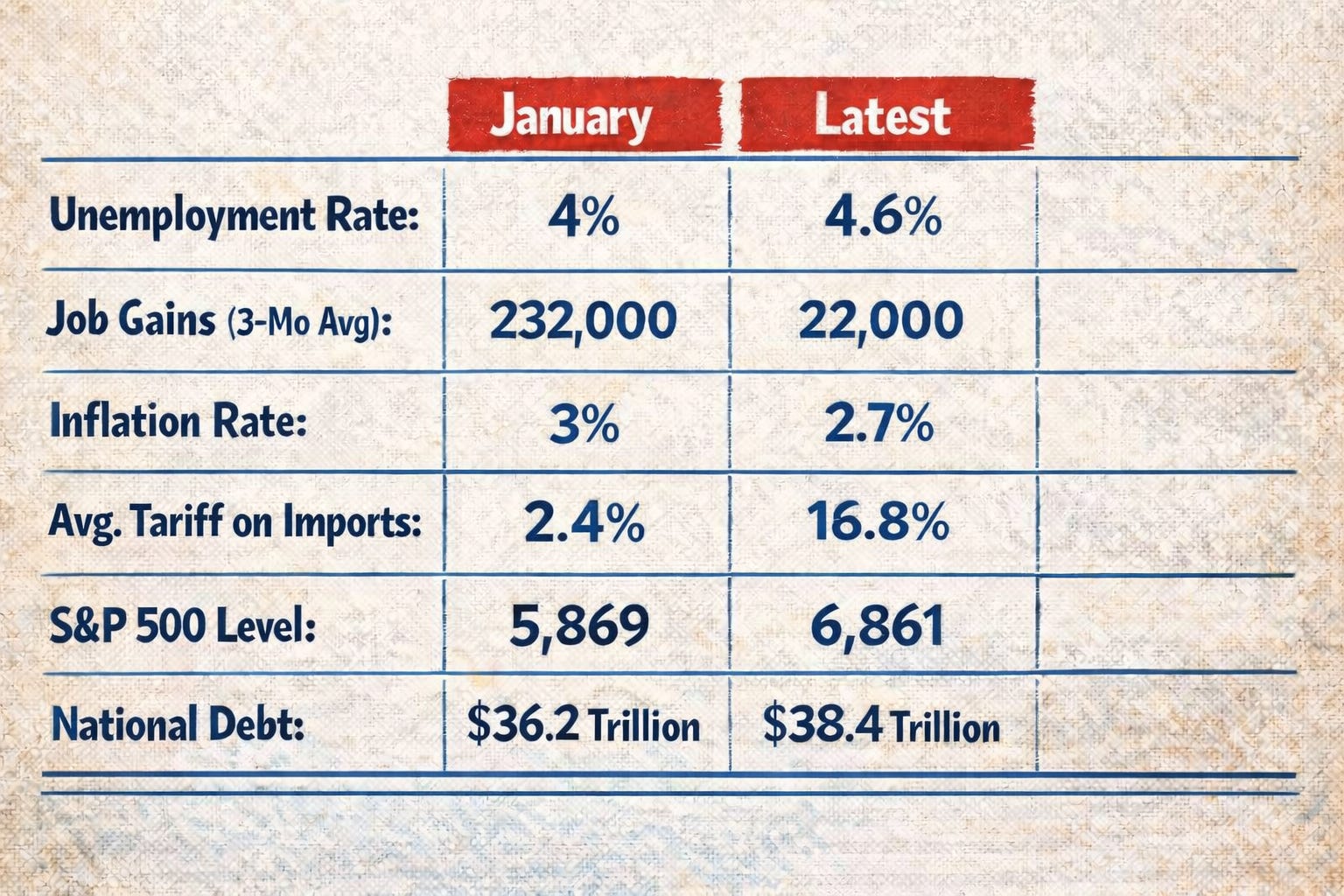
The stock market performed well. The S&P 500 index rose about 17% for the year, after a 23% gain in 2024. Stock values are very high, which has prompted worries of a bubble that might burst. But some analysts say strong earnings validate high valuations. Stock gains are boosting the wealth of the shareholder class and keeping overall spending levels solid.
“Affordability” became a political buzzword. The “affordability crisis” isn’t new. It’s part of a long-term trend of worsening wealth and income inequality, plus the burden of elevated inflation during the last few years. But it became a handy catch-phrase in 2025 for Americans’ struggles with the high cost of rent, food, health care, electricity and other things. President Trump tried to capitalize on the trend by claiming to be “the affordability president,” but then he changed tactics and began saying “affordability is a hoax.”
[More: It’s not just affordability. Trump has a jobs problem, too]
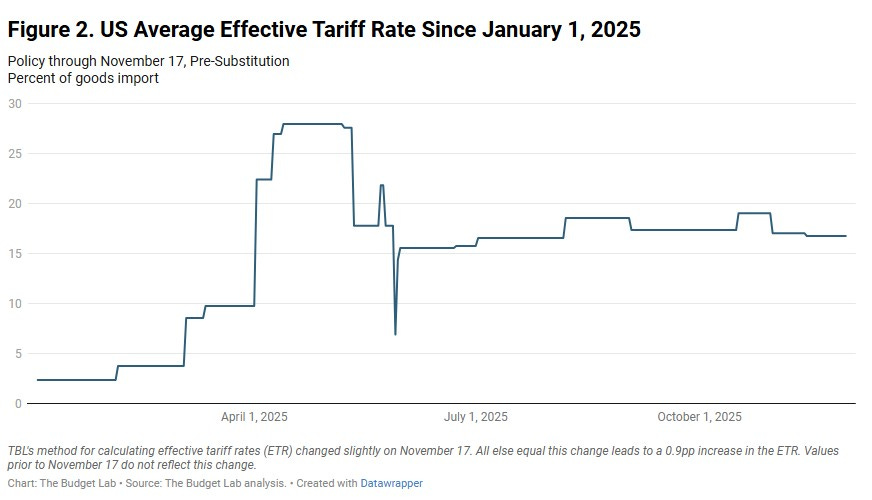
Markets made peace with the Trump tariffs. Trump has raised the average tax on imports from 2.4% to around 17%. Stocks have risen and the economy has continued to grow. But in April, when Trump pushed the average tariff all the way up to 28%, stocks tanked and other market signals flashed danger. Trump reacted by lowering his tariffs to levels most companies seem to be able to live with. A nice stock-market recovery ensued.
Artificial intelligence boomed. Fourteen percent of the world’s population, or 1.2 billion people, use AI regularly, according to Microsoft. Companies worldwide invested $1.5 trillion in AI in 2025, more than doubling the total investment to date. By some accounts, AI is taking hold faster than electricity or digital technology, which both transformed the world economy. Investors in 2025 had occasional nervous fits over whether all the spending will produce profits to match. But to the big companies in the AI race, they can’t afford not to spend.
Trump deportations cut into labor force growth. The labor force grew by 2% in 2024. But in 2025, labor-force growth slowed to just 0.5%, largely because of Trump’s aggressive effort to deport undocumented migrants. That has led to a shortage of workers in construction, agriculture, hospitality and other industries. Worker shortages tend to raise prices.
[More: The Trump tariffs go splat]
The ”DOGE” chainsaw created new risks. One agency shrunk as part of the “DOGE” effort to slash the federal bureaucracy is CISA, which guards against foreign cyberattacks on the United States. The FBI has reportedly scaled back terrorist tracking. If a preventable incident harms Americans or damages the economy, blame is likely to fall on Trump’s federal cutbacks.
The US lost its last AAA credit rating. Moody’s became the last major rating agency to knock the US government from its top tier. “Persistent, large fiscal deficits will drive the government’s debt and interest burden higher,” Moody’s explained. “The US fiscal performance is likely to deteriorate relative to its own past and compared to other highly-rated sovereigns.”
More Trump tax cuts pushed the national debt even higher. The tax cuts Trump signed into law in July will add around $4 trillion to the national debt. Those tax cuts will provide some economic stimulus that boosts certain parts of the economy during the next few years. They will also cut food and medical benefits for some poorer Americans, making the affordability crisis worse for those unlucky folks.
Ukraine launched meaningful attacks inside Russia. Ukraine isn’t winning the ghastly war, but innovative efforts to hurt Russian dictator Vladimir Putin in his backyard have bolstered morale and helped keep Ukraine in the fight. Trump’s efforts to ink a peace deal have failed because Putin will only stop the war if he gets what he wants—much of Ukraine—or the cost of the war becomes too much for him to bear.
Israel became the dominant power in the Middle East. Its combat jets flew unimpeded over archrival Iran while its operatives assassinated several Iranian nuclear scientists. The Trump-brokered peace deal regarding Gaza didn’t exactly stop the fighting there, but it brought hostages and hostage remains back to Israel and may be a step toward the reconstruction of Gaza.
There was no obvious blowback to the US attack on Iran. Many critics worried that Trump was kicking a hornet’s nest when he authorized American bombers to aid Israeli jets in the June attack on Iranian nuclear facilities. Instead, Iran’s theocratic regime seems embarrassed and chastened. There could still be retaliation, and it may never be clear how much damage those strikes caused. But Trump gambled and it may have paid off.
Trump imposed “state capitalism.” Under Trump’s direction, the US government has acquired ownership stakes in Intel, US Steel and several companies that mine or process rare earth minerals. It also made a deal with chipmakers Nvidia and AMD to take a 15% cut of certain sales to China. None of these deals was necessary to protect the US economy or keep a corporate titan solvent. Trump is seeking control over certain segments of corporate America and deliberately politicizing what ought to be mostly business decisions.
The Charlie Kirk shooting normalized political violence. The conservative activist gunned down in Utah on September 10 seems like just another victim of gun violence that kills nearly 47,000 Americans every year. The nation is so numb to massacres that no amount of killing seems able to move the needle toward more rational gun laws.
A Muslim socialist became New York City’s next mayor. Zohran Mamdani’s surprise win showed that an earnest politician promising to lower living costs can command voters’ attention, no matter how improbable his candidacy might seem. Delivering on his promises will be tough, though.

The crypto rally fizzled. Trump promised friendlier regulation toward cyrptocurrencies and their ilk, which sent prices soaring in the first half of 2025. But pro-crypto legislation has sputtered in Congress and market demand seemed to dry up in the second half of the year. Bitcoin hit a record high of around $123,000 in August, but it’s ending the year at around $88,000—about 6% lower than it started.
[More: Let Mamdani give free buses and government food stores a try]
Warren Buffett retired. The legendary investor and head of Berkshire Hathaway said he’s finally hanging up his hat at the age of 95. Buffett didn’t just make money year after year. He remained deeply relevant into his 90s due to his timeless insights on business and financial markets and his refreshing confidence in America. Fellow investor Seth Klarman recently wrote a this digestible summary of what makes Buffett so special.
Epstein became a forever scandal. Interest in the secrets of the dead sex trafficker Jeffrey Epstein grew so intense that Congress passed a law in November ordering the Justice Dept. to publish nearly everything it ever gathered in years of investigating the disgraced financier. The biggest unanswered question is whether Trump—an Epstein buddy for years—ever had sexual encounters with the underage women Epstein illegally trafficked. There’s nothing on that in the first batches of documents released. But more are on the way, and the Epstein scandal might still be titillating voyeurs—and vexing Trump—when pundits draw up their 2026 lookback lists a year from now.